Chingford (London) DVSA Driving Test Routes
Book Test-
Free
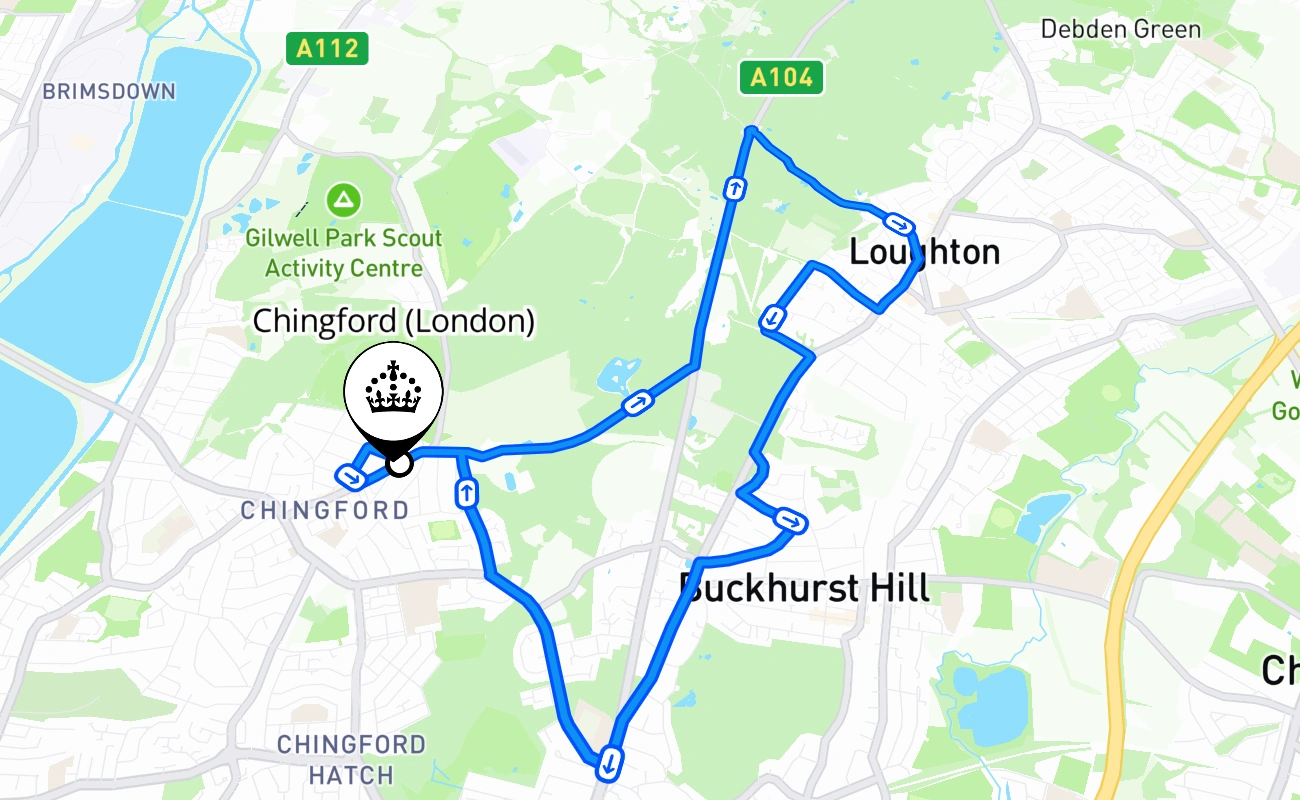
Chingford (London) (ENG) #477
 AUDrive 01 Feb 20261.3K
 -
Pro
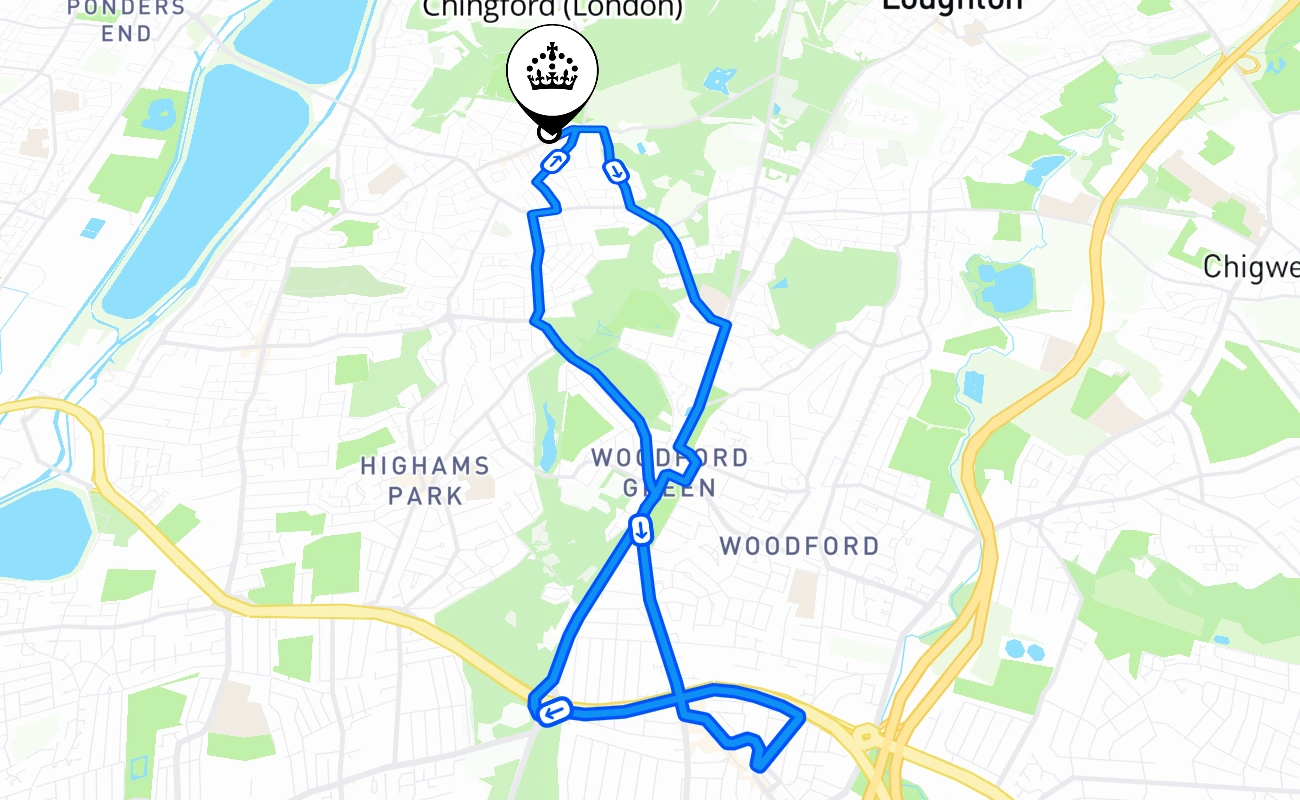
Chingford (London) (ENG) #476
AUDrive 01 Feb 20261.1K -
Pro
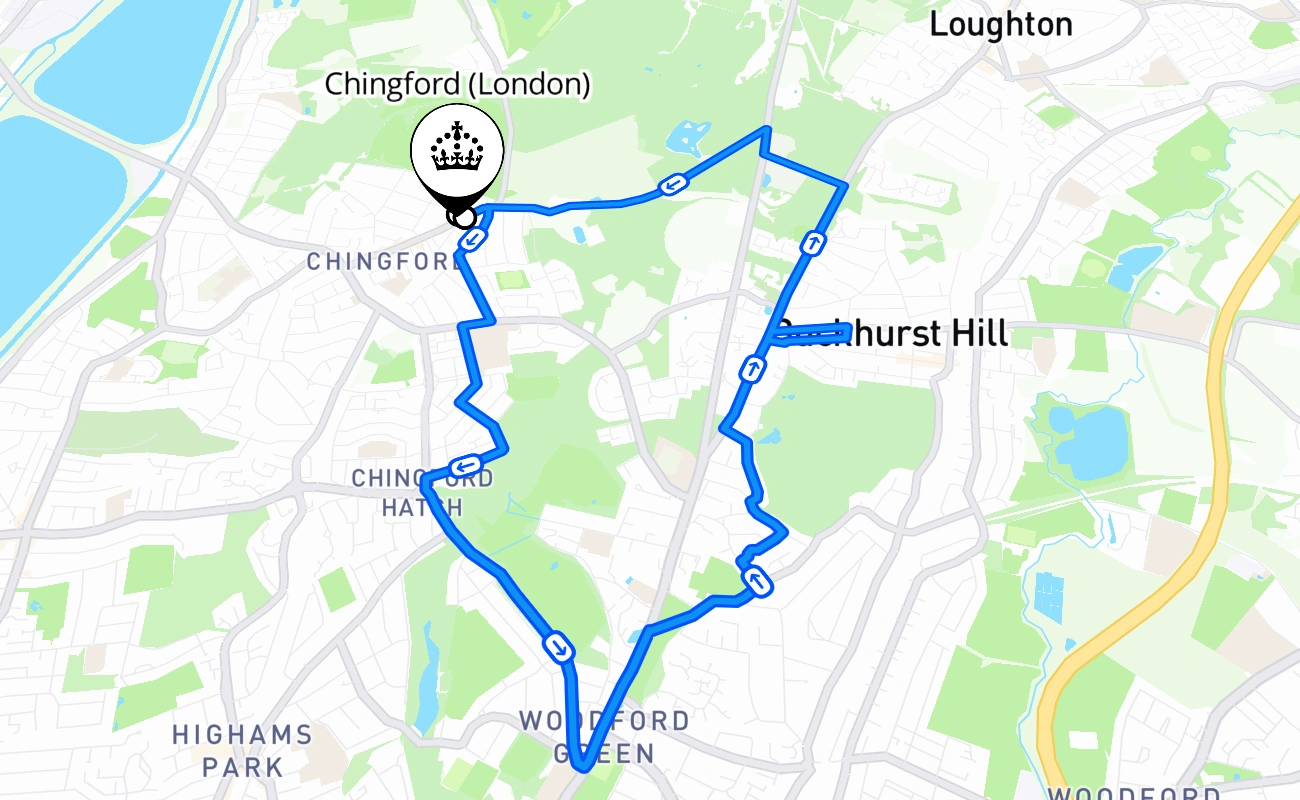
Chingford (London) (ENG) #478
AUDrive 18 Jan 2026900 -
Pro
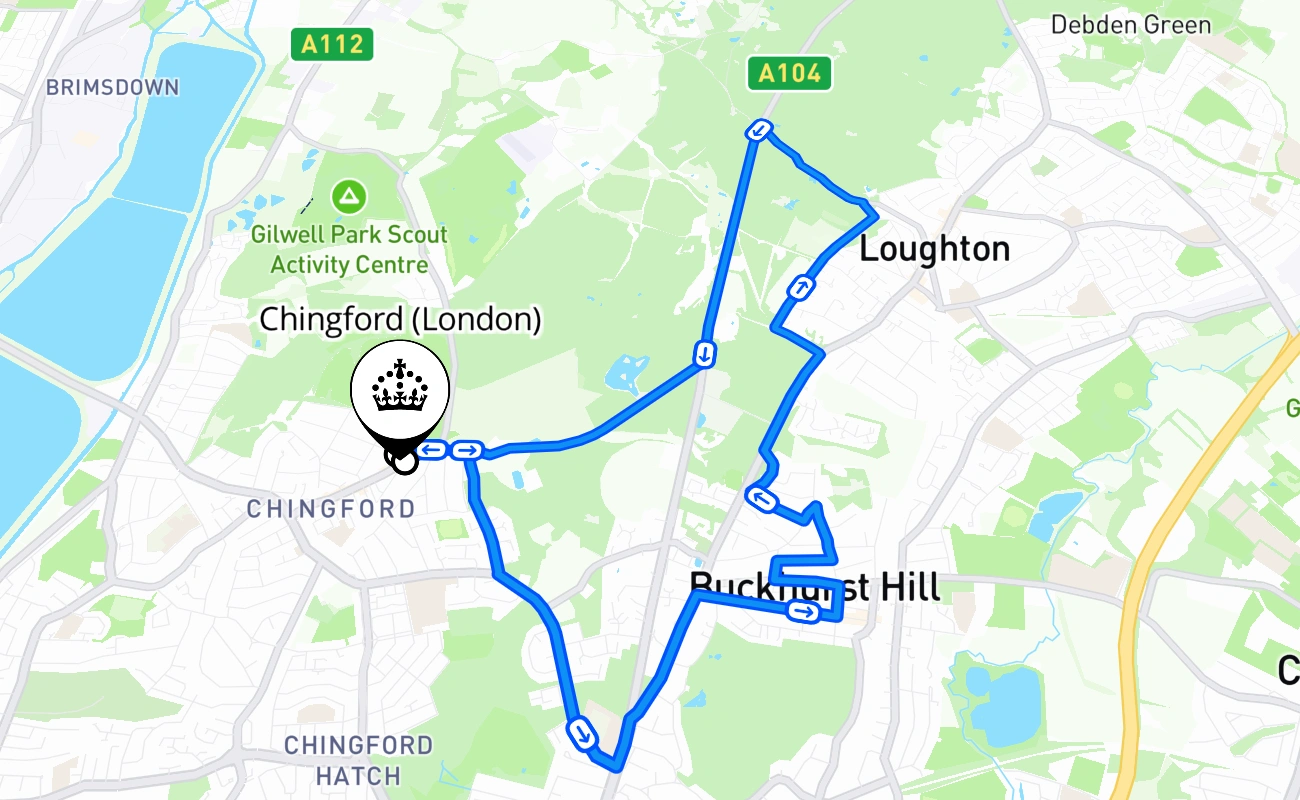
Chingford (London) (ENG) #480
AUDrive 11 Jan 2026994 -
Free
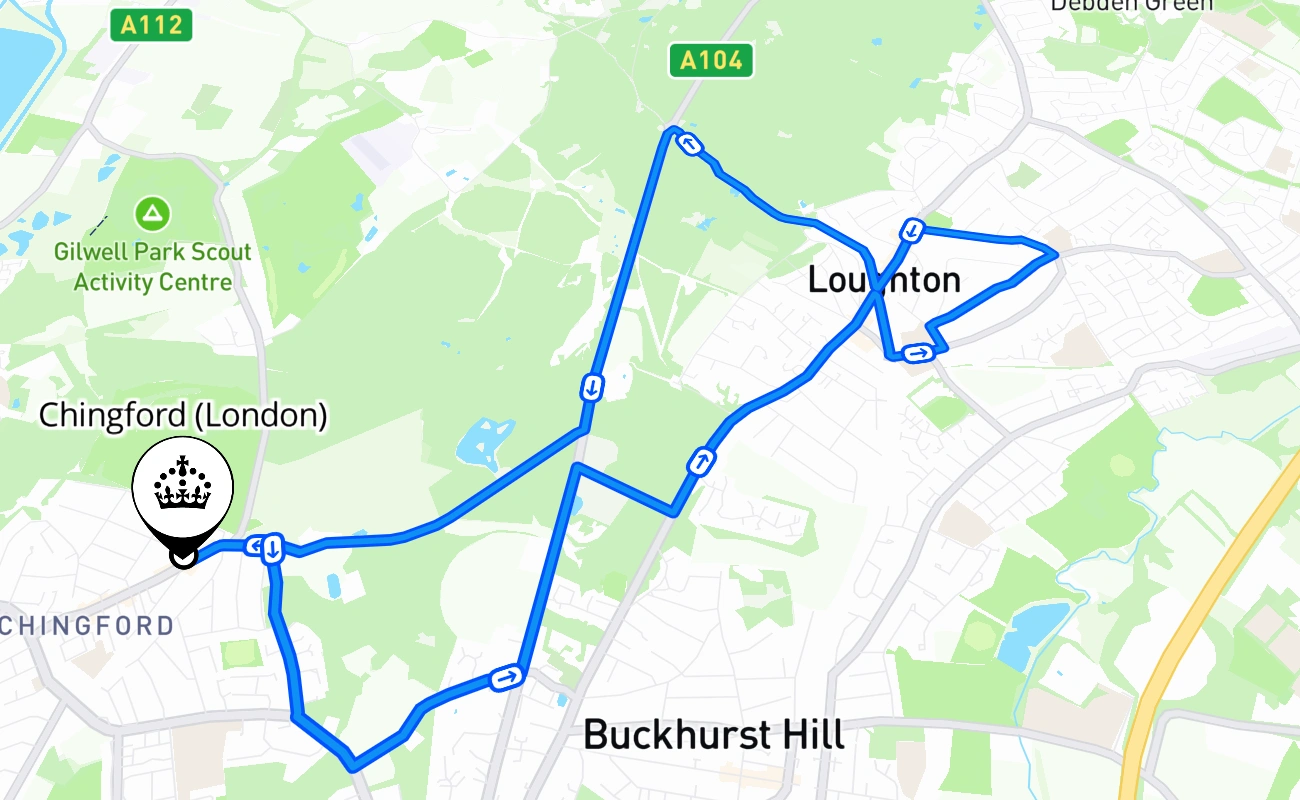
Chingford (London) (ENG) #482
AUDrive 03 Jan 2026874 -
Pro
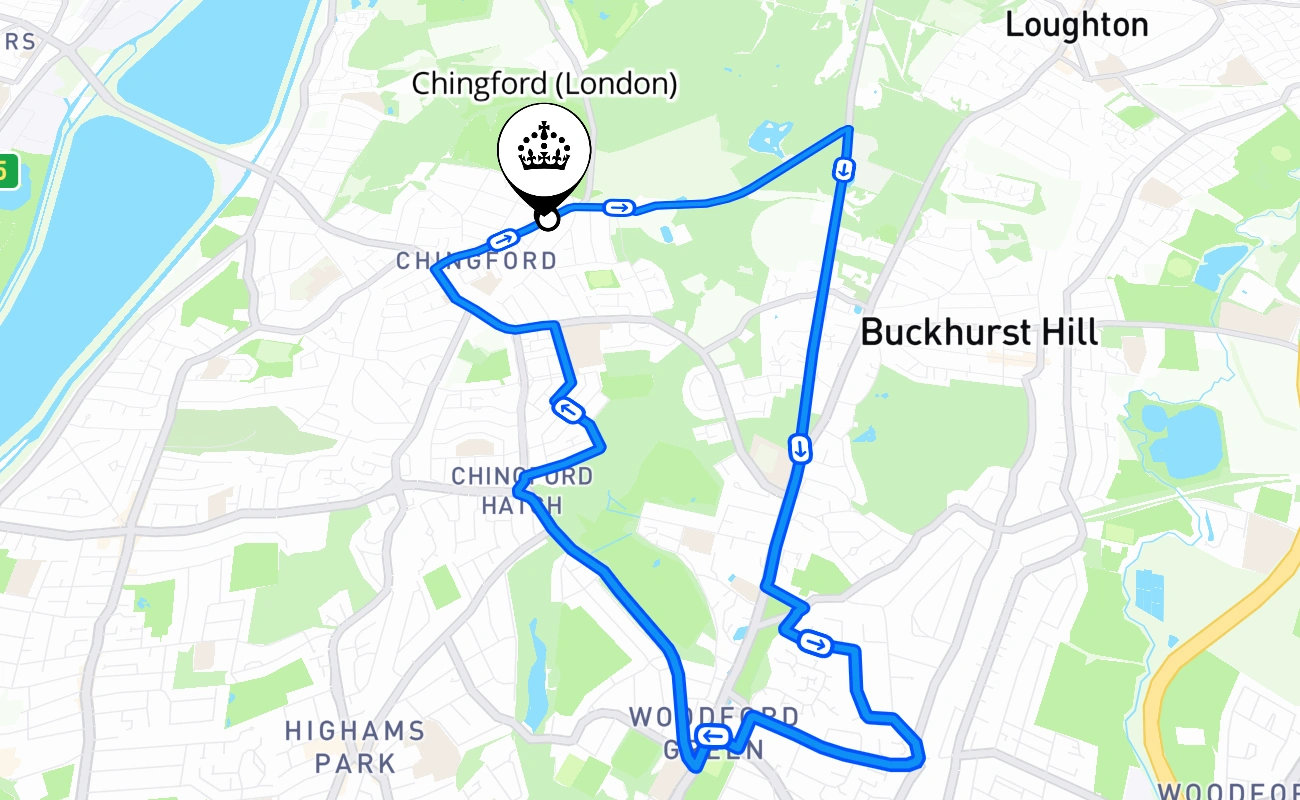
Chingford (London) (ENG) #483
AUDrive 26 Dec 2025786 -
Pro
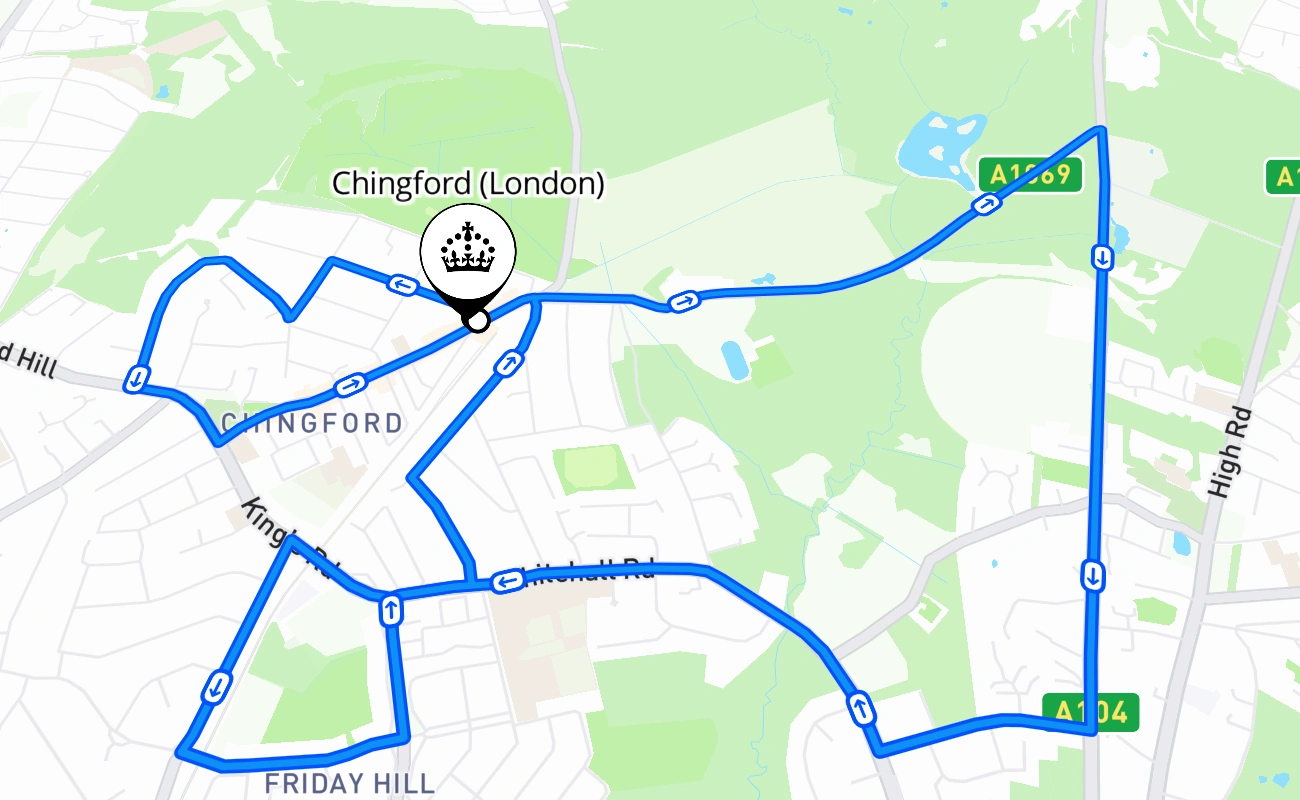
Chingford (London) (ENG) #481
AUDrive 26 Dec 2025797 -
Pro
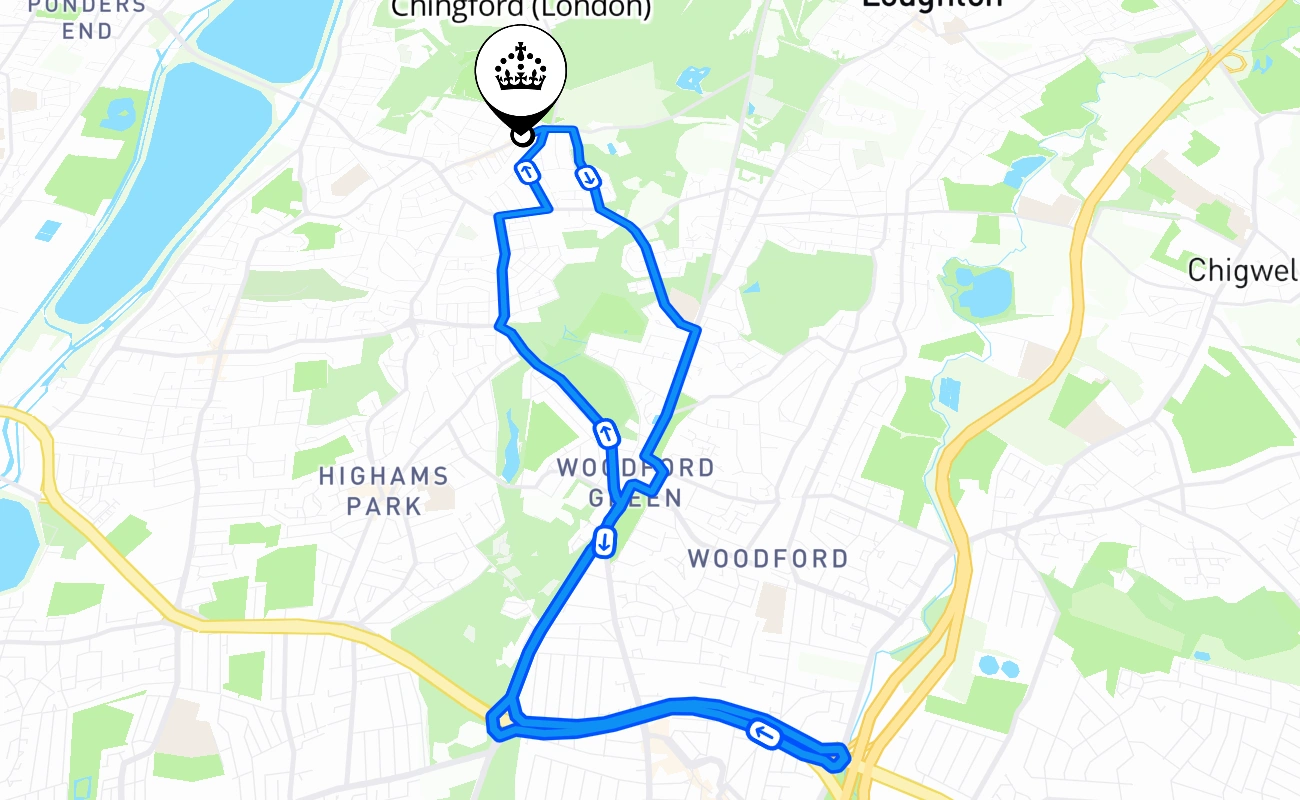
Chingford (London) (ENG) #484
AUDrive 21 Dec 20251.1K -
Free
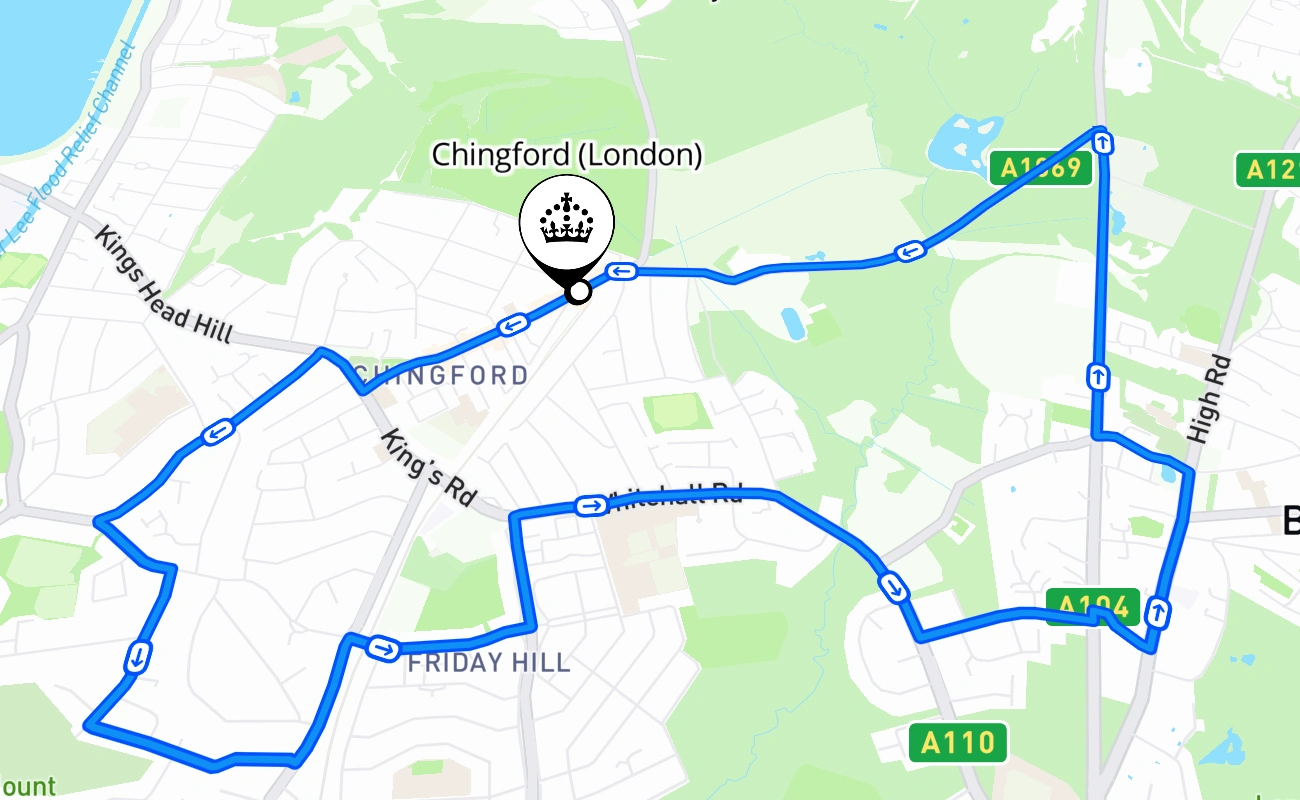
Chingford (London) (ENG) #485
AUDrive 14 Dec 2025882 -
Free
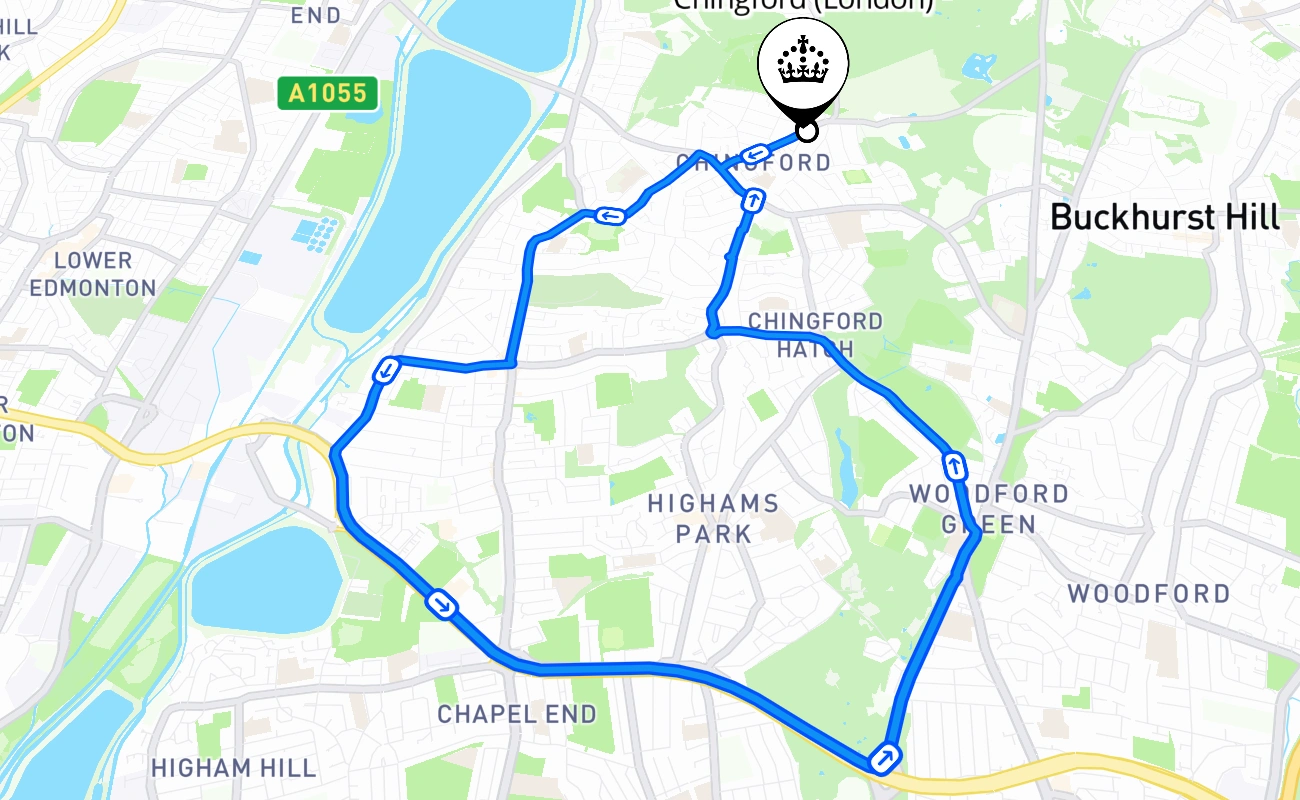
Chingford (London) (ENG) #479
AUDrive 14 Dec 20251K -
Earn Pro rewards
Passed your test?
Contribute your route, get your Pro refunded.
Contribute a Route
General Tips
Typical Speed Limits Chingford test routes feature extensive 20 mph zones around Chingford Mount Road and the shopping centre area. Station Road, Whitehall Road, and residential streets like Friday Hill and Broadmead Road are 30 mph. The A406 North Circular and Woodford New Road carry 40 mph limits, while Epping New Road has 50 mph sections near Epping Forest.
Traffic Conditions Chingford Mount Road (A112) is congested with multiple speed limit changes and unpredictable drivers near shops. The A406 North Circular carries heavy through-traffic, and slip roads require confident merging. Lea Valley Road (A110) has a fixed speed camera on a downhill stretch. School-run periods add congestion around Station Road.
Key Features Charlie Brown's Roundabout at the A406/A113 junction is a complex spiral multi-lane roundabout—wrong lane selection towards Chingford is a top fail reason. Friday Hill narrows with parked cars on both sides, forcing tight passing decisions. Routes near Epping Forest include country lanes with blind bends. The pass rate of around 37% reflects the challenging mix of urban and semi-rural roads.
Common Test Manoeuvres Parallel parking is commonly tested on residential streets off Larkshall Road or around Richmond Road. Pull-up-on-the-right may occur on quieter roads off Mulberry Way or The Drive. Independent driving sections often use the A406 North Circular or route along Chingford Lane. Hill starts can feature on Kings Head Hill.
Frequently Asked Questions
What is the pass rate at Chingford driving test centre?
Chingford has a pass rate of 37.2%, well below the national average of 48%. Historical data shows a gradual improvement from 35.9% in 2015-16 to around 40% in recent years, but it remains one of the more challenging centres in North East London. Nearby loughton london has a higher rate at 45%, while goodmayes london sits at 45.1%. The centre's mix of busy urban roads and fast A-roads contributes to the lower pass rate.
What are the most difficult areas on Chingford driving test routes?
The three trickiest spots are Charlie Brown's Roundabout, Chingford Mount Road, and Lea Valley Road. Charlie Brown's Roundabout (A406/A113) is a complex spiral roundabout where candidates incorrectly select lane 1 for Chingford and then cut across three exits — choose lane 3 at the gantry, hold 25 mph, and follow the spiral arrows. On Chingford Mount Road (A112), the 20 mph zone past shops and zebra crossings catches candidates creeping to 24 mph — stay in 2nd gear and aim for 18 mph. On Lea Valley Road (A110), candidates drift to 38 mph downhill toward a fixed 30 mph speed camera — lock at 30 mph in 3rd gear.
What roads are used on Chingford driving test routes?
Routes typically use Station Road, Kings Road, Larkshall Road, Friday Hill, New Road, Hatch Lane, Chingford Mount Road (A112), Lea Valley Road (A110), and the A406 North Circular. Some routes head toward Epping Forest via Sewardstone Road (A112), while others use slip roads onto the A406. You can expect narrow estate roads with parked cars, multi-lane roundabouts, country lanes with blind bends near Epping Forest, and dual carriageway sections. Practise these roads on AUDrive's interactive route maps.
Why do people fail at Chingford test centre?
The most common fail reasons at Chingford are missing observations at junctions, not checking mirrors before lane changes, over-speeding or driving too slowly for conditions, hesitating on roundabouts, and poor lane discipline. Charlie Brown's Roundabout is a frequent fail point due to wrong lane selection. Chingford Mount Road's multiple speed limit changes catch candidates who lose track of the current limit. Kings Head Hill's steep slopes combined with multi-lane roundabouts create a double challenge, and Friday Hill's parked cars force tight driving decisions.
What is the best time to book a driving test at Chingford?
Mid-morning (10-11am) or early afternoon (1-2pm) slots tend to have lighter traffic. Avoid rush hours (8-9am and 4-6pm) when the A112, A110, and A406 North Circular get heavily congested. Also avoid school run times as residential streets near schools become busy. The current waiting time for a test at Chingford is around 17 weeks — one of the longer waits in London — so book early or check for cancellation slots regularly.
What are the examiners like at Chingford test centre?
Reviews are mixed but with several positive mentions. Examiners Stuart and Mr Ali have received positive comments for being nice and polite. As with any centre, examiner styles vary. Some candidates have raised concerns about demeanour, but the majority of feedback suggests professional conduct. Focus on demonstrating safe, confident driving rather than worrying about the examiner's personality. The centre has limited parking, so use Connaught Avenue if needed.
How does Chingford compare to other London test centres?
Chingford's 37.2% pass rate is below average for London. For comparison, loughton london has 45%, goodmayes london has 45.1%, sidcup london has 58.2%, and morden london has 46.5%. Hornchurch (10.5 miles away) has a notably higher rate at 51.3%. If you live in North East London and want better statistical odds, loughton london may be worth considering, though preparation and route familiarity matter more than the centre's overall pass rate.
How should I prepare for the Chingford driving test?
Focus on Charlie Brown's Roundabout lane discipline (lane 3 at the gantry for Chingford), speed control on Chingford Mount Road's 20 mph zone, and maintaining 30 mph on Lea Valley Road's downhill section past the speed camera. Practise narrow estate roads with parked cars (common around Hatch Lane and off Larkshall Road), steep slopes on Kings Head Hill, and merging onto the A406 via slip roads. If routes head toward Epping Forest, expect country lanes with blind bends. Use AUDrive to study the known test routes with interactive maps.
Are driving test routes the same across England?
No, each DVSA test centre has its own set of test routes designed by the local senior examiner. Routes are chosen to test a range of road types and driving conditions specific to the area, including residential streets, main roads, roundabouts, and dual carriageways where available. The examiner selects one of several pre-set routes on the day of your test.
What manoeuvres are tested at Chingford?
You will be asked to perform one of four possible manoeuvres: parallel parking, forward bay parking, reverse bay parking, or pulling up on the left and reversing. There is also a 1-in-3 chance of being asked to do an emergency stop. Parallel parking is often tested on Richmond Road near the centre. Reverse manoeuvres are commonly tested around Hatch Lane or residential streets off Larkshall Road. The test lasts approximately 40 minutes with 20 minutes of independent driving.
Can I choose which DVSA test centre to take my test at?
Yes, you can book your practical test at any DVSA test centre in England (or the rest of Great Britain). Many learners choose a centre with shorter waiting times or a higher pass rate, even if it means travelling further. However, make sure you practise on the roads around your chosen centre, as familiarity with local conditions is a key factor in passing.
What types of roads will I encounter on my England driving test?
England test routes typically include residential streets (20-30mph), urban A-roads and B-roads (30-40mph), and where available, dual carriageways (50-70mph). You will almost certainly encounter roundabouts, traffic lights, pedestrian crossings, and possibly bus lanes. Rural centres may include country roads with national speed limits. The independent driving section may involve following a satnav on unfamiliar roads.
Are there speed cameras on Chingford test routes?
Yes, there is a notable fixed 30 mph speed camera on Lea Valley Road (A110) on the downhill section. Candidates commonly drift to 38 mph heading downhill toward this camera. The solution is to stay in 3rd gear, lock your speed at 30 mph, and maintain a steady gap to the vehicle ahead. Chingford Mount Road (A112) also has varying speed limits that change between 20 and 30 mph — always watch for signs. A speeding offence during your test is an automatic serious fault.
How do England pass rates compare to Scotland and Wales?
England generally has slightly lower average pass rates compared to Scotland and Wales, largely because of the concentration of busy urban centres, particularly in London and the Midlands. London test centres typically have the lowest pass rates in the UK (30-45%), while rural centres in all three nations tend to have higher rates (55-65%). The test itself is identical across Great Britain as all centres follow DVSA standards.
What is the process to get a full UK driving licence?
The process has three main steps: (1) Apply for a provisional driving licence at age 17+ (costs GBP 34 online or GBP 43 by post). (2) Pass the theory test, which consists of 50 multiple-choice questions and 14 hazard perception video clips (costs GBP 23). (3) Pass the practical driving test, approximately 40 minutes of on-road assessment (costs GBP 62 weekday or GBP 75 evenings/weekends/bank holidays). Once you pass the practical test, your full licence is issued. There is no mandatory minimum hours of supervised driving, unlike Australia.
How do I book my practical driving test?
You can book your practical driving test online at gov.uk/book-driving-test or by phone on 0300 200 1122. You will need your provisional licence number, theory test pass certificate number, and your driving instructor's personal reference number (if applicable). You must have passed the theory test before you can book the practical test. Waiting times at popular test centres can be several months, so book as early as possible.
How long are the waiting times for a driving test?
Waiting times vary significantly by test centre and region. Popular urban centres (e.g., London, Birmingham, Manchester) can have waiting times of 3-6 months or more. Less popular or rural centres may have shorter waits of 4-8 weeks. Many learners regularly check for cancellation slots to get an earlier date. DVSA is introducing new booking rules from 31 March 2026 that may affect how cancellation slots are managed.
How can I find an earlier test date through cancellations?
You can check for cancellation slots by logging into your booking account on gov.uk and looking for earlier available dates. Many learners check frequently throughout the day as slots become available when others cancel. There are also third-party apps and services that monitor for cancellations and send alerts, though DVSA's new rules from March 2026 may restrict some of these services. Always use your own DVSA account details to book - never share them with third parties.
How much does it cost in total to get a UK driving licence?
The minimum official costs are: Provisional licence GBP 34 (online), Theory test GBP 23, Practical test GBP 62 (weekday) = Total GBP 119. However, most learners also pay for driving lessons with an ADI (Approved Driving Instructor) at approximately GBP 30-45 per hour. The average learner takes around 45 hours of professional instruction plus 22 hours of private practice before passing. Total cost including lessons typically ranges from GBP 1,500 to GBP 2,500.
What does the theory test involve?
The theory test has two parts taken in one sitting: (1) Multiple-choice: 50 questions with a 57-minute time limit. You need 43 out of 50 to pass. Topics include road safety, traffic signs, rules of the road, and vehicle handling. (2) Hazard perception: 14 video clips showing real driving scenarios. You must identify developing hazards by clicking at the right time. One clip has two hazards, the rest have one each. Pass mark is 44 out of 75. The theory test certificate is valid for 2 years - you must pass your practical test within this period.
What happens during the practical driving test?
The practical test lasts approximately 40 minutes and includes: (1) An eyesight check - read a number plate from 20 metres. (2) Two 'Show me, tell me' vehicle safety questions. (3) General driving for about 20 minutes following the examiner's directions. (4) Independent driving for about 20 minutes, usually following a satnav provided by the examiner. (5) One reversing manoeuvre (parallel park, bay parking, or pull up on the right). (6) Possibly an emergency stop (about 1 in 3 tests). You may accumulate up to 15 minor faults and still pass, but any serious or dangerous fault means an immediate fail.
What are 'Show me, tell me' questions?
These are vehicle safety questions asked during the practical test. A 'tell me' question is asked before you start driving - you answer verbally (e.g., 'Tell me how you would check the brakes are working'). A 'show me' question is asked while you are driving - you must demonstrate the action (e.g., 'Show me how you would wash and clean the rear windscreen'). There are 19 possible questions in total, published on gov.uk. Getting one or both wrong counts as one minor fault each. They will not cause you to fail on their own.
How does the independent driving section work?
Independent driving lasts about 20 minutes of your test. In most tests, you follow directions from a satnav (a TomTom unit provided by the examiner - not your own device). In some tests, you follow road signs instead. The key point is that you are NOT assessed on your navigation ability. If you take a wrong turn or miss a direction, the examiner will calmly redirect you, and you will not be marked down for the navigation error. You ARE assessed on your driving quality during this section - observations, signals, speed, and road positioning all count.
What is the pass rate for the UK driving test?
According to DVSA official statistics, the national average pass rate was 48.4% in 2023/24 (47.0% in Q4, 48.9% in Q1 2025). This is significantly lower than most Australian states (typically 65-80%). Males pass at 48.2% vs females at 45.6%. Pass rates vary dramatically by test centre, ranging from around 30% (inner London) to 65% (rural areas like Dorchester). Within London alone, Sidcup has 57.2% while Belvedere has only 34.9%. The low pass rate is attributed to the UK's complex road network, strict marking standards, and no mandatory minimum hours of practice.
What are the most common reasons for failing the practical test?
According to DVSA statistics, the #1 serious fault is Junctions—Observation (not looking properly before emerging). Other top faults: (2) Mirrors—not checking before changing direction or speed. (3) Steering control issues. (4) Road positioning, especially at roundabouts and dual carriageways. (5) Inappropriate speed for conditions. (6) Not responding to traffic signals or signs. (7) Reversing manoeuvre errors. The average pass candidate has 5.3 minor faults; the average fail has 9.7. Even a single serious or dangerous fault means immediate fail, regardless of how well you drove otherwise.
What happens if I fail the practical test?
If you fail, you will receive a test result form showing all faults marked during the test, categorised as minor, serious, or dangerous. You must wait at least 10 working days before taking the test again. There is no limit to the number of times you can retake the practical test, but you must pay the full fee each time (GBP 62 weekday / GBP 75 evenings/weekends). Your theory test must still be valid (within 2 years of passing). Use the fault feedback to focus your practice before rebooking.
Can I exchange my overseas driving licence for a UK licence?
It depends on which country issued your licence. Licences from 'designated countries' (most EU/EEA countries and select others like Australia, Canada, Japan, South Korea) can be exchanged directly for a UK licence for GBP 43 without taking any tests. For non-designated countries (including China), you must apply for a provisional licence, pass the theory test, and pass the practical test - the full process. You can drive on your overseas licence for up to 12 months after becoming a UK resident, but must obtain a UK licence within that period.
I have a Chinese driving licence - what do I need to do?
China is not on the UK's designated countries list, so you cannot directly exchange your Chinese licence. You must: (1) Apply for a UK provisional driving licence (GBP 34 online). (2) Pass the UK theory test (GBP 23). (3) Pass the UK practical driving test (GBP 62-75). You may drive on your Chinese licence for up to 12 months after becoming a UK resident. After 12 months, you must have a UK licence to drive legally. Many Chinese learners find the roundabouts, right-of-way rules, and mirror checking standards different from China.
Do I need a certain number of practice hours before taking the test?
No, the UK has no mandatory minimum hours of supervised driving practice, unlike Australia. However, DVSA recommends an average of 45 hours of professional instruction with an ADI (Approved Driving Instructor) combined with 22 hours of private practice before taking the test. Candidates who take lessons with an ADI-approved instructor generally have higher pass rates. You can also learn with a friend or family member who is over 21 and has held a full UK licence for at least 3 years.
What is an ADI and do I need one?
An ADI is an Approved Driving Instructor - someone who has passed DVSA's rigorous three-part qualification process and is registered to give paid driving lessons. Their car will display a green octagonal badge. While not legally required, taking lessons with an ADI is strongly recommended as they know the test standards, local test routes, and common fault areas. A PDI (Potential Driving Instructor) displaying a pink badge is a trainee instructor who has passed part of the qualification. Both can provide quality instruction.
What are the 2026 changes to driving test booking rules?
DVSA is implementing new booking rules effective 31 March 2026. These changes aim to address the chronic test availability problems, long waiting times, and the impact of automated booking bots and commercial resellers who bulk-buy and resell test slots. The new rules introduce restrictions on booking frequency and cancellation/rebooking patterns. Learners should check gov.uk/book-driving-test for the latest information. These changes may affect third-party cancellation-monitoring services that many learners rely on to find earlier test dates.
What should I do on the day of my practical test?
On test day: (1) Bring your provisional driving licence (photocard). (2) Arrive at the test centre at least 10 minutes early. (3) Your car must be roadworthy, properly insured for a driving test, and have L-plates (or D-plates in Wales) displayed front and rear. (4) The examiner will check your eyesight first - if you fail this, the test is terminated. (5) Stay calm during 'Show me, tell me' questions. (6) Drive normally as you have been taught. (7) Minor mistakes are expected - do not let one error affect your concentration for the rest of the test. (8) If you are unsure about a satnav direction, drive safely and the examiner will redirect you.
Is the UK practical test the same in England, Scotland, and Wales?
Yes, the practical driving test is standardised across England, Scotland, and Wales as all three are governed by DVSA. The same test format, marking criteria, and pass standards apply everywhere. The only notable difference is that in Wales, you may request to take the test in Welsh, and D-plates (Dysgwr, meaning learner) can be used instead of L-plates. Northern Ireland has its own DVA (Driver & Vehicle Agency) with a separate test system and is not covered by DVSA standards.
What tips do experienced learners recommend for passing first time?
Common advice from successful candidates: (1) Take enough lessons - do not rush to book the test to save money, as retakes cost more in the long run. (2) Practice in the area around your test centre to become familiar with the roads. (3) Master roundabouts thoroughly - they are a major source of faults. (4) Develop a consistent mirror-checking routine (interior mirror, door mirror, signal, manoeuvre). (5) Practice the independent driving section with a satnav. (6) Take at least one mock test with your instructor. (7) On the day, treat it as just another driving lesson. (8) If you make a mistake, move on mentally - one minor fault does not fail you.

Office discussion
No comments yet
Share how your practice went. It helps the next learner.