Bundoora Driving Test Routes
Book Test-
Pro
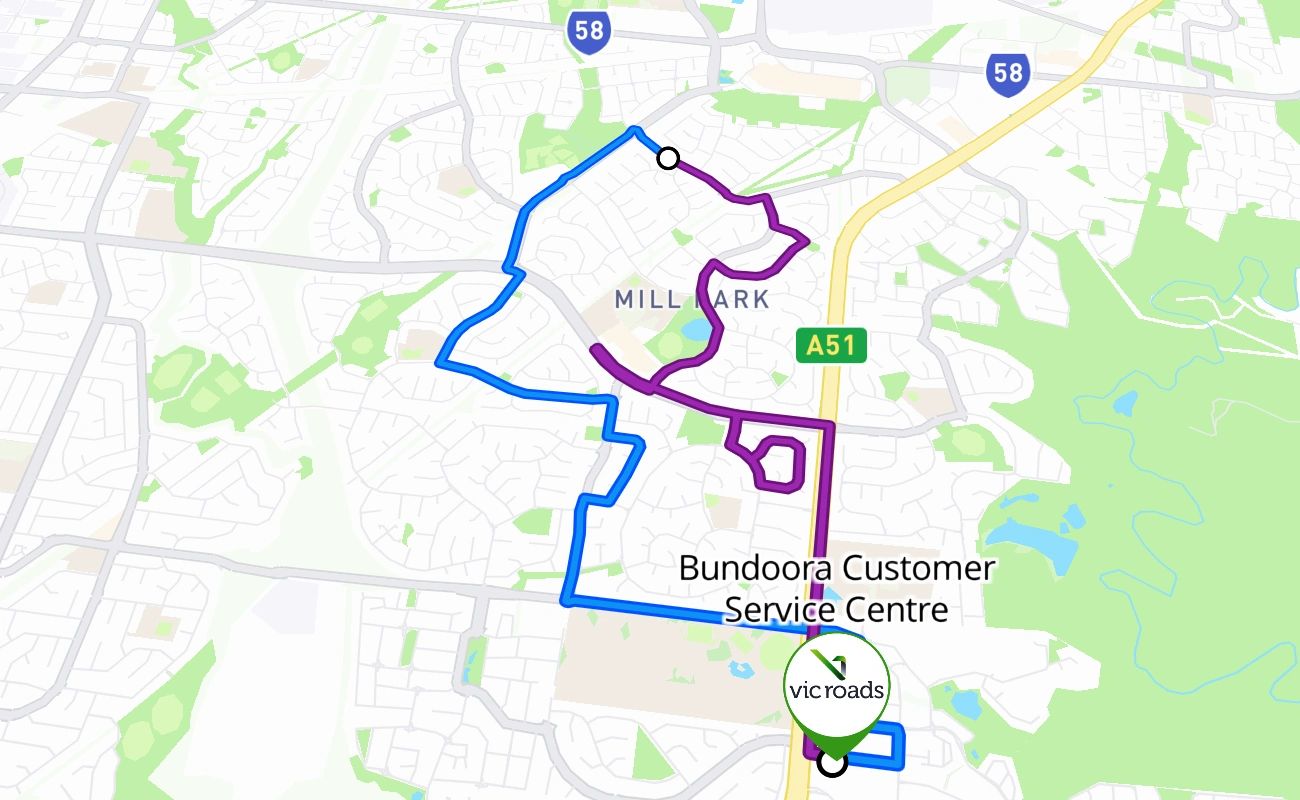
Bundoora (VIC) #27
 AUDrive 06 Jul 20254.2K
 -
Free
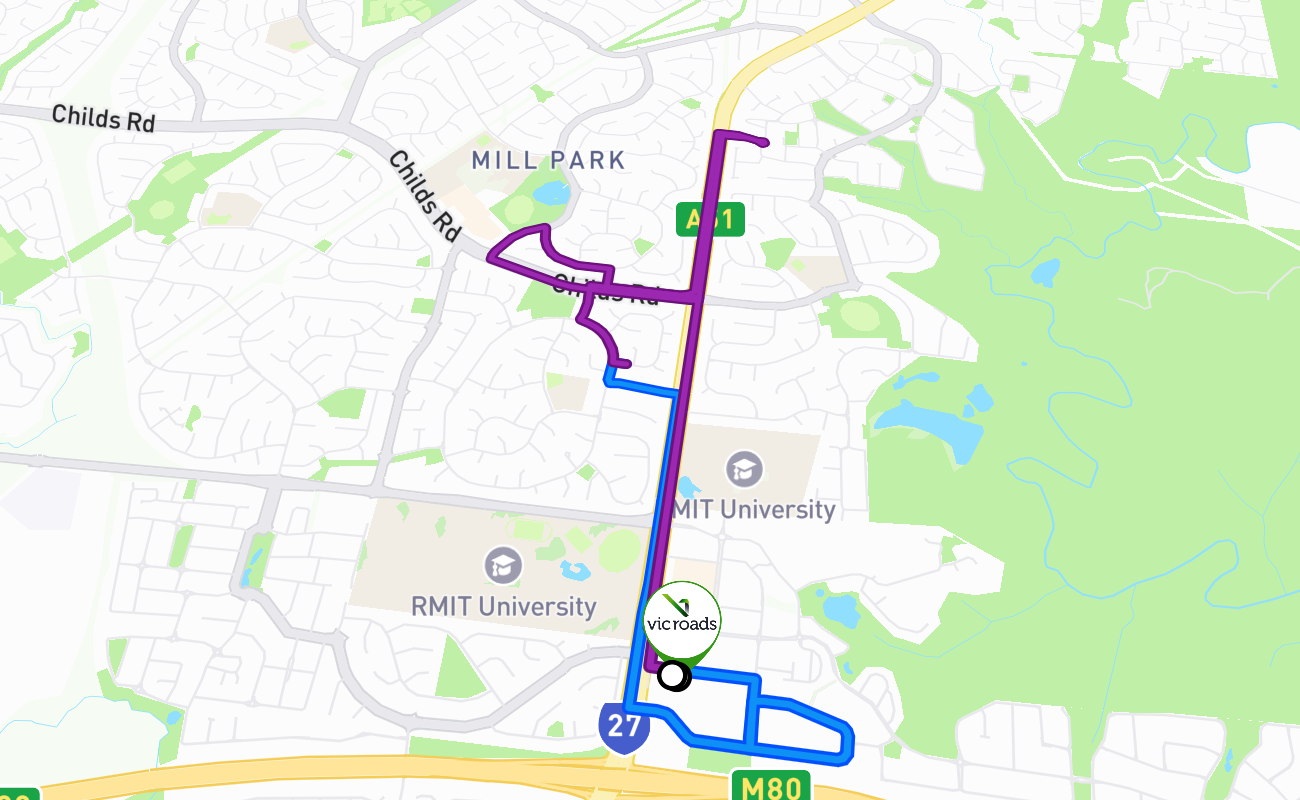
Bundoora (VIC) #28
AUDrive 13 Jun 20253.8K -
Free
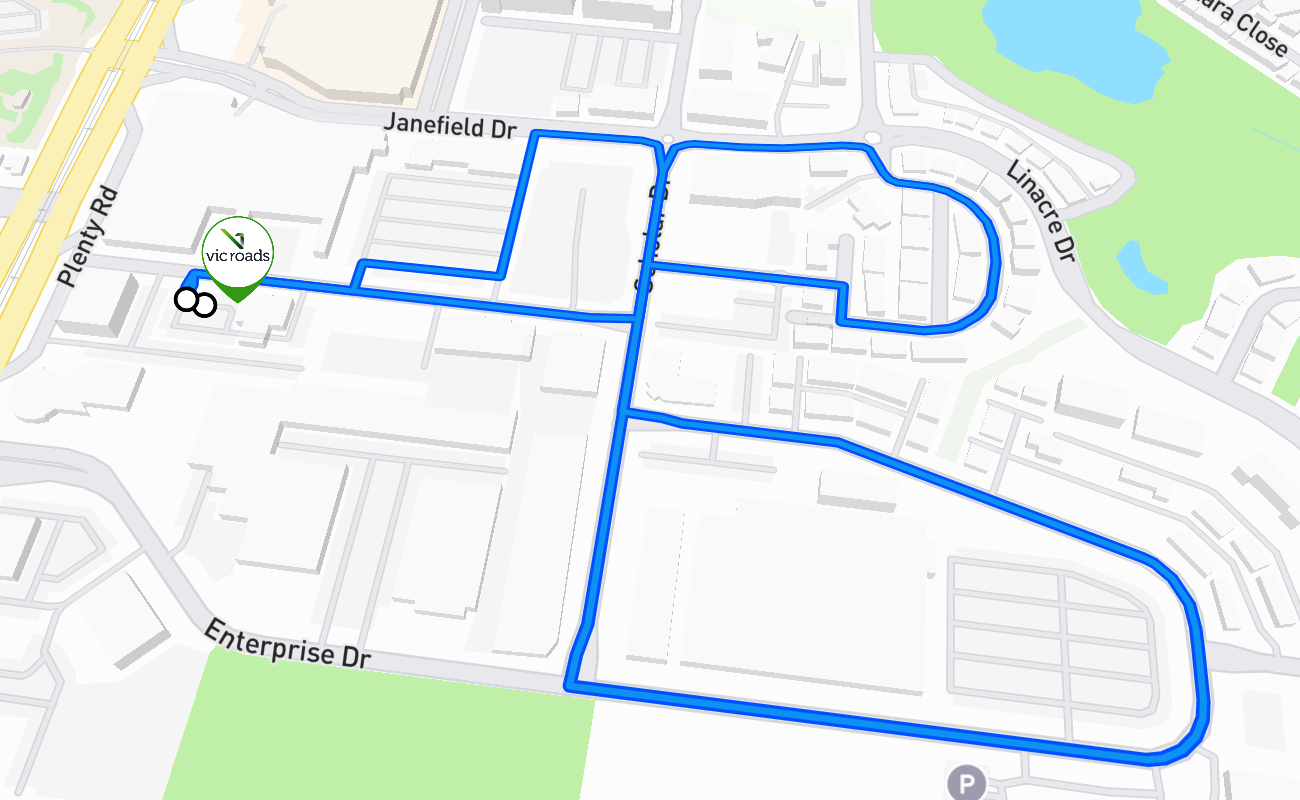
Bundoora (VIC) #25
AUDrive 13 Jun 20252.7K -
Pro
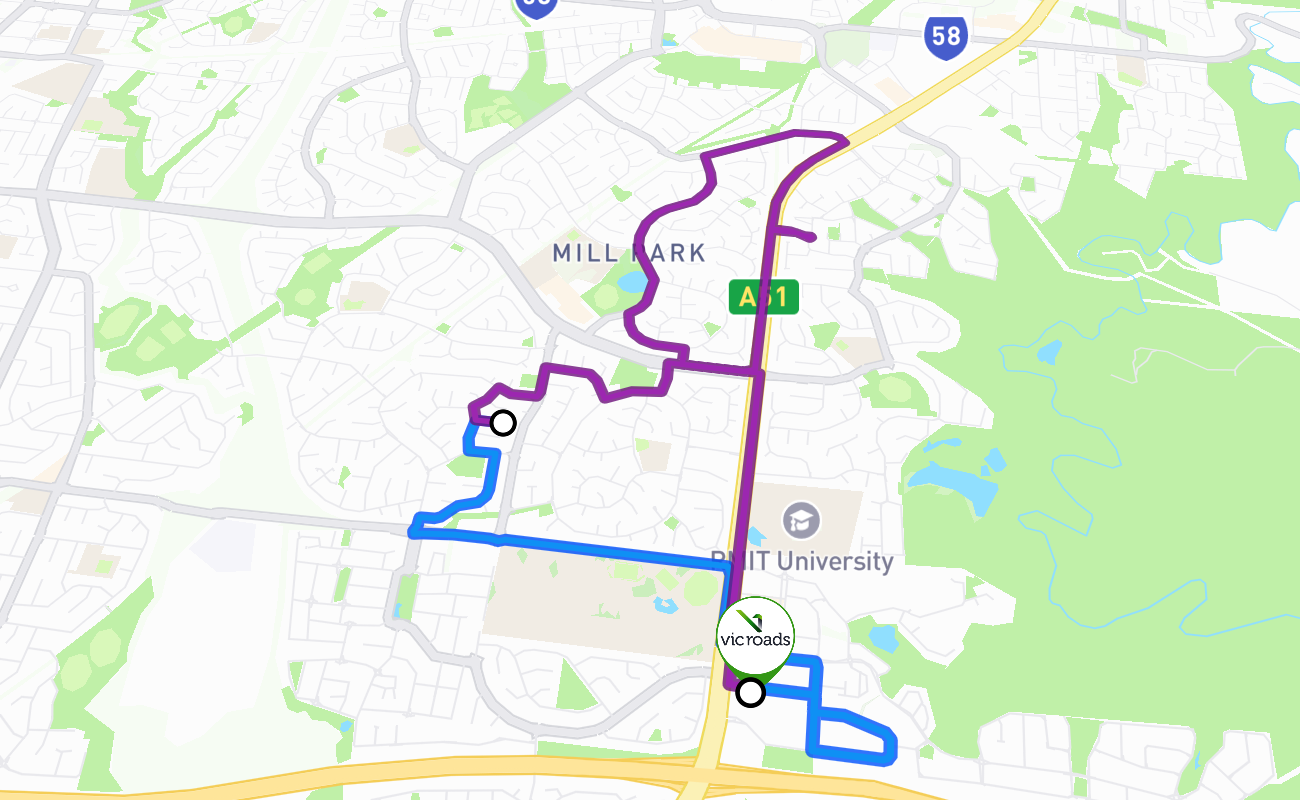
Bundoora (VIC) #26
AUDrive 12 Jun 20252.9K -
Pro
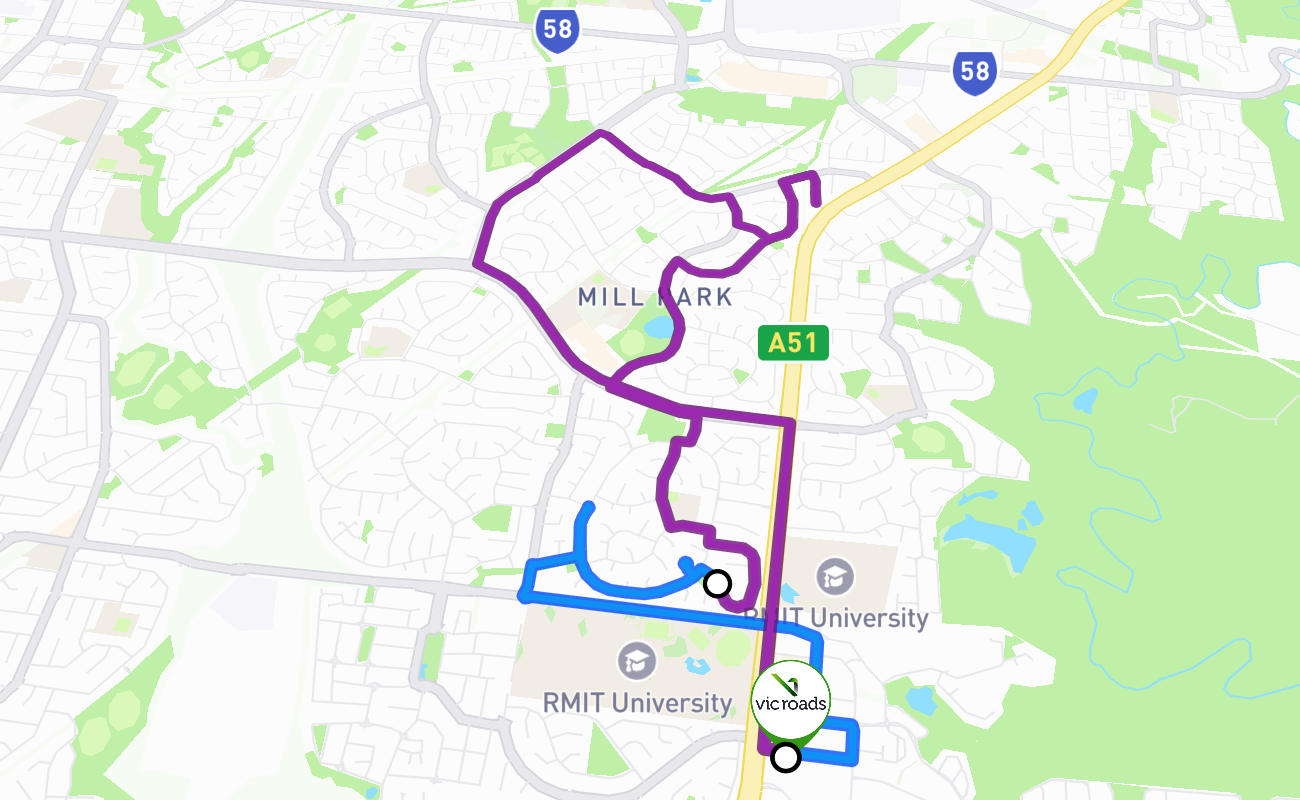
Bundoora (VIC) #24
AUDrive 12 Jun 20252.2K -
Pro
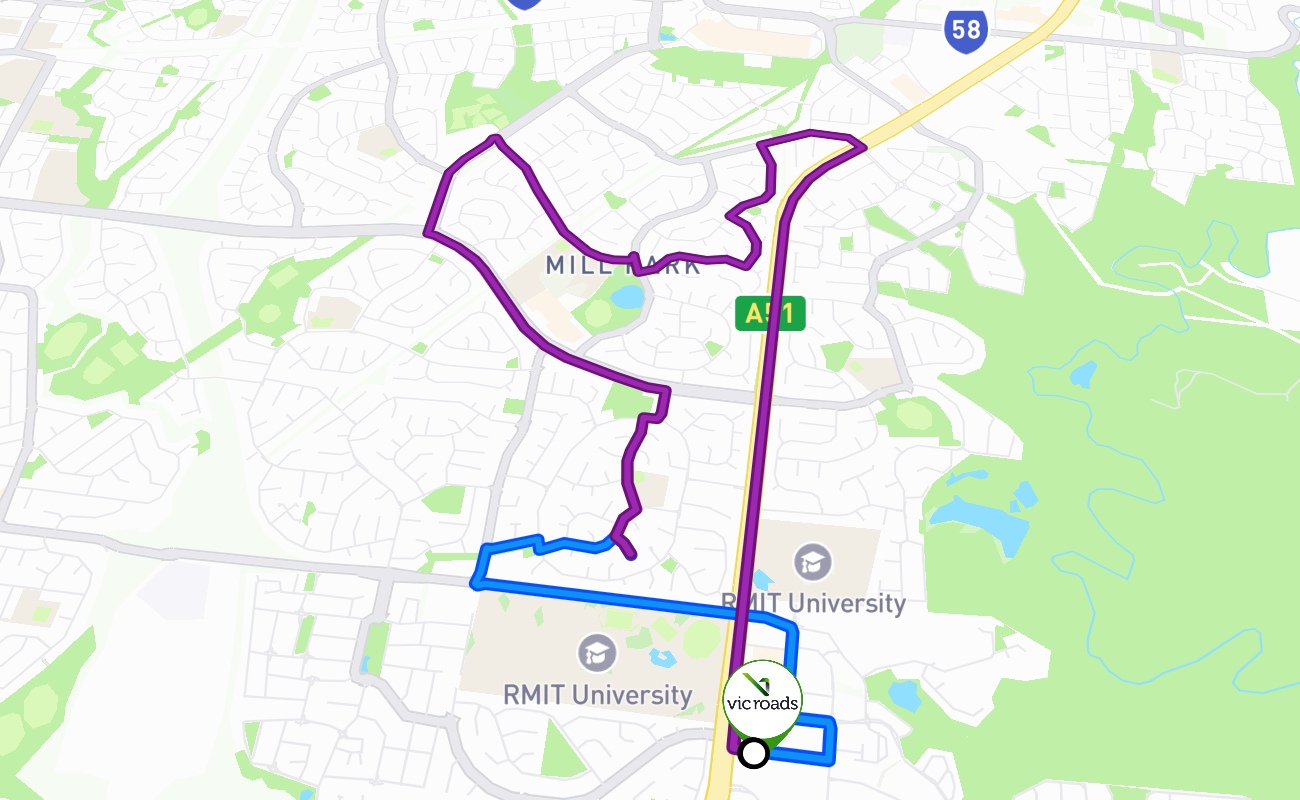
Bundoora (VIC) #22
AUDrive 12 Jun 20252.1K -
Earn Pro rewards
Passed your test?
Contribute your route, get your Pro refunded.
Contribute a Route
General Tips
 Typical Speed Limits
Mix of 60-70 km/h on main roads like Plenty Road, numerous 40 km/h zones around nearby estates and schools, and standard 50 km/h in residential streets. Speed adherence is critical.
Traffic Conditions
Can be heavy with significant congestion on Plenty Road, especially around tram stops and major intersections. Residential streets are quieter but have high pedestrian activity near the university and shopping precincts.
Key Features
Dominated by the presence of trams on Plenty Road. A mix of multi-lane main roads, numerous roundabouts within nearby residential estates, and several nearby schools, making school zones a very high probability.
Common Test Maneuvers
Reverse parallel parking and three-point turns in residential streets, frequent lane changes on busy multi-lane roads, and navigating complex intersections, often involving interactions with trams.
Driving Instructors & Schools at Bundoora
Be the instructor Bundoora learners see first. Learners compare routes and pass rates on this page right before booking their test. Your listing meets them at that exact moment, and every enquiry comes straight to you.
500+ learners a month
see the Bundoora test centre page
Enquiries come straight to you
no commission and no middleman
Free while we launch
early joiners are listed first
Right where they decide
your listing sits with this centre's practice routes
Frequently Asked Questions
How do I book a driving test in Victoria?
You can book your Victorian drive test online through the VicRoads website (vicroads.vic.gov.au), by phone on 13 11 71, or in person at a VicRoads Customer Service Centre. You must have passed both the Learner Permit Knowledge Test and Hazard Perception Test (HPT) before booking.
What is the most common fail reason at Bundoora VicRoads?
Failing to give way when turning right is the most common fail reason at Bundoora. You must yield to all oncoming vehicles before turning. One user reported failing within 5 minutes due to this error. Always wait for a clear gap before making right turns.
What are the requirements for the Victoria driving test?
To take the VicRoads drive test, you must: be at least 18 years old, have held your learner permit for at least 12 months, completed 120 hours of supervised driving (including 10 hours at night) if under 25, and passed the Hazard Perception Test (HPT). You also need a roadworthy registered vehicle.
What areas does the Bundoora driving test cover?
Test routes typically cover the University Hill business park area including Graduate Road, Scholar Drive, and Enterprise Drive. Routes include roundabouts and may require U-turns. The area has moderate traffic and clear road markings.
How much does the Victoria driving test cost?
The VicRoads drive test costs $51.80 plus a $21.50 appointment fee, totalling $73.30. Under the Motorist Package, the first online Learner Permit Knowledge Test and Hazard Perception Test are free. If you fail, you pay the full drive test fee again but the appointment fee is waived if you rebook.
What are the examiners like at Bundoora VicRoads?
Bundoora examiners have positive reviews (3.7 stars overall). Examiner John is frequently praised for being 'really chill', putting candidates at ease, giving clear instructions, and willingly repeating directions when asked.
What is the driving test pass rate in Victoria?
Victoria has the highest driving test pass rate in Australia at 75%, well above the national average of 62%. Even the lowest-performing centre in Victoria (Dandenong at 67%) still exceeds the national average. 9 out of the top 10 pass rate centres in Australia are in Victoria. (Data: EzLicence 2024-2025)
How is the Victoria driving test structured?
The VicRoads drive test takes approximately 30 minutes. It starts with pre-drive checks (seatbelts, mirrors, indicators, wipers, lights), then covers suburban driving and may include higher-speed roads. You will do either a three-point turn OR reverse parallel parking (examiner chooses). The test has two stages covering different road environments.
What is the best time to book my Bundoora driving test?
Early afternoon around 2:00pm-3:00pm is recommended. Avoid Monday mornings and Friday afternoons as these times tend to be busier. Booking an appointment in advance is recommended as walk-ins may experience long wait times.
What are the instant fail items in the Victoria driving test?
Instant fail items include: running a red light, speeding, not stopping at stop signs, failing to give way, causing danger to other road users, any collision, not checking blind spots when changing lanes, and any action requiring examiner intervention. Forgetting to cancel your indicator after a lane change can also result in a fail.
What should I bring to my Victoria driving test?
Bring: your current learner permit, proof of identity, a roadworthy vehicle with current registration and insurance, and your supervising driver (who must hold a full licence for 2+ years). Arrive at least 15 minutes early. The vehicle must have L plates displayed and no warning lights on the dashboard.
What should I know about roundabouts at Bundoora?
The Bundoora test area has several roundabouts. Always give way to vehicles already in the roundabout. Indicate left when entering if turning left, no indicator for going straight, and indicate right then left when turning right or doing a U-turn.
Can I convert my overseas licence to a Victorian licence?
Yes. Drivers from recognised countries (UK, USA, Canada, NZ, EU, Japan, Singapore and others on the Austroads list) can convert directly without tests. Drivers from non-recognised countries including China must pass the Knowledge Test, Hazard Perception Test, and Drive Test. A NAATI certified translation is required for non-English licences.
How do I handle pedestrian crossings at Bundoora?
There are multiple pedestrian crossings on the test routes. You must come to a complete stop when pedestrians are present or waiting to cross. Don't wave pedestrians across - let them decide when to cross. Check for pedestrians before every turn.
What happens if I fail my Victoria driving test?
If you fail, you will receive feedback on what to improve. You can rebook immediately but must pay the drive test fee again ($51.80). There is no limit on attempts. Given Victoria's high 75% pass rate, most candidates pass within 1-2 attempts with adequate preparation.
What are the most common reasons for failing the Victoria driving test?
The most common fail reasons are: not making head checks obvious enough (examiners need to see you turn your head), forgetting to cancel indicators after lane changes, poor mirror checking frequency, failing to give way at roundabouts, speeding in school zones (40km/h), and incorrect hook turn procedure in Melbourne CBD.
What is the pass rate at Bundoora VicRoads?
While official pass rates aren't published, Bundoora is considered to have a moderate pass rate among Melbourne test centres. The clear road layout in the business park area and patient examiners make it a reasonable choice for test-takers.
What is a hook turn and will it be in my driving test?
A hook turn is a right turn made from the left lane, unique to Melbourne CBD where tram tracks occupy the centre of the road. You pull into the left lane, wait for the cross-street light to turn green, then complete your right turn. Hook turns are unlikely in the drive test unless your test centre is in the CBD area (e.g., Carlton).
How many hours of practice do I need before the Victoria test?
If under 25, you must complete 120 hours of supervised driving (including 10 night hours) recorded in your logbook. This is one of the highest requirements in Australia. If 25 or older, there is no mandatory hour requirement, but VicRoads recommends extensive practice. Most successful candidates have at least 5-10 hours of professional lessons.
How does Bundoora compare to other Melbourne test centres?
Bundoora is considered moderate difficulty - easier than inner-city centres like Carlton (no trams) but requires attention to give way rules. The University Hill business park area has clearer roads than suburban residential areas.
Which Melbourne test centres have the highest pass rates?
Based on EzLicence data (2024-2025), Melbourne test centres with the highest pass rates are: Frankston (~80%, the highest in all of Australia), Geelong (77%), Werribee (~75%), Melton (~74%), and Bundoora (~73%). All Victorian centres exceed the national average of 62%.
What should I bring to my Bundoora driving test?
Bring your current learner permit, proof of identity, and a roadworthy vehicle with valid registration. Book an appointment in advance to avoid long wait times. Arrive at least 15 minutes early to complete paperwork.
Which Melbourne test centres are more challenging?
While all Victorian centres have pass rates above the national average, the more challenging ones include: Dandenong (67%), Heatherton (64%), and Broadmeadows (69%). Carlton is perceived as difficult by Chinese learners due to tram tracks and CBD traffic, though its pass rate is around 70%.
What is the Victoria learner permit and P-plate system?
Victoria uses a Graduated Licensing System: Learner Permit (age 16+), P1 Red Probationary (age 18+, after 12 months on L), P2 Green Probationary (after 1 year on P1), and Full Licence (after 3 years on P2 or age 22). P1 drivers have a zero BAC limit and passenger restrictions at night.
Any tips for nervous drivers at Bundoora?
Bundoora examiners like John are known for being patient and putting candidates at ease. If you need instructions repeated, just ask. Focus on giving way properly at intersections and take your time - rushing leads to mistakes.
Do I need professional driving lessons before the Victoria test?
While not mandatory, professional lessons are highly recommended. Most first-time passers have 5-10+ hours with a qualified instructor. Victorian instructors know the specific test routes and criteria. Each hour with an instructor counts as 3 hours in your logbook (up to 10 instructor hours = 30 logbook hours).
What documents do I need to convert an overseas licence in Victoria?
You need: your original overseas licence, NAATI certified translation (if not in English), passport and visa, proof of Victorian address (utility bill or bank statement), completed application form, and payment. Permanent residents must convert within 6 months. Temporary visa holders can drive on their overseas licence with an English translation.
Other VIC Driving Test Centres
Coolaroo Licence Testing Centre
Coolaroo
Broadmeadows Customer Service Centre
Broadmeadows
Carlton Customer Service Centre
Carlton
Mitcham Testing and Inspection Centre
93A Heatherdale Road
Deer Park Licence Testing Centre
Deer Park
Heatherton Customer Service Centre
Heatherton
Office discussion
No comments yet
Share how your practice went. It helps the next learner.