Silverwater Driving Test Routes
Book Test-
Pro
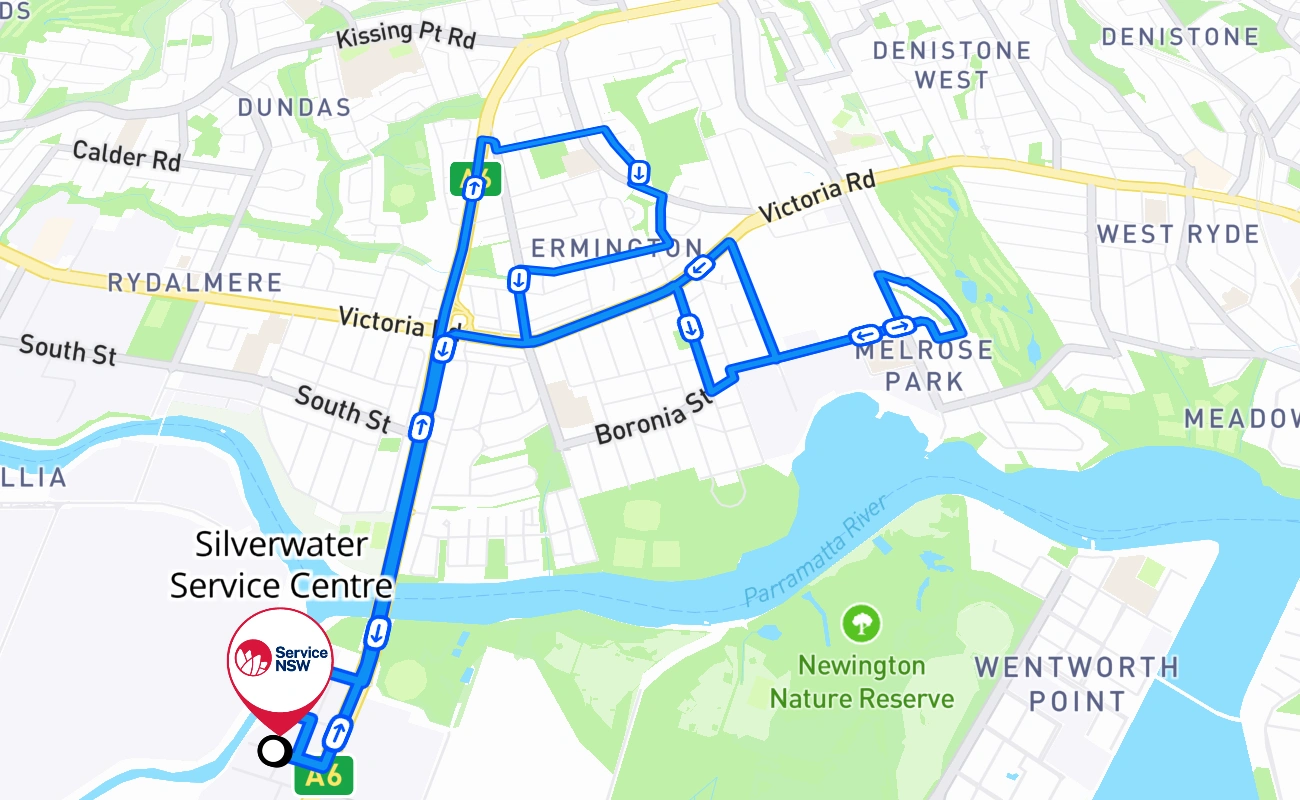
Silverwater (NSW) #2134
 AUDrive 04 Sep 2026796
 -
Pro
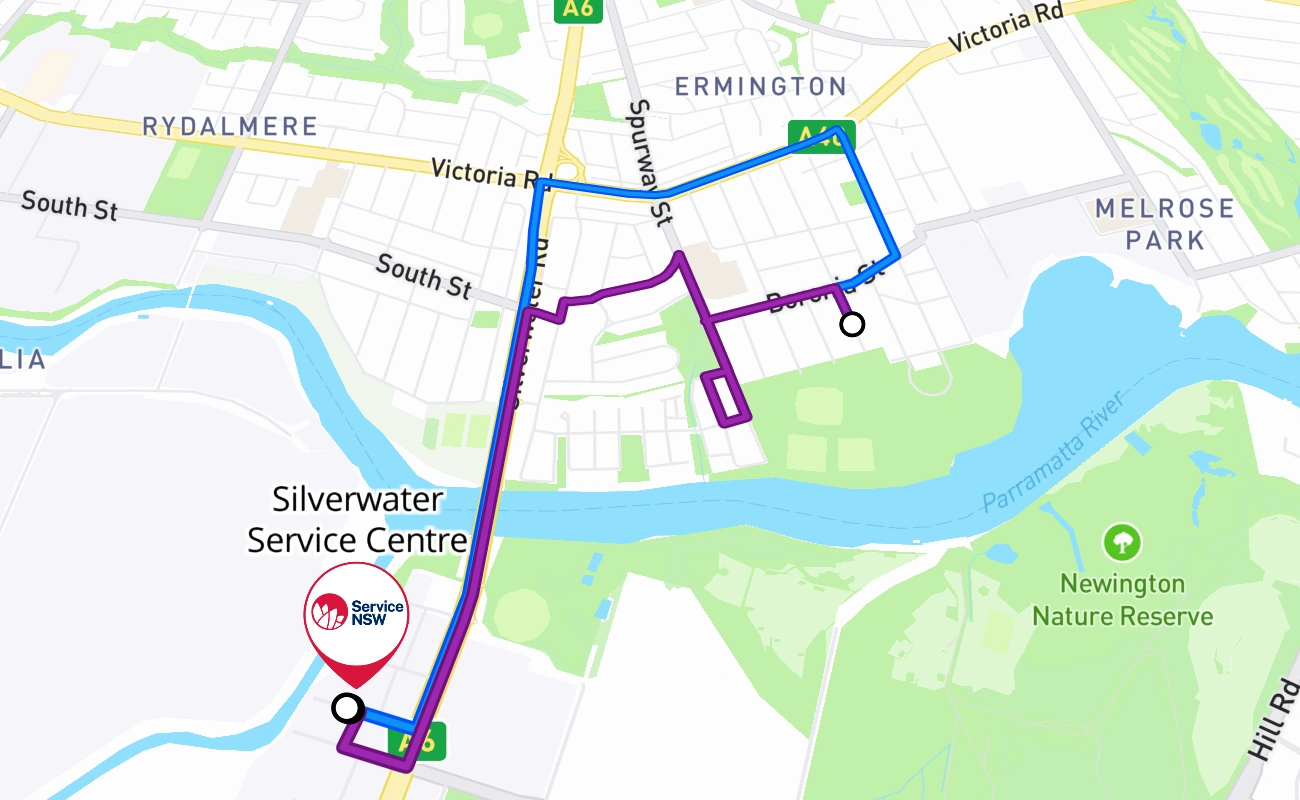
Silverwater (NSW) #159
AUDrive 13 Jul 20254.5K -
Pro
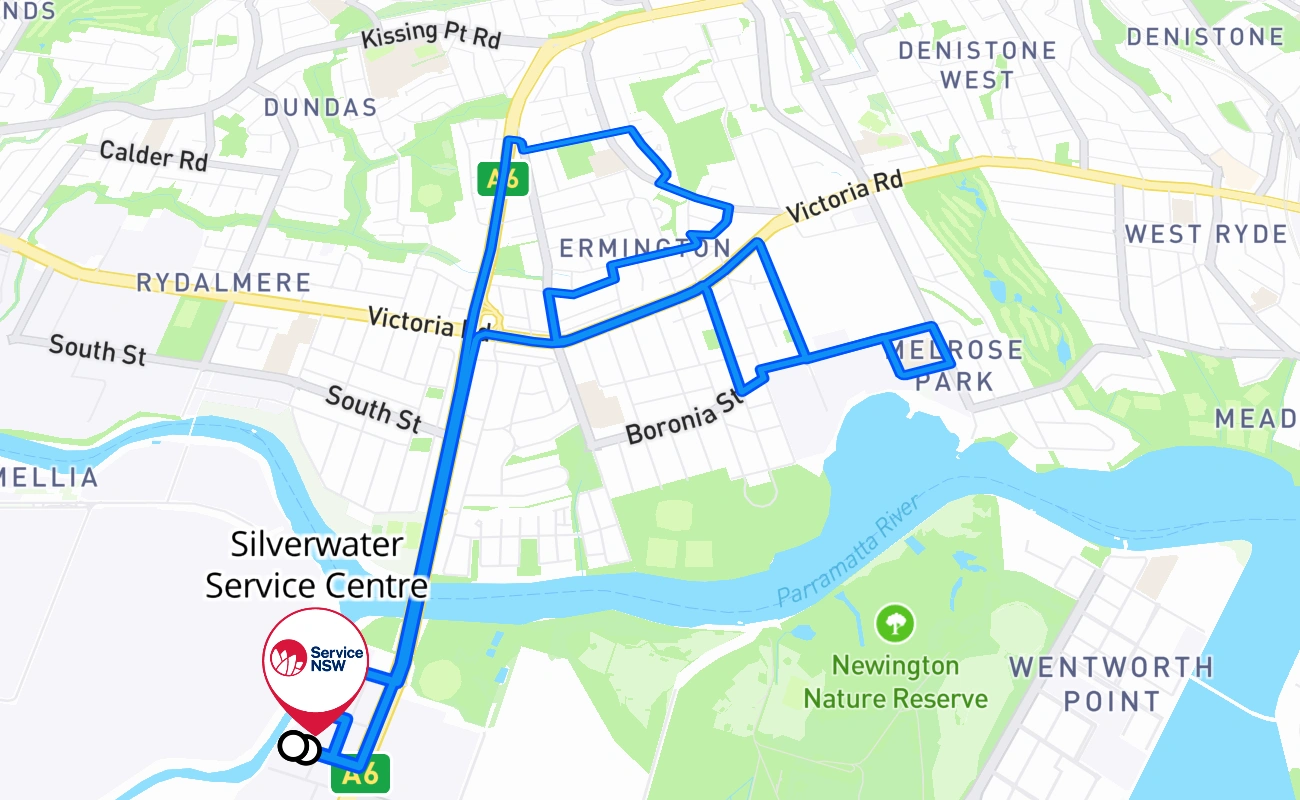
Silverwater (NSW) #75
AUDrive 21 May 20243.1K -
Pro
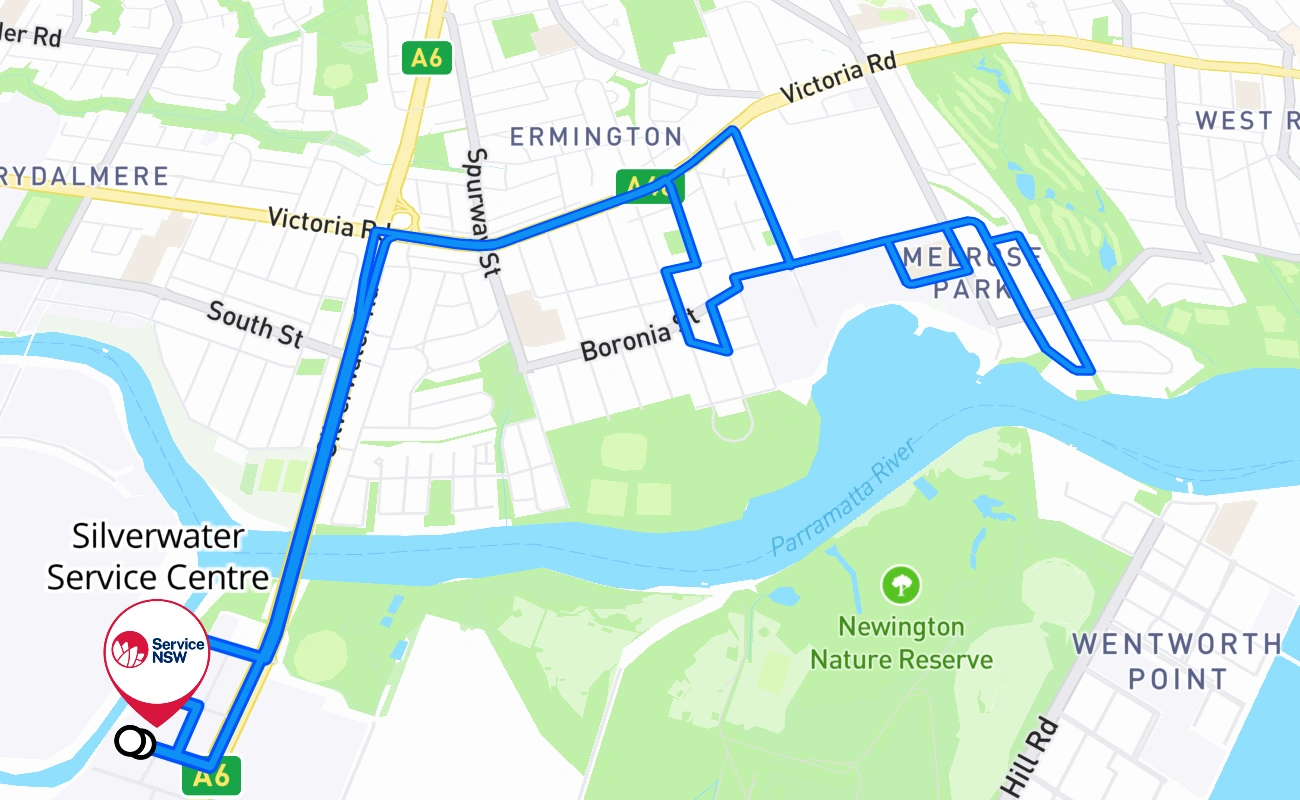
Silverwater (NSW) #76
AUDrive 19 May 20242.6K -
Pro
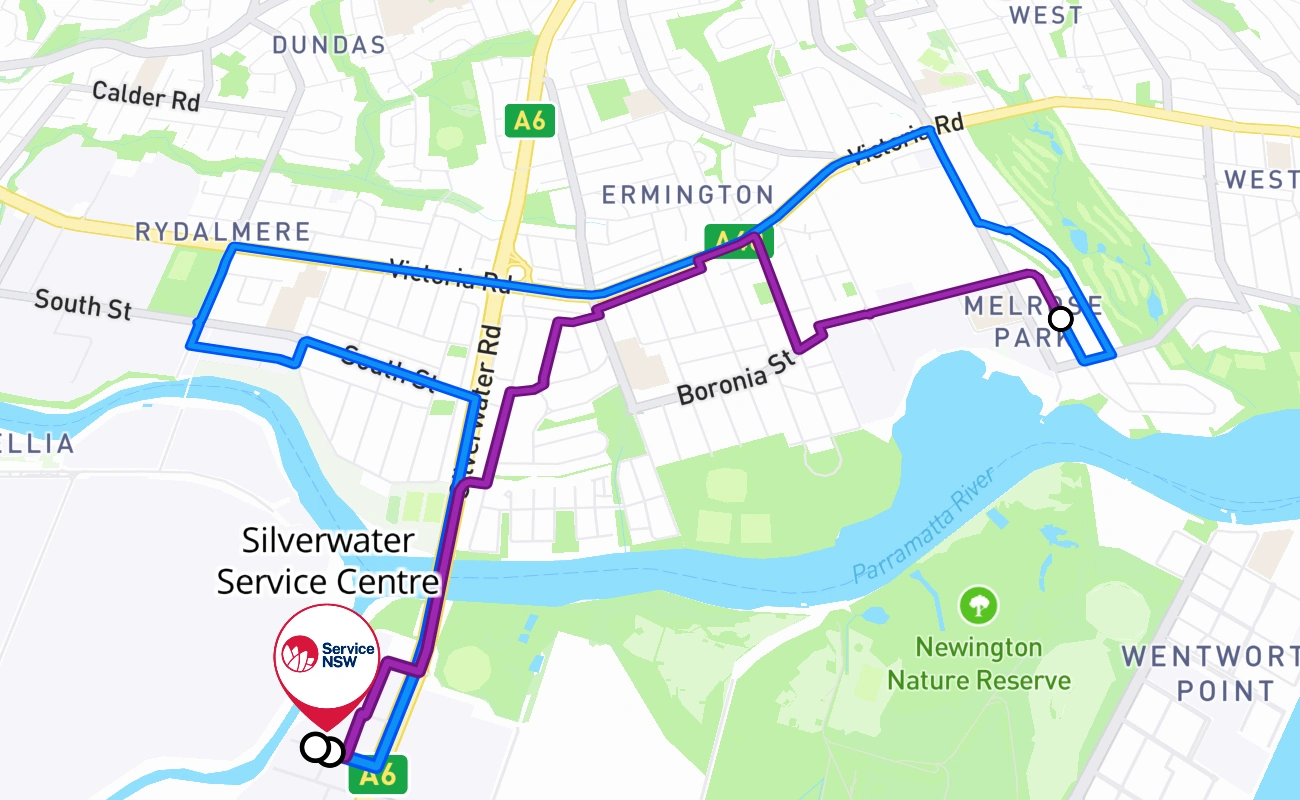
Silverwater (NSW) #51
AUDrive 17 Feb 20243.4K -
Free
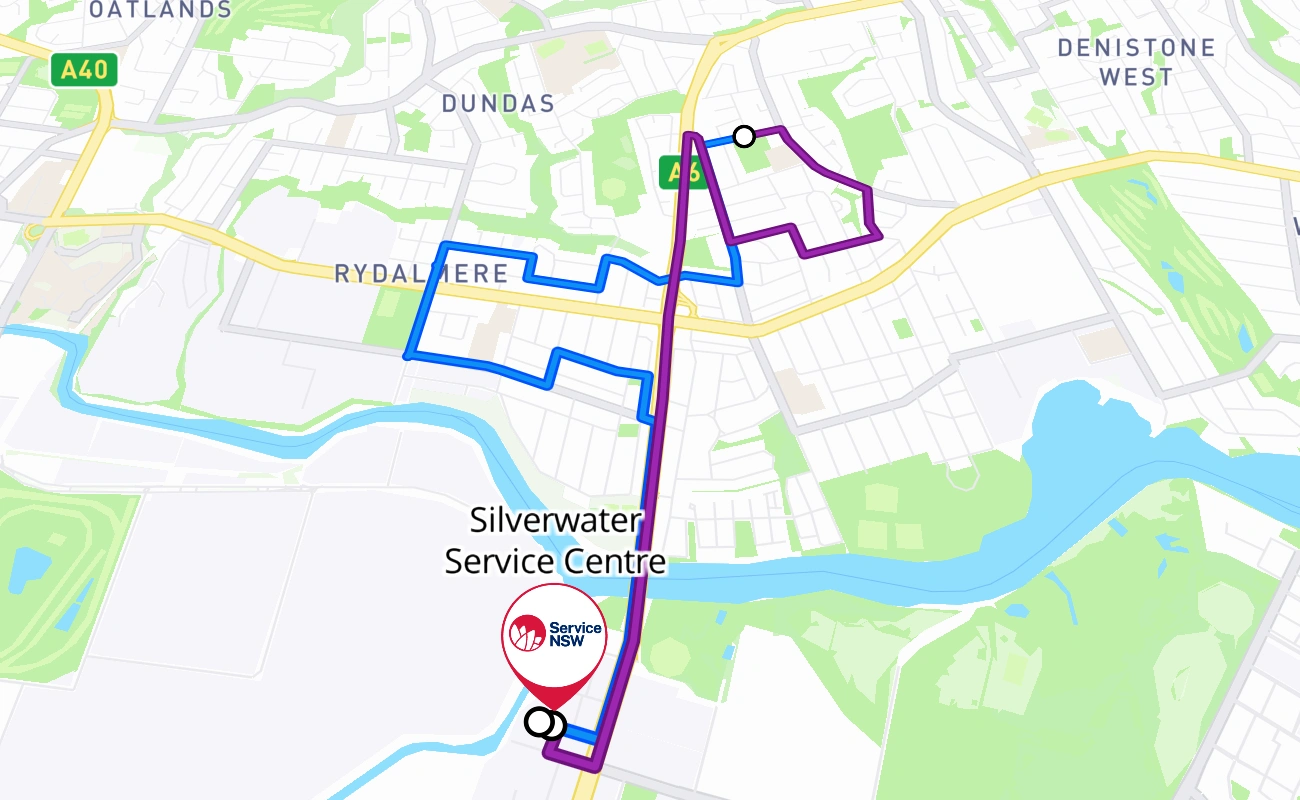
Silverwater (NSW) #52
AUDrive 17 Feb 20243.1K -
Pro
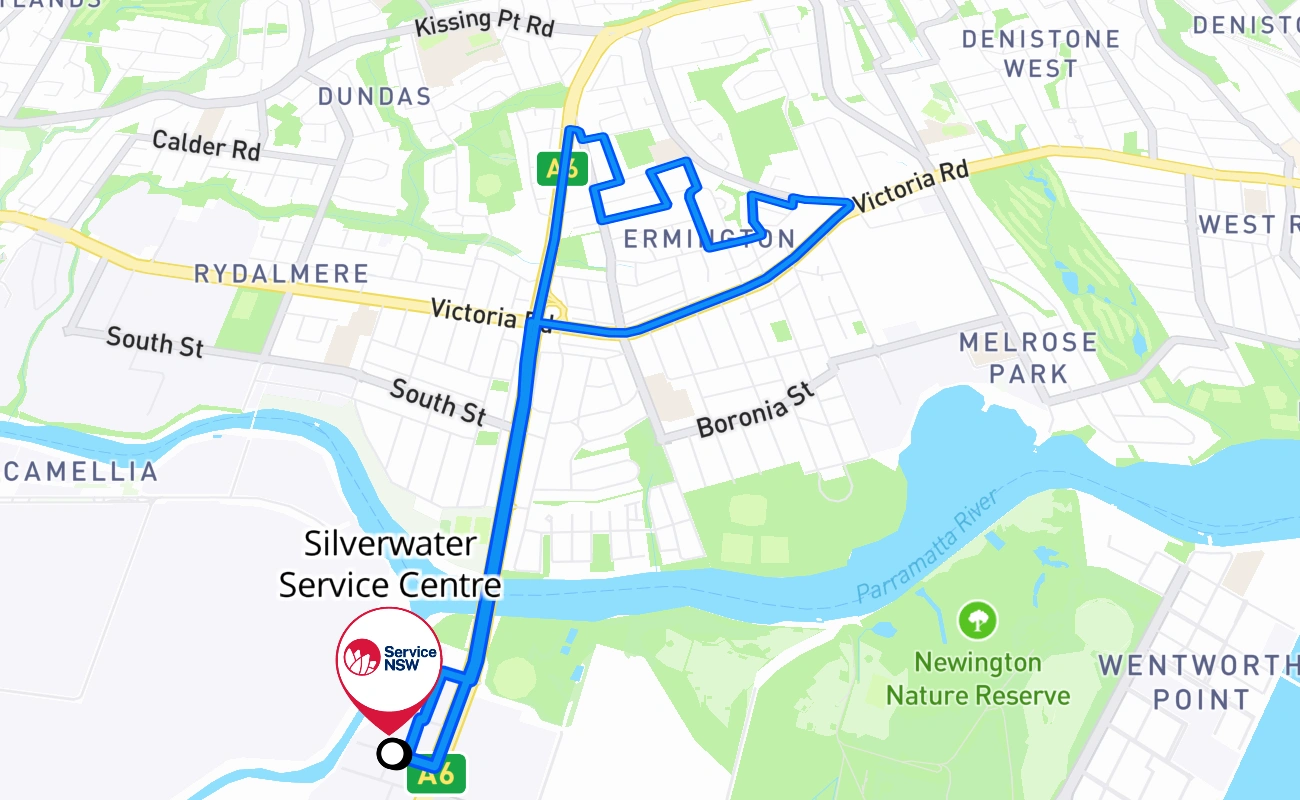
Silverwater (NSW) #74
AUDrive 30 Jan 20241.7K -
Pro
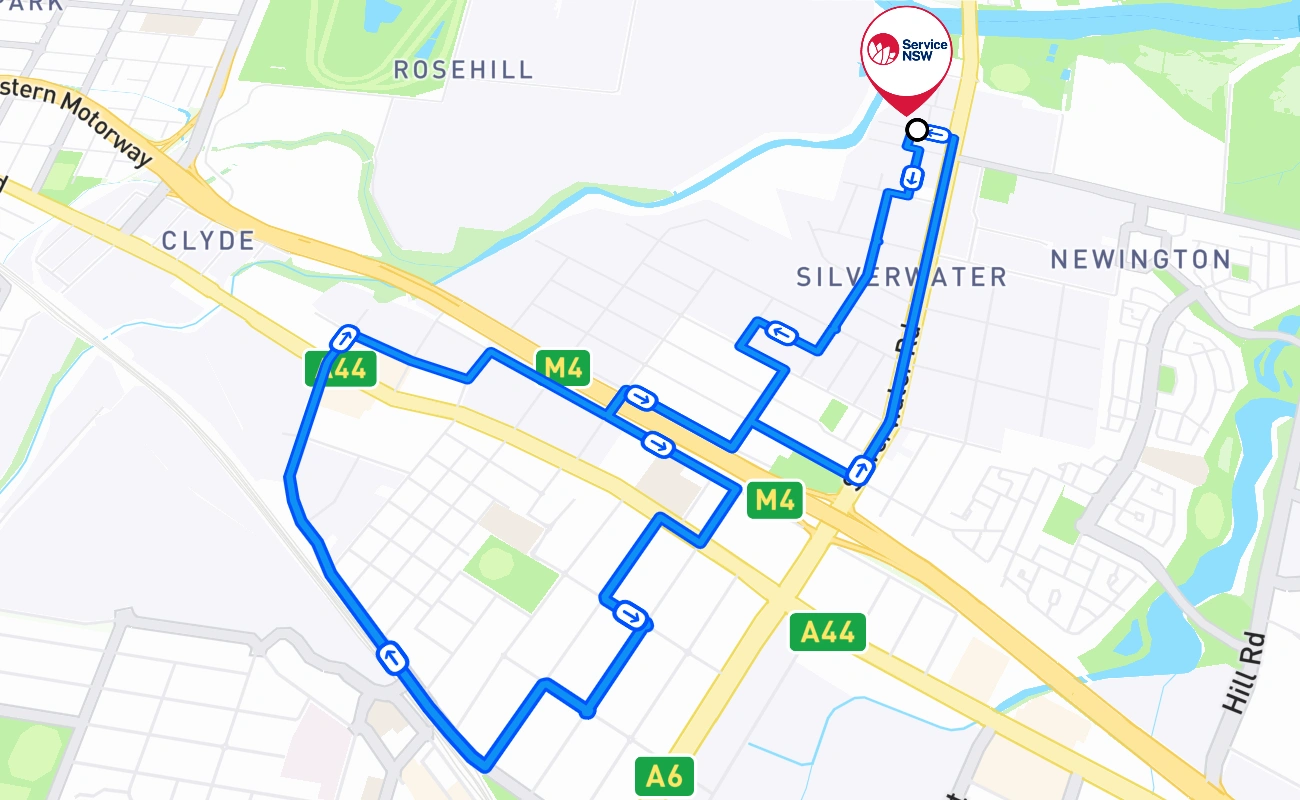
Silverwater (NSW) #73
AUDrive 30 Jan 20242K -
Pro
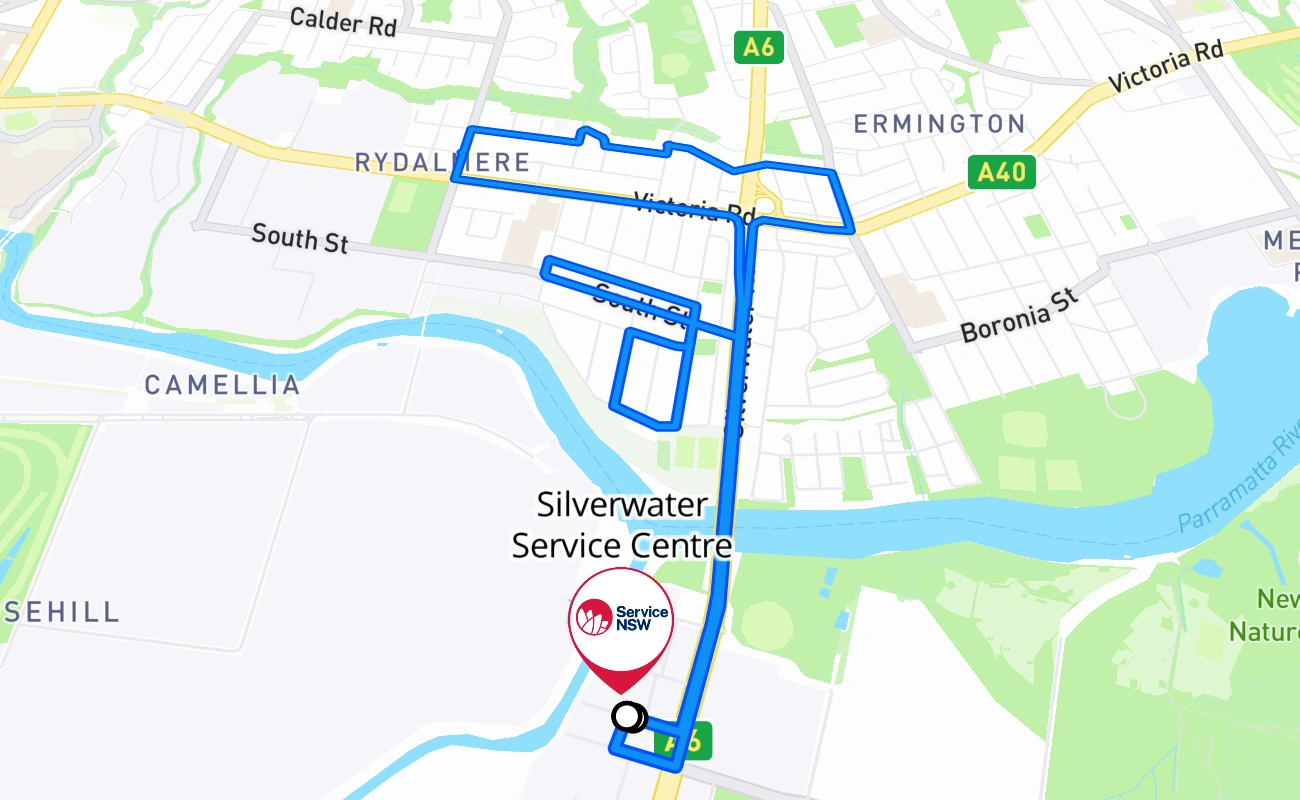
Silverwater (NSW) #72
AUDrive 30 Jan 20241.8K -
Pro
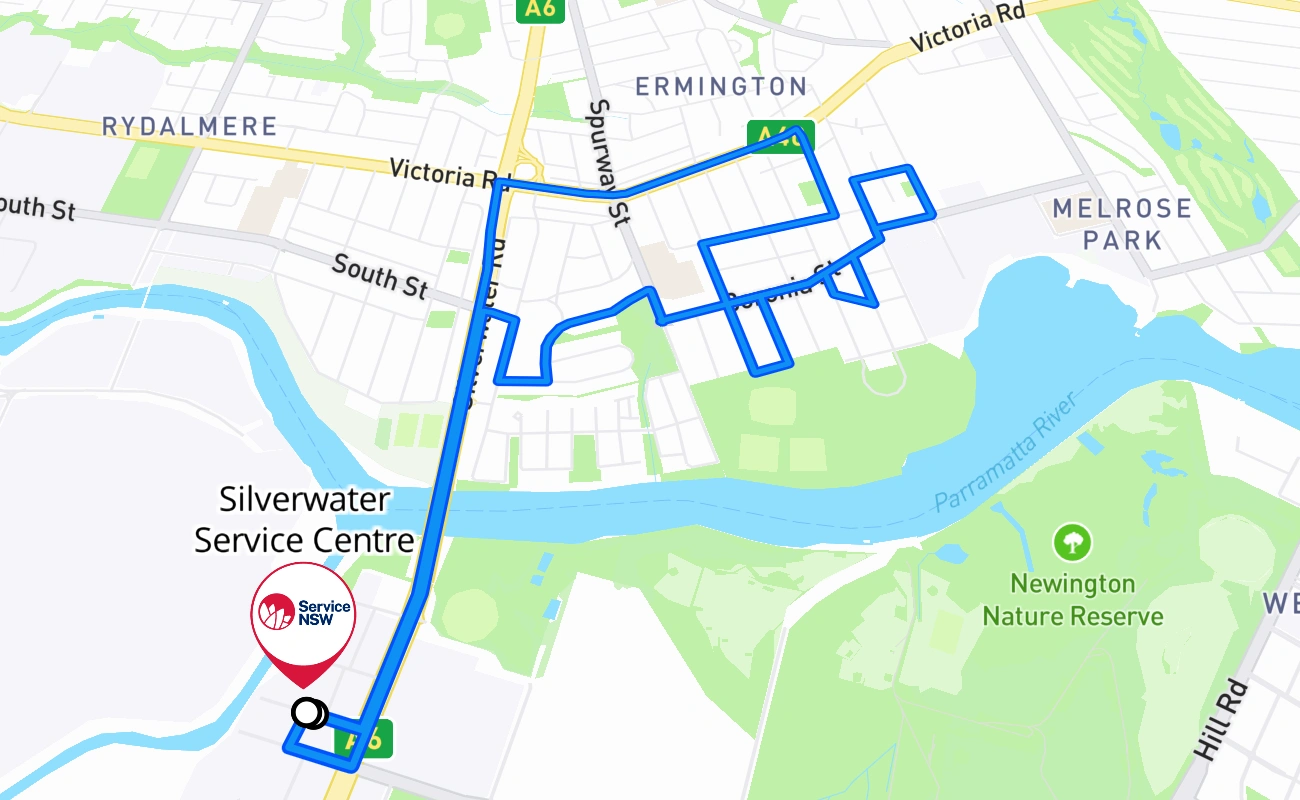
Silverwater (NSW) #71
AUDrive 30 Jan 20241.7K -
Earn Pro rewards
Passed your test?
Contribute your route, get your Pro refunded.
Contribute a Route
General Tips
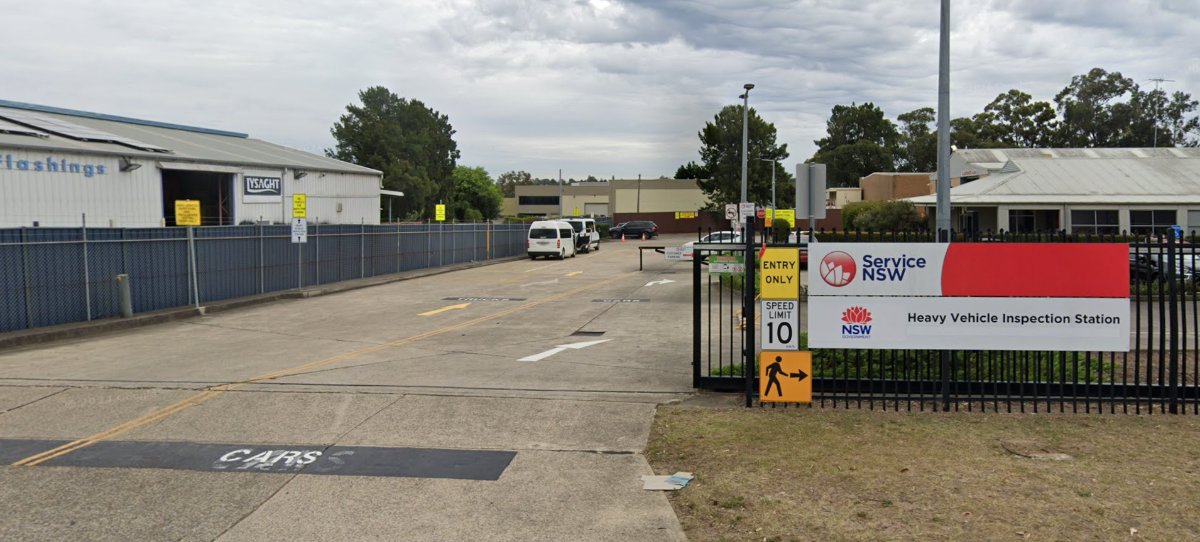
Silverwater is dominated by industrial areas and major connecting roads like Silverwater Road (A6), Victoria Road, and the M4 motorway proximity. Traffic conditions are often heavy, featuring a significant number of trucks and heavy vehicles, which requires greater stopping distances and awareness. The test will almost certainly involve navigating multi-lane arterial roads with speeds of 70-80 km/h. Key challenges include merging safely with high-speed traffic, making lane changes around large trucks, and navigating intersections designed for industrial flow. While residential streets are used for manoeuvres, the core of the test is focused on handling the vehicle confidently and safely in a demanding, high-speed, and industrial traffic environment. Strong lane discipline and observation are paramount.
Driving Instructors & Schools at Silverwater
Be the instructor Silverwater learners see first. Learners compare routes and pass rates on this page right before booking their test. Your listing meets them at that exact moment, and every enquiry comes straight to you.
850+ learners a month
see the Silverwater test centre page
Enquiries come straight to you
no commission and no middleman
Free while we launch
early joiners are listed first
Right where they decide
your listing sits with this centre's practice routes
Frequently Asked Questions
What are the main challenges at Silverwater driving test centre?
Silverwater is dominated by industrial areas with heavy traffic including many trucks. Main challenges include: 1) Merging onto 70-80 km/h multi-lane arterial roads (Silverwater Road A6, Victoria Road), 2) Making lane changes around large trucks requiring greater stopping distances, 3) Navigating intersections designed for industrial flow, 4) Handling high-speed traffic near M4 motorway.
What is the most common reason for failing at Silverwater?
Head checks are the #1 fail point. Examiners at Silverwater are very strict - you must turn your head past your shoulder, and it must be the LAST action before changing lanes. After doing a head check, do not look at anything else (like the gear shift) or it will be counted as 'not done'. One candidate failed 3 times due to head check errors alone.
How strict are the stop signs at Silverwater?
Extremely strict. You must stop COMPLETELY for 3 full seconds at stop signs. The vehicle must be fully stationary. One candidate failed when they stopped for 3 seconds but then looked at the gear shift after their head check when starting off - the examiner said they didn't properly complete the head check.
What about school buses at Silverwater?
School buses with flashing lights are a common fail point. When you see a school bus with flashing lights, you MUST slow down to 40 km/h, even if on a different road. One candidate failed for not noticing a school bus on their right side and exceeding 40 km/h. Watch carefully for yellow flashing lights.
When is the best time to book a test at Silverwater?
Early morning slots (8-9am) are recommended. These times have better availability when booking appointments. The traffic is also slightly lighter in early morning compared to peak industrial hours. Use the 'Driving Test Routes' app to check test routes with 85%+ accuracy.
How do examiners at Silverwater compare to other centres?
Silverwater examiners are generally stricter than average (Google rating 2.7 stars). Named examiners include: Jen (professional, clear instructions, friendly), Paul and Cassandra (professional and honest), ADAM (mixed reviews - some say calm and friendly, others warn to avoid). One examiner who wears a headscarf is noted as particularly strict about following distance at red lights.
What should I do if my English is not good at Silverwater?
Tell the examiner at the start that your English is limited. Examiners will speak more slowly and use hand gestures to help you understand. This is completely acceptable and they are trained to accommodate language barriers. Don't be embarrassed - clear communication helps everyone.
What are the speed limits I'll encounter at Silverwater?
Expect varied speeds: 1) Arterial roads (Silverwater Road, Victoria Road) are 70-80 km/h, 2) Residential streets are 50 km/h, 3) School zones are 40 km/h during school hours (watch for flashing lights), 4) Industrial access roads may be 60 km/h. You must reach the speed limit but never exceed it - even 1 km/h over is an instant fail.
What specific roads will I drive on during the Silverwater test?
The test area includes major arterial roads like Silverwater Road (A6) and Victoria Road with 70-80 km/h speeds. You'll also navigate industrial side streets and some residential areas. The test focuses heavily on multi-lane roads with trucks and high-speed merging. Routes are predictable - use route apps to practice beforehand.
How should I handle trucks and heavy vehicles at Silverwater?
Industrial area means many trucks. Key tips: 1) Maintain longer following distances (trucks need more stopping distance), 2) When changing lanes near trucks, ensure you have plenty of space, 3) Be extra careful with blind spots around large vehicles, 4) Don't take risks - wait for safe gaps even if it takes longer.
What is the 'never take risks' rule at Silverwater?
Silverwater examiners strictly enforce safe gap selection. One candidate failed for merging when the gap to oncoming traffic was deemed insufficient. NEVER take risks - if you're unsure whether a gap is safe, wait for the next one. It's better to wait 30 seconds than to fail the test.
Should I use a driving instructor before testing at Silverwater?
Highly recommended. One user took 4 attempts without an instructor and regretted it. Professional instructors familiar with Silverwater routes can teach you the specific standards examiners expect (especially head checks and stop signs). Even 5-10 hours of professional lessons can make a big difference.
What if I fail multiple times at Silverwater?
If you fail 2-3 times at Silverwater, consider switching to an easier test centre. Silverwater is known for strict examiners and challenging industrial traffic. Castle Hill (70% pass rate) or Rockdale (68% pass rate) are much easier alternatives. Chatswood and Bondi Junction (43% each) should be avoided.
How does Silverwater's difficulty compare to other Sydney centres?
Silverwater is considered one of the more difficult centres in Sydney due to heavy industrial traffic, trucks, and strict examiners. The 2.7 star Google rating (581 reviews) reflects this. Compare to: Castle Hill 70% pass rate (easiest), Rockdale 68%, average Sydney 56%, Chatswood/Bondi Junction 43% (hardest).
What following distance do I need at traffic lights in Silverwater?
When stopped at red lights, maintain proper following distance from the car ahead. One examiner (described as wearing a headscarf) is particularly strict about this. You should be able to see the rear tires of the car in front touching the road. Don't stop too close.

Office discussion
No comments yet
Share how your practice went. It helps the next learner.