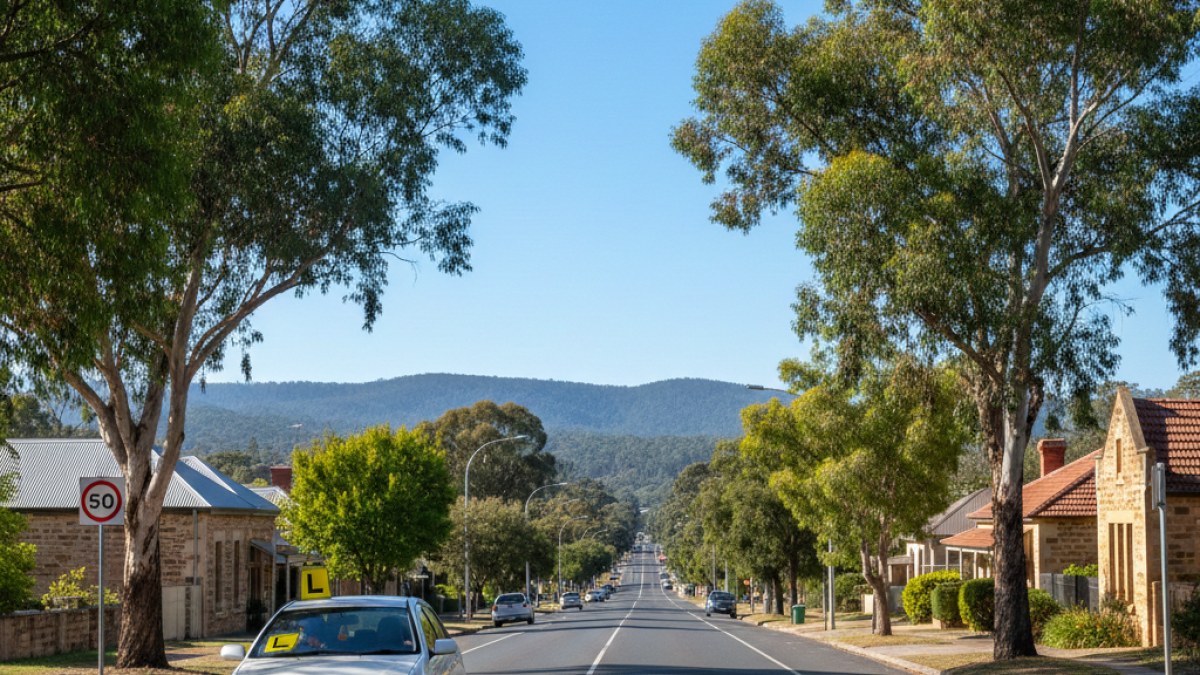
South Australia's driving test, the VORT (Vehicle On Road Test), costs roughly $350 per attempt. That's the most expensive in Australia, where most states charge $67-$180. When you're paying that much for each shot, choosing the right test location matters more than usual.
Unlike NSW, QLD, and WA, South Australia doesn't publish pass rate data by test centre. But a 2023 Budget Direct survey found over 80% of South Australians passed on their first attempt, above the national average of ~71%. The road environments around each hub vary significantly, and that variance can affect your chances.
How SA Testing Works
SA's system is different from other states. Here's what you need to know:
The VORT is not conducted at Service SA centres. You meet an accredited VORT examiner at a designated hub starting point, usually a car park near a shopping centre or reserve. The examiner gets in your car (or provides a dual-control vehicle), and you drive a predetermined route from that hub. Routes are randomly allocated by the Registrar of Motor Vehicles, not chosen by the examiner or you.
After passing, you go separately to a Service SA centre to process your licence paperwork.
Your training instructor cannot be your examiner. SA law requires your VORT examiner to be someone who didn't teach you to drive. There are about 90 active VORT examiners across SA.
Adelaide VORT Hubs
Adelaide has seven metropolitan hub locations where VORT tests begin:
Firle / Tranmere (Eastern Suburbs)
Meeting point: Firle Plaza northeast corner, Margaret & Glynburn Roads
One of Adelaide's most popular hubs. Routes extend through a mix of commercial areas around Firle Plaza, residential streets, and busy arterial roads. Glynburn Road, Magill Road, and Payneham Road are all major corridors that may feature on your route.
Road characteristics:
- Relatively flat with gentle inclines towards the Adelaide Hills foothills
- Busy arterial roads with multiple lanes and frequent speed zone transitions
- Traffic lights, multi-lane intersections, and roundabouts
- Moderate to heavy traffic, especially on Magill Road and Payneham Road
Best for: Candidates who've practised extensively in the eastern suburbs. The busy arterials mean more traffic to manage, but the road infrastructure is well-maintained and predictable.
Elizabeth (Northern Suburbs)
Meeting point: Fremont Park, 2nd car park entrance on Yorktown Road (east of Main North Road)
Elizabeth was designed as a planned community, which means grid-like street patterns, generous road widths, and predictable traffic flow. Routes radiate from the hub through residential streets and along Main North Road.
Road characteristics:
- Flat terrain, no hill starts on the general driving section
- Wide streets with clear lane markings
- Several schools along likely routes, school zone compliance is critical
- Large roundabouts in residential areas
- Mix of suburban streets and Main North Road arterial traffic
Best for: Candidates who prefer flat, wide roads with lower traffic volumes. But watch for school zones, there are several along common routes, and missing one is an instant fail.
Kilkenny (Inner West)
Meeting point: Arndale Shopping Centre northeast car park, opposite Big W
An inner-suburban hub near the major Arndale Shopping Centre. Routes include a mix of quiet residential streets and busier roads near Port Road. Adelaide's inner west has many roundabouts.
Road characteristics:
- Flat terrain
- Frequent roundabouts (single and multi-lane)
- Transitions between quiet residential streets and busier arterials
- Shopping centre traffic and pedestrian activity
- Moderate traffic levels
Best for: Candidates comfortable with roundabouts. The inner west is roundabout-heavy, so solid roundabout technique matters here more than at some other hubs.
Flinders Park (Western Suburbs)
Meeting point: Tedder Reserve / Pooch Park car park, Findon Road
A suburban hub with routes through typical western suburbs residential streets. Nearby access to Grange Road and Henley Beach Road means some routes may include busier corridor driving.
Road characteristics:
- Flat western suburbs terrain
- Suburban intersections and traffic lights
- Residential streets with standard 50 km/h limits
- Moderate traffic, less intense than the eastern suburbs hubs
Best for: Candidates who want a balanced suburban test without the heavy arterial traffic of Firle or the school zone density of Elizabeth.
Port Adelaide (Western/Port Area)
Meeting point: Minories Street, southern end car park (between Dale & Leadenhall Streets)
The Port Adelaide hub sits in a historic commercial area with some industrial influence. Routes may include older suburban streets, one-way sections, and roads with heavier commercial vehicle traffic.
Road characteristics:
- Flat, coastal area
- Older street layouts with some narrow roads
- One-way streets in some sections
- Heavier commercial and port-related traffic
- Varied road widths
Best for: Candidates familiar with the Port Adelaide area. The commercial traffic and older street layouts add complexity that other suburban hubs don't have.
Glandore (Southern Inner Suburbs)
Meeting point: Community Centre car parks, Clark Avenue
Only 6 km from the CBD, Glandore is the most inner-city hub in Adelaide. Routes pass near South Road (a major arterial) and the tram corridor, an unusual hazard not found at other hubs.
Road characteristics:
- Flat terrain
- Inner-city traffic density
- Proximity to South Road and its complex intersections
- Tram corridor awareness required (Adelaide's tram runs through the northern part of this area)
- Varied speed zones
Best for: Candidates who've practised around the inner southern suburbs. The tram corridor adds a layer of complexity, know the rules for tram tracks before testing here.
Mount Barker (Adelaide Hills: Regional)
Meeting point: Mount Barker township
The only non-metropolitan hub. Routes extend through the Mount Barker township and into the Adelaide Hills, including roads to Woodside, Brukunga, and Nairne. This is genuine hill driving with steep grades, curves, and rural conditions.
Road characteristics:
- Hilly terrain with genuine elevation changes
- Winding roads with limited visibility around corners
- Speed transitions between 50 km/h township and 80 km/h rural zones
- Narrow country lanes, occasional gravel edges
- Lower traffic but requires hazard awareness for curves and wildlife
Best for: Only if you live in the Hills and have extensive experience on hill roads. Don't choose Mount Barker to avoid city traffic, the hill driving and curve management are harder than suburban intersections.
The VORT Format
The VORT takes about 45 minutes and has two scored parts:
Part 1: General Driving (90% of your score)
You drive a predetermined route through a mix of road environments. The examiner assesses you on:
- Lane changes and merging
- Turning at traffic lights, stop signs, and give-way signs
- Turning onto and from busy roads
- Roundabout navigation
- Interaction with other road users (pedestrians, cyclists, other cars)
The examiner uses the System of Car Control sequence: centre mirror → signal → brake. Every manoeuvre is assessed against this sequence. Each criterion is marked Yes/No/Not Applicable on the recording sheet.
Part 2: Five Slow-Speed Manoeuvres (10% of your score)
| Manoeuvre | Notes |
|---|---|
| Hill start | Moving off on a gradient |
| Angle park | Nose-in parking |
| U-turn | Full 180° turn |
| Three-point turn | Standard reverse-assisted turn |
| Reverse parallel park | Must finish within 30 cm of the kerb |
Each manoeuvre is pass/fail, 2 marks if you pass, 0 if you fail. No partial credit.
Passing Score
- 90% minimum overall score required
- 100% road law compliance: any road law breach (speeding, running a red, failing to stop) is an instant fail and the test ends immediately
- You receive a copy of the VORT recording sheet whether you pass or fail
Costs
| Item | Cost |
|---|---|
| VORT (examiner's vehicle) | ~$350 |
| VORT (your own vehicle) | ~$256 |
| VORT + lessons package | $600-$1,200 |
| CBT&A initial assessment | ~$300 |
| Learner permit | ~$79 |
| P1 licence | ~$79 |
Costs vary by examiner. The $350 figure includes dual-control vehicle use; if you bring your own roadworthy, registered vehicle, some examiners charge around $256.
Re-test: If you fail, you must wait 14 days before testing again, and you pay the full fee again. At $350 per attempt, investing in a few extra lessons before your test is almost always cheaper than a second attempt.
Test Time Restrictions
| Period | Earliest Start | Latest Start |
|---|---|---|
| Sep 1 - Mar 31 | 7:30 am | 6:30 pm |
| Apr 1 - Aug 31 | 7:30 am | 4:15 pm |
| Sundays/Public holidays | 10:00 am | As above |
| Christmas Day / Good Friday | No testing | No testing |
SA School Zone Rules
SA's school zone system is unique in Australia. The state has two types:
- 25 km/h zones: active whenever children are present, flashing lights are on, or flags are displayed. These operate 24/7.
- 40 km/h zones: on major roads near schools, active during morning and afternoon peaks on school days.
Missing a school zone speed change is an instant fail. When in doubt, 25 km/h is always safe.
VORT vs CBT&A: Two Paths to Your Licence
SA offers two testing pathways:
| VORT | CBT&A (Logbook) | |
|---|---|---|
| Format | Single 45-min test | 30 tasks completed over time |
| Pass threshold | 90% | 80% competency |
| Examiner | Independent (can't be your instructor) | Your training instructor |
| Road law breach | Instant fail, 14-day wait | Reassessment on same day |
| Cost per attempt | ~$350 | Higher total (multiple lessons) |
| Speed | Quick for confident drivers | Longer, self-paced |
| Best for | Confident drivers who want it done fast | Nervous drivers who want gradual assessment |
The CBT&A pathway is widely considered easier due to the lower 80% threshold and familiar examiner, but it costs more overall because you need multiple paid lessons to complete the 30 tasks.
Common Reasons for Failing
1. Vehicle Fails Pre-Drive Check
SA's pre-drive inspection is more thorough than most states. Examiners check tyres, lights, mirrors, windscreen, seatbelts, and horn. A cracked windscreen in the driver's line of sight, a blown indicator bulb, or bald tyres will cancel the test before it starts, and you still lose the fee.
Check your car the night before. Every light, every tyre, every mirror. At $350 per attempt, a $5 indicator bulb is cheap insurance.
2. System of Car Control Errors
The SA VORT specifically assesses the sequence: centre mirror → signal → brake. Doing these out of order (e.g., braking before checking mirrors) loses marks. This is more rigid than testing in other states.
3. School Zone Errors
With SA's dual school zone system (25 km/h and 40 km/h), confusion about which speed applies is common. When in doubt, 25 km/h is always safe.
4. Going Too Slow
SA has a 50 km/h default speed limit in built-up areas. Many learners drive too slowly out of caution, which also loses marks. Driving 40 in a 50 zone was specifically cited as a penalised error by examiners. Drive at or just below the limit, not 10-15 km/h under.
5. Rolling Through Stop Signs
A complete stop means wheels not moving. Count "one thousand and one" after stopping before looking and proceeding.
6. Insufficient Head Checks
Not checking mirrors frequently enough and not performing obvious head checks before turning or changing lanes. The examiner needs to see you checking, subtle eye movements aren't enough.
How to Choose Your Hub
1. Practice Where You'll Test
This matters more than any other factor. SA's routes are randomly allocated from each hub, so you can't cherry-pick an easy route. But you can familiarise yourself with the roads, speed zones, school zones, and tricky intersections around your hub. Whichever area you choose, drive there extensively before test day at the same time you'll be tested.
2. Flat, Suburban Roads Are Forgiving
Elizabeth and Flinders Park generally offer the most straightforward road environments, flat terrain, wide streets, manageable traffic. Elizabeth's school zones require attention, but the road layout itself is predictable.
3. Avoid Mount Barker Unless You Live There
The hill driving, curves, and rural conditions add difficulty that suburban hubs don't have. Only test at Mount Barker if you've practised extensively on Adelaide Hills roads.
4. Factor in the Cost
At ~$350 per attempt, a few extra hours of professional lessons before your test are a better investment than a second attempt. Most driving instructors charge $60-$80 per hour, three to four lessons cost less than one failed test.
5. Avoid Peak Hours
Book between 10:00 am and 2:00 pm on a weekday to avoid school zone times and rush hour traffic. This reduces the number of variables you need to manage.
Practice Routes
AUDrive has GPS practice routes for Adelaide test centres. Use them to identify speed zone changes, school zones, and tricky intersections along routes near your VORT hub, then practise until every section feels routine.
Key Reminders
- The VORT costs ~$350, the most expensive driving test in Australia
- Pre-drive vehicle check is strict, prepare the night before
- 90% minimum score + 100% road law compliance
- System of Car Control: mirror → signal → brake (in that order)
- SA has dual school zones: 25 km/h and 40 km/h, know the difference
- 50 km/h default speed limit, don't drive too slow either
- Your training instructor cannot be your examiner
- If you fail, wait 14 days and pay the full fee again
- Make head checks obvious and frequent
Frequently Asked Questions
How much does the SA driving test cost?
The VORT costs approximately $350 when using the examiner's vehicle, or about $256 if you bring your own roadworthy, registered vehicle. This is the most expensive driving test in Australia.
What pass score do I need for the VORT?
You need 90% minimum overall, plus 100% road law compliance. Any road law breach (speeding, running a red light, failing to stop) is an instant fail.
Can my driving instructor be my examiner?
No. SA law requires your VORT examiner to be someone who did not teach you to drive. There are about 90 active VORT examiners across SA.
What is the difference between VORT and CBT&A?
The VORT is a single 45-minute test with a 90% pass threshold. The CBT&A (logbook) pathway involves completing 30 tasks over time with an 80% competency threshold, assessed by your instructor. CBT&A costs more overall but is considered easier.
How long do I wait to retest if I fail?
You must wait 14 days before retesting, and you pay the full fee again. At $350 per attempt, extra lessons before your test are usually cheaper than a second attempt.
What is SA's school zone speed limit?
SA has a dual system: 25 km/h zones (active when children are present, lights are on, or flags are displayed) and 40 km/h zones (on major roads near schools during peak times). Missing a school zone is an instant fail.
Related Guides
- SA Driving Test Complete Guide: Full breakdown of the VORT format, CBT&A pathway, and SA-specific rules.
- Head Check and Mirror Technique Guide: The number one fail reason in Australia and how to build proper observation habits.