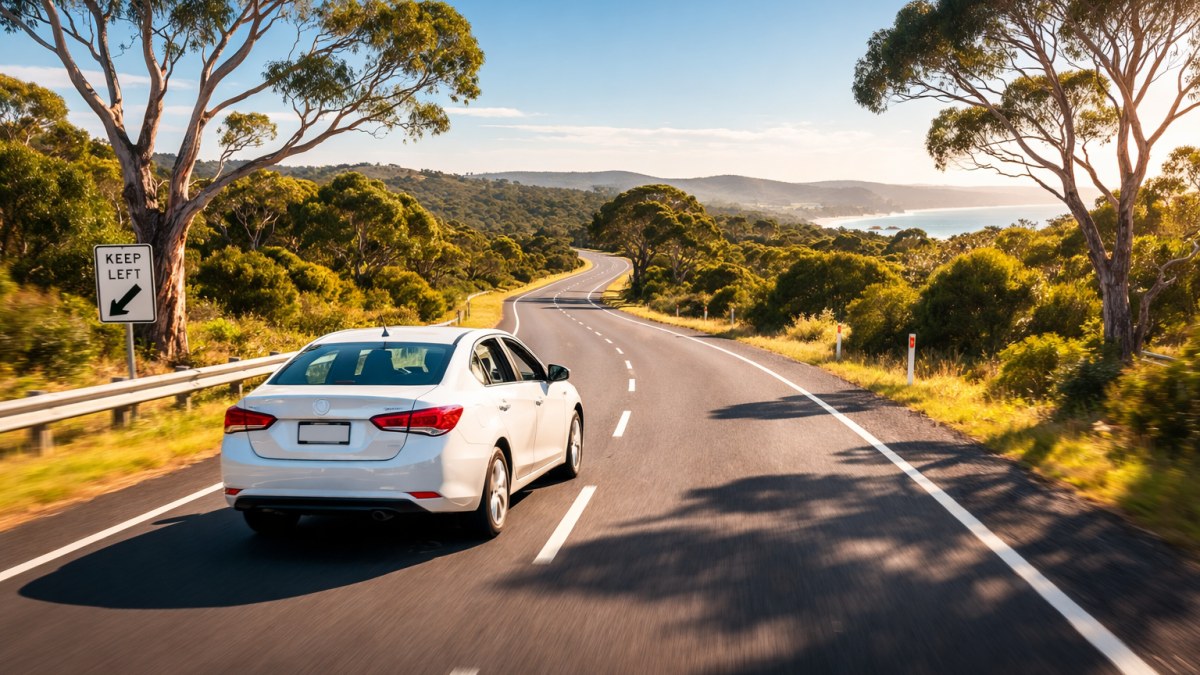
About 35% of the world's population drives on the left, that's Australia, New Zealand, the UK, Japan, India, and around 75 other countries. If you've spent your whole driving life on the right side of the road, switching feels deeply wrong for the first few hours. Then it gets easier. Then you stop thinking about it entirely.
The dangerous part is the transition. Research shows drivers switching sides have a roughly 30% higher accident rate, and about 40 people die annually in the UK alone from wrong-side collisions. Most of those accidents happen not while actively driving, but in the moments after stopping, pulling out of a petrol station, exiting a car park, or turning at a quiet intersection where there's no traffic to follow.
This guide covers the practical reality of making the switch, with specific tips for Australia, New Zealand, and the UK.
This video covers the key things to know about driving in Australia as a visitor:
The Most Dangerous Moments
These are ranked by how often they cause accidents for drivers switching to the left:
1. Turning at intersections. This is where head-on collisions happen. Your instinct says to turn into the right lane. In left-hand traffic, that's oncoming traffic. It's the single biggest killer of tourists switching sides.
2. Pulling out after stopping. Car parks, petrol stations, rest areas, scenic lookouts, any time you've been stationary, your brain resets to its default programming. You pull out and drift right without thinking. This "reversion effect" is the most common mistake, period.
3. Roundabouts. In left-hand traffic countries, roundabouts flow clockwise. You enter from the left and give way to the right. If your instinct is counter-clockwise flow, you'll approach roundabouts from the wrong angle.
4. Empty roads. On busy roads, you follow the car in front and it feels natural. On empty roads, early morning, late at night, rural areas, there's no visual cue to remind you which side to be on. This is when people drift right.
5. Overtaking. You pass on the right in left-hand traffic countries. The instinct to check the left mirror and pass on the left can put you straight into oncoming traffic.
Before You Drive
Rent an automatic
This is the single most recommended tip from every source. Shifting gears with your left hand while simultaneously thinking about which side of the road to be on is asking for trouble. Eliminate one variable. Most rental fleets in Australia, New Zealand, and the UK are automatics anyway.
Know the controls
In a right-hand drive car (driver sits on the right), the pedals are in the same order, accelerator on the right, brake in the middle, clutch on the left. That doesn't change.
What does change: the indicator and wiper stalks may be swapped depending on the car brand.
| Car Brand | Indicator | Wipers |
|---|---|---|
| European (BMW, VW, Mercedes) | Left stalk | Right stalk |
| Japanese (Toyota, Honda, Mazda) | Often right stalk (older) or left (newer) | Varies |
| Korean (Hyundai, Kia) | Left stalk | Right stalk |
You'll accidentally turn on the wipers instead of indicating at least a few times. Everyone does. It's annoying but harmless.
Adjust everything before moving
Spend 5-10 minutes in the car before driving anywhere:
- Adjust all three mirrors (you'll reach for them on the wrong side at first)
- Find the indicator, wipers, headlights, and hazard lights
- Adjust your seat, you're sitting on the right side now, closer to the centre of the road
- Put a "KEEP LEFT" sticky note on the dashboard if it helps
Your First Drive
The passenger trick
If someone's travelling with you, they sit in the left seat and do one job: remind you to keep left. Especially at turns and when pulling out from stops. This single thing prevents most wrong-side errors.
The centre line rule
Here's the spatial trick that works: your body should be near the centre line. In a right-hand drive car, you're sitting on the right side of the car, which means you're closer to the centre of the road. Keep the centre line roughly aligned with your right knee. This prevents the most common error, drifting too far left toward the kerb.
The intersection mantra
At every turn, repeat: "left to left." When turning left, stay tight to the left. When turning right, cross to the left side of the road you're turning into. The phrase works for both directions and keeps you from swinging into the wrong lane.
Follow another car
When in doubt, follow a local car. They'll put you in the right position on the road without you having to think about it. On empty roads with no car to follow, that's when you need to be most vigilant.
Drive slower
Your reaction time is longer when you're processing unfamiliar spatial relationships. Give yourself more time. There's no rush.
Avoid driving at night initially
Reduced visibility plus unfamiliar roads plus reversed traffic is a bad combination. If you can, do your first few hours of left-side driving in daylight.
Country-Specific Rules
Australia
| Rule | Detail |
|---|---|
| Speed | km/h. Urban default 50 km/h, highways 100-110 km/h, NT has some 130 km/h zones |
| BAC limit | 0.05 (stricter than the US at 0.08) |
| Roundabouts | Clockwise. Give way to the right |
| Seatbelts | Mandatory, all seats. Fines start at $350+ |
| Mobile phones | Completely prohibited while driving: even holding it. Heavy fines |
| Speed cameras | Extremely common, especially in VIC and NSW |
| Hook turns | Melbourne CBD only. Right turns from the left lane to clear tram tracks. Unique globally at this scale. Follow the signs: they'll tell you when a hook turn is required |
| Trams | Must stop behind trams when doors open. Cannot pass a stopped tram with open doors. This rule catches a lot of tourists in Melbourne |
| Wildlife | Kangaroos, wombats, and other animals on roads, especially at dawn and dusk in rural areas. A kangaroo strike at 100 km/h causes serious damage |
| Licence | Foreign licence valid 3 months (most states). Non-English licence needs IDP or NAATI translation |
New Zealand
If you're planning to drive in NZ, watch this first, it covers the unique road conditions and rules that catch tourists:
| Rule | Detail |
|---|---|
| Speed | km/h. Urban default 50 km/h, open road 100 km/h |
| BAC limit | 0.05 |
| Roundabouts | Clockwise. Give way to the right |
| One-lane bridges | Common in rural areas. Priority indicated by signs: blue arrow means you have right of way, red arrow means give way. Tourists often don't understand these |
| Road conditions | Many roads are narrow and winding. Gravel roads common on the South Island. Don't rely on GPS travel time estimates for rural NZ |
| "Keep Left" signs | Installed at hazardous locations, especially on the tourist-heavy South Island |
| Weather | Changes rapidly, especially on South Island mountain passes. Snow chains may be required in winter |
| Livestock | Sheep and cattle on rural roads are normal. You stop and wait |
| Licence | Foreign licence valid 12 months. Must carry licence plus IDP or certified English translation at all times |
United Kingdom
| Rule | Detail |
|---|---|
| Speed | mph (not km/h). Urban default 30 mph (~48 km/h), motorways 70 mph (~113 km/h) |
| BAC limit | 0.08 (England/Wales/NI), 0.05 (Scotland) |
| Roundabouts | Clockwise. Give way to the right. Far more roundabouts per capita than AU or NZ: you'll encounter them constantly |
| Road width | Significantly narrower than Australian or American roads. Rural lanes with hedgerows can be barely one car wide |
| Motorway lanes | Drive in the left lane unless overtaking. "Undertaking" (passing on the left) is illegal |
| Speed cameras | Very common. Average speed cameras measure your speed over a distance |
| Congestion charges | London charges £15/day for driving in central London. Other cities have similar zones |
| "LOOK RIGHT" markings | Painted at pedestrian crossings in tourist areas |
| Licence | Non-UK licence valid 12 months. IDP not required for Australian, NZ, or other designated country licences |
The speed unit trap: Australia and New Zealand use km/h. The UK uses mph. If you're driving between these countries, or renting a car with a km/h speedometer in the UK, pay close attention. 30 mph is about 48 km/h, not 30 km/h.
Insurance Tips
Rental car insurance in all three countries comes with a high excess (deductible), typically $2,000-$5,000 AUD for standard cars, up to $8,000-$10,000 for campervans.
Reduce your excess before you go:
- Third-party excess insurance (iCar Hire Insurance, 1Cover, Allianz) is usually cheaper than the rental company's daily excess reduction fee
- Some premium credit cards include rental car excess coverage, check yours before paying for extra insurance
- Full travel insurance often includes rental vehicle excess as an add-on
Watch for exclusions:
- Single-vehicle accidents (hitting a pole, going off the road) aren't always covered by basic policies, and these are exactly the type of accident that's more common when switching driving sides
- Windscreen, tyre, and undercarriage damage are often excluded. On NZ gravel roads, stone chips are practically guaranteed
- Under-25 surcharges are common across all three countries
Chinese Licence Holders
China doesn't issue International Driving Permits (IDPs). For Australia, you'll need a NAATI-certified English translation. For New Zealand, a certified English translation or an IDP from a third country. Most rental companies in AU/NZ specifically ask for the NAATI translation for Chinese licences.
Common Mistakes Checklist
Use this as a reminder for your first few days:
- Entered the car on the wrong side (the driver's door is on the right)
- Pulled out of a car park on the right side of the road
- Turned into the wrong lane at an intersection
- Looked left instead of right at a pedestrian crossing
- Activated wipers instead of indicators
- Drifted left toward the kerb (your body should be near the centre line)
- Entered a roundabout from the wrong direction
- Checked the left mirror instead of the right before overtaking
- Forgot which side the fuel cap is on (check the arrow on the fuel gauge)
If you catch yourself doing any of these, you're normal. It means your brain is still running its old program. Give it time.
How Long Until It Feels Normal?
Most drivers report feeling comfortable after about 10 hours of actual driving time. The first hour is the hardest. By day two or three, the mechanics of staying left become mostly automatic. Turns and roundabouts take longer, maybe a week of regular driving before you stop thinking about them.
The reversion effect (pulling out on the wrong side after stopping) can persist for weeks. Stay conscious of it every time you get back in the car after a break.
If you're practicing driving test routes in Australia, New Zealand, or the UK, AUDrive maps the actual roads used during driving tests, helpful for learning local routes and building familiarity with left-hand traffic in a structured way.
Frequently Asked Questions
How long does it take to get used to driving on the left?
Most drivers feel comfortable after about 10 hours of actual driving. The first hour is the hardest. Turns and roundabouts take longer, maybe a week of regular driving.
What is the most dangerous moment when switching sides?
Turning at intersections, where your instinct is to turn into the right (oncoming) lane. Pulling out after stopping is the most common mistake, because your brain resets to its default programming.
Should I rent an automatic or manual car?
Automatic. This is the single most recommended tip. Shifting gears with your left hand while also thinking about which side of the road to be on adds unnecessary risk.
Are the road rules the same in Australia, NZ, and the UK?
The basics are similar (drive on left, clockwise roundabouts, give way to the right), but there are important differences. Australia uses km/h, the UK uses mph. Speed limits, BAC limits, and specific rules (like Melbourne's hook turns) vary.
Can I drive on my overseas licence in these countries?
In Australia, 3 to 6 months depending on the state. In New Zealand, up to 18 months. In the UK, up to 12 months. You may need an International Driving Permit or certified translation.
Related Guides
- Overseas Licence Conversion in Australia: Requirements for converting your licence state by state.
- Head Check and Mirror Technique Guide: Mirror and blind spot habits for left-hand traffic driving.