The One Rule You Cannot Break
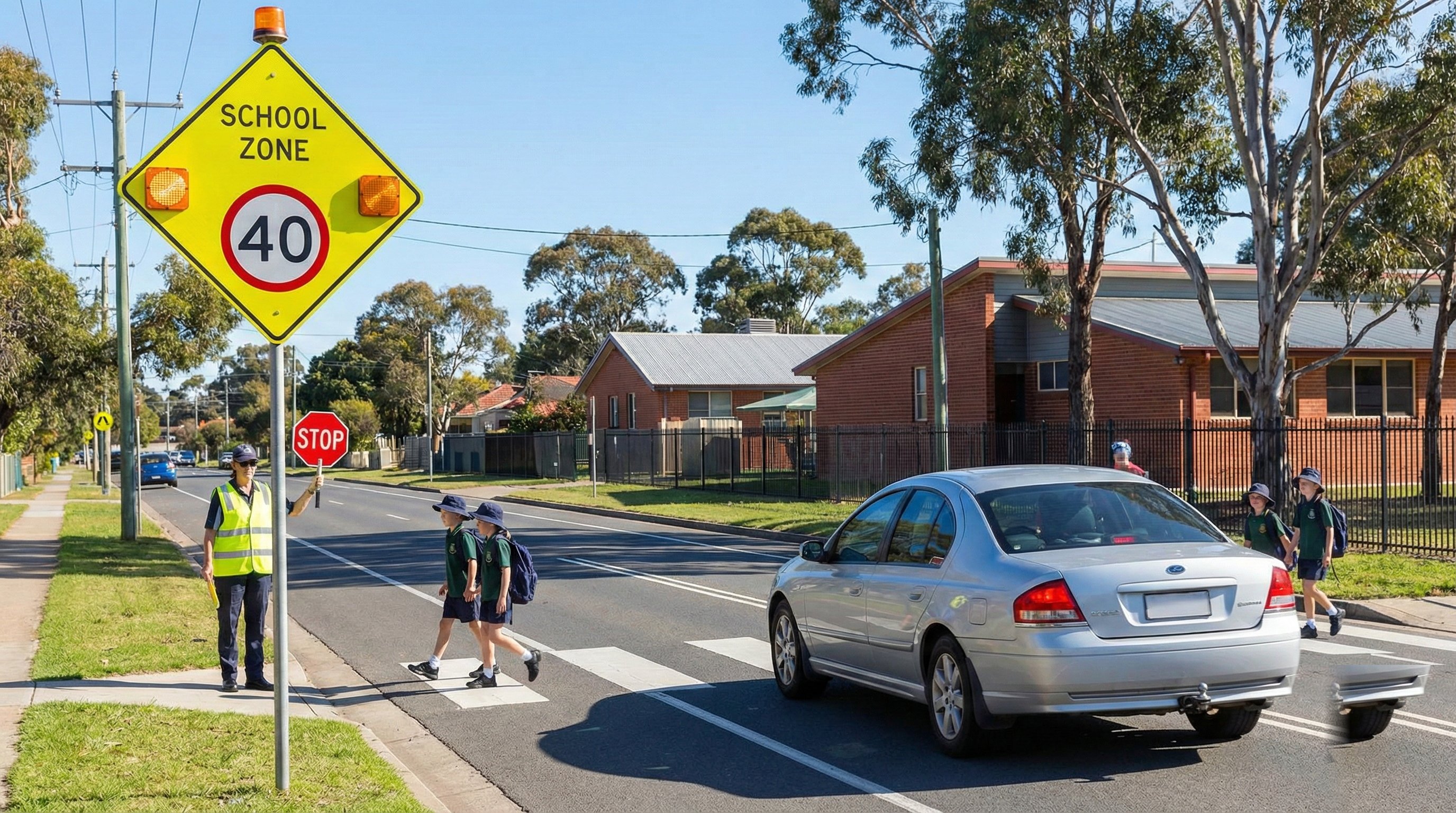
Exceeding the speed limit in a school zone is an instant fail on the driving test in every Australian state and territory. No exceptions, no second chances. Even 1 km/h over ends the test immediately.
In South Australia, missing school zone speed limits is one of the most frequently cited reasons for failing. It's entirely avoidable, but you need to know the rules, because they differ between states.
Speed Limits and Hours by State
School zone active hours by Australian state
| State | Speed Limit | Operating Hours | Notes |
|---|---|---|---|
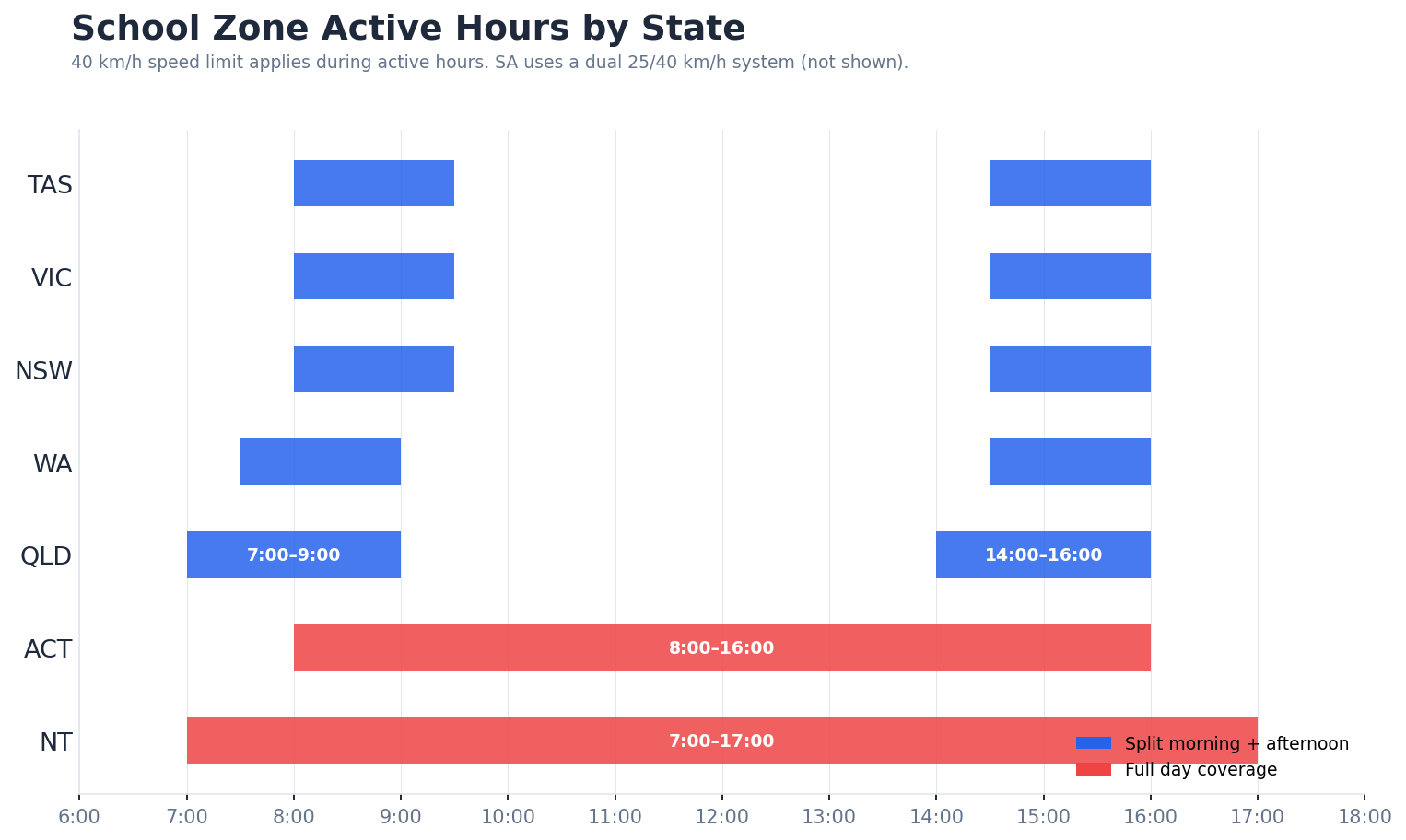
| NSW | 40 km/h | 8:00–9:30 am, 2:30–4:00 pm | School days only |
| VIC | 40 km/h | 8:00–9:30 am, 2:30–4:00 pm | Electronic signs common |
| QLD | 40 km/h | 7:00–9:00 am, 2:00–4:00 pm | Wider hours than most states |
| WA | 40 km/h | 7:30–9:00 am, 2:30–4:00 pm | School days only |
| SA | 25 km/h or 40 km/h | See below | Dual system from September 2025 |
| TAS | 40 km/h | 8:00–9:30 am, 2:30–4:00 pm | School days only |
| ACT | 40 km/h | 8:00 am – 4:00 pm | Full day window, not split |
| NT | 40 km/h | 7:00 am – 5:00 pm | Flashing lights indicate active |
School days only means weekdays during school terms, not weekends, public holidays, or school holidays. However, if electronic flashing signs are active, the zone applies regardless of the day or time.
Queensland: Earlier Hours
QLD school zones start at 7:00 am, a full hour earlier than NSW, VIC, and TAS. If you've learned to drive in another state, don't assume the hours are the same. The afternoon window also starts earlier (2:00 pm vs 2:30 pm).
ACT: Full Day Window
The ACT is unique, school zones run from 8:00 am to 4:00 pm continuously, not in split morning and afternoon windows. This means the zone is active during the middle of the day when other states' zones are off.
South Australia: Dual System
SA overhauled its school zone rules in September 2025. The state now has two types of school zones:
- 25 km/h zones: still apply wherever children are present, flashing lights are active, or flags are displayed. These operate 24/7 year-round when their activation conditions are met.
- 40 km/h zones: new zones on major roads near schools, active during morning and afternoon peak times on school days.
If you're driving in SA, watch the signs carefully. The speed you need to hit depends on which type of zone you're in. When in doubt, 25 km/h is always safe.
Northern Territory
The NT uses flashing lights to indicate active school zones. The general operating window is 7:00 am to 5:00 pm on school days, much wider than most states.
Types of School Zone Signs
You'll encounter three types across Australia:
1. Fixed signs with times printed on them. Follow the listed hours on school days. Outside those hours (or on non-school days), the zone isn't active.
2. Electronic flashing signs. These override everything else. If the lights are flashing, the zone is active, even if it's outside normal hours, even if it's a public holiday. Some of these are activated manually by schools for events.
3. "When children are present" signs. Used mainly in SA. The zone is active whenever children are visible near the road, regardless of time or day.
Common Mistakes on the Driving Test
Not slowing down early enough. You need to be at or below 40 km/h (or 25 in SA) when you cross the school zone sign, not when you see it. Start braking well before the sign.
Speeding up too early. The zone doesn't end at the school building, it extends to the end-of-zone sign. Some zones are longer than expected, especially on main roads where the zone might cover the distance between two schools.
Missing zones on unfamiliar roads. During a test, the examiner may direct you through streets you haven't practised. Always scan 100–200 metres ahead for signage, especially near schools, parks, and residential areas.
Confusing hours between states. QLD starts at 7:00 am while most others start at 8:00 am. ACT runs all day until 4:00 pm. Know your state's specific hours.
Ignoring electronic signs. If lights are flashing, the zone is active. Don't second-guess it.
Following other traffic. The car in front might be speeding through the zone. Don't match their speed, drive to the sign, not to the traffic.
What Examiners Watch For
- Speed compliance: At or below the limit for the entire zone. Even 1 km/h over is a critical error that ends the test.
- Early deceleration: Reaching the correct speed before the sign, not at it or after it.
- Active scanning: Looking for school zone signs ahead, not just reacting to them at the last moment.
- Pedestrian awareness: Watching for children near the road, exiting cars, or on crossings.
Penalties Outside the Test
School zone speeding carries heavier penalties than regular speeding in every state:
| Offence | NSW Fine | NSW Demerit Points |
|---|---|---|
| 1–10 km/h over | ~$203 | 2 points |
| 11–20 km/h over | ~$365 | 4 points |
| 21–30 km/h over | ~$726 | 5 points |
| 30–45 km/h over | ~$1,179 | 6 points + 3-month suspension |
Other states have similar scales. NSW and ACT also apply double demerit points during holiday periods, which means a school zone offence during a long weekend could cost you 4–12 demerit points from a single incident.
Speed cameras operate in school zones in several states, including NSW and QLD. You won't always see a police car, the camera will catch you.
How to Stay Safe
- Memorise your state's school zone hours. Write them on a sticky note on your dashboard while you're learning if you need to.
- Scan 100–200 metres ahead for school zone signs. By the time you see one, you should already be slowing.
- If electronic lights are flashing, slow down. No exceptions.
- Slow down before the sign, not at it. You should be at the correct speed when you cross the boundary.
- Don't follow other drivers' speed. They may be breaking the law. Drive to the sign.
- When in doubt, slow down. There's no penalty for driving at 40 km/h outside a school zone. There's a severe penalty for driving at 60 km/h inside one.
Practise With AUDrive
AUDrive's GPS practice routes for test centres across Australia help you identify school zones along likely test routes. Practise driving through them at the correct speed until it's automatic, that way, on test day, you won't even have to think about it.
Frequently Asked Questions
Is speeding in a school zone an instant fail on the driving test?
Yes. Even 1 km/h over the school zone limit ends the test immediately in every Australian state and territory. No exceptions.
What is the school zone speed limit?
40 km/h in most states. South Australia has a dual system: 25 km/h zones (when children are present, lights are on, or flags are displayed) and 40 km/h zones (on major roads near schools during peak times).
When are school zones active?
It varies by state. Most states use a split window (morning and afternoon). QLD starts earliest at 7:00 am. The ACT runs continuously from 8:00 am to 4:00 pm. Check the table in this article for your specific state.
Do school zones apply on weekends and holidays?
Generally no, school zones only apply on school days. However, if electronic flashing signs are active, the zone applies regardless of the day or time.
How can I avoid school zone mistakes on my driving test?
Book your test outside school zone hours (avoid 8:00-9:30 am and 2:30-4:00 pm on school days). Scan 100 to 200 metres ahead for signs. Slow down before the sign, not at it.
Related Guides
- Common Driving Test Fails in Australia: School zone speeding is one of the most cited fail reasons, especially in SA.
- Best Time to Book Your Driving Test: Booking outside school zone hours removes a major risk factor.