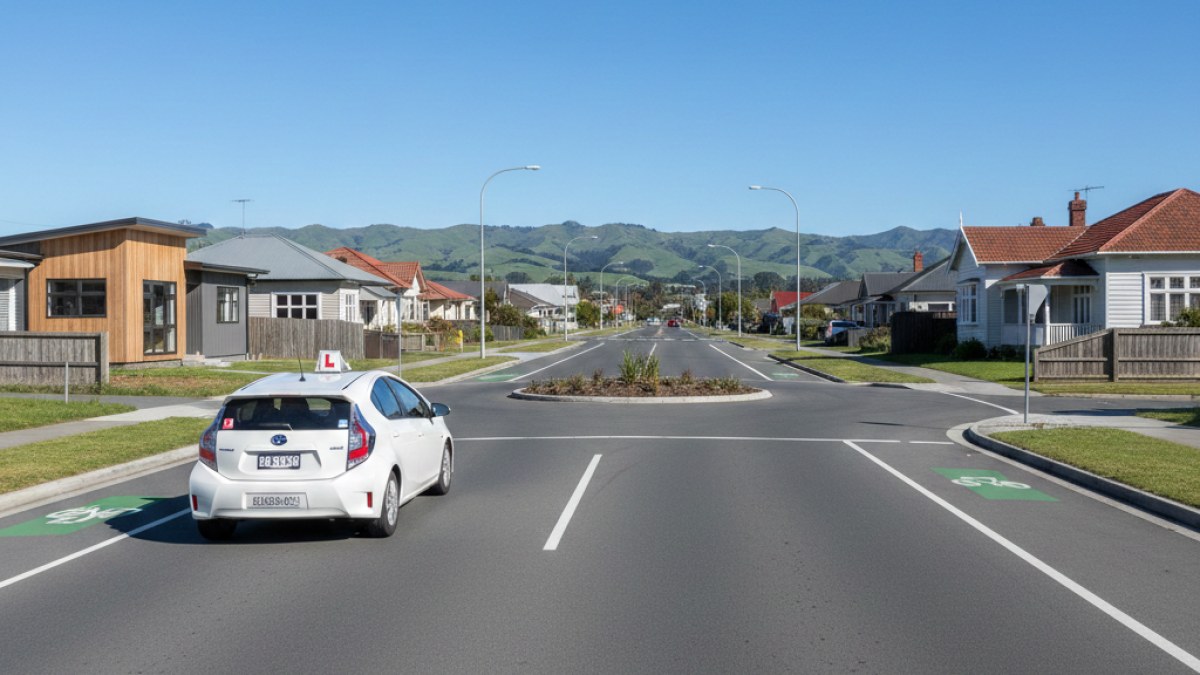
Christchurch offers one of New Zealand's most learner-friendly driving test environments. Sitting on the flat Canterbury Plains, the city has none of the extreme hills that make Wellington tests so demanding. Post-earthquake rebuilding has also produced modern road infrastructure with clear markings and well-designed intersections across much of the city.
Christchurch Testing Locations
Driving tests in New Zealand are conducted by VTNZ (Vehicle Testing New Zealand), the primary practical test provider. AA offices handle licence applications but VTNZ runs the actual driving tests. Canterbury has six VTNZ centres:
VTNZ Sockburn (26 Jipcho Road)
The Sockburn centre in southwest Christchurch is one of the most popular testing locations. The surrounding area combines suburban residential streets with commercial corridors near the Hornby Hub shopping area. Roads are flat and well-maintained, with a mix of roundabouts and traffic-light intersections.
Road characteristics:
- Flat terrain throughout
- Wide suburban streets with clear markings
- Some busier sections near Main South Road
- Multiple roundabouts in residential zones (note: the large Sockburn roundabout itself is not used in tests. VTNZ avoids it due to complexity)
- Moderate traffic outside peak hours
Best for: Candidates wanting a balanced suburban test environment with modern roads.
VTNZ Lichfield Street (240 Lichfield Street)
The central city location sits in Christchurch's rebuilt CBD. Post-earthquake reconstruction means modern intersections, clear lane markings, and up-to-date signage. The trade-off is more urban traffic, one-way streets, and pedestrian activity than suburban centres.
Road characteristics:
- Completely flat
- Modern post-earthquake CBD infrastructure
- One-way streets and bus lanes in the central area
- Higher pedestrian and cyclist activity
- Good road markings but more complex traffic situations
Best for: Candidates comfortable with urban driving who live centrally.
VTNZ Belfast (Radcliffe Road)
Northern Christchurch's Belfast centre offers a suburban test environment with generally calm traffic. The area is a mix of residential streets and some semi-rural roads on the city's northern fringe.
Road characteristics:
- Flat terrain
- Quiet residential streets alongside some commercial corridors
- Good visibility at most intersections
- Moderate traffic near the Belfast shopping area
- Well-maintained post-earthquake roads
Best for: Candidates in northern Christchurch who want a calm suburban test.
VTNZ Rangiora (347 Flaxton Road)
For candidates willing to drive north of the city, Rangiora offers a quieter testing environment. Traffic volumes are lower, streets are simpler, and the overall pace is slower than urban Christchurch.
Road characteristics:
- Flat Canterbury Plains terrain
- Small-town street layout with wide roads
- Very low traffic volumes
- Some rural-urban transitions
- Straightforward roundabouts and intersections
Best for: Candidates who want the calmest possible test environment and don't mind the drive north.
VTNZ Ashburton & VTNZ Timaru
Two regional centres south of Christchurch for candidates in those areas. Both offer small-town test environments with low traffic and flat terrain. Only worth considering if you live locally, the drive from Christchurch isn't justified when three urban centres are available.
NZ Test Format
Restricted Licence Test
The restricted test takes about 1 hour total (including 45 minutes of actual driving) and is split into two stages:
Stage 1 (10 minutes): Checks the basics on roads up to 60 km/h. Includes left and right turns, lane changes, merging, straight drives, a roundabout, and a reverse parallel park. There are 7 assessable tasks, and you can't get more than 1 critical error in this stage.
Stage 2 (35 minutes): You drive on roads with speed limits from 50-100 km/h. There are 18 assessable tasks covering more complex traffic situations, speed transitions, and independent driving.
- Requirements: Hold a learner licence for at least 6 months (12 months if under 25)
- Critical errors: Up to 2 over the whole test. Three or more = fail. Any immediate failure error (e.g. causing an accident, running a red light) = instant fail.
- Fee: NZ$167.50 (includes your first test and one free resit if you don't pass). Third attempt onwards costs $102.80 each.
Full Licence Test
- Duration: About 30 minutes (20 minutes driving)
- Requirements: Hold a restricted licence for at least 18 months (12 months with an approved course)
- Additional assessments: Independent driving, highway/motorway driving, more complex intersections
- Fee: NZ$98.90
2027 reform: The NZ Government confirmed on 3 February 2026 that the full licence road test will be removed from 25 January 2027. It'll be replaced with an online assessment. The total cost of getting a full licence drops from $362.50 to about $282.50. This applies to Class 1 (car) licences only.
Christchurch Advantages
Flat Terrain
The Canterbury Plains are almost entirely flat. This eliminates hill starts, gradient speed management, and the stress of steep descents, challenges that dominate testing in Wellington and parts of Auckland. For candidates who struggle with hills, Christchurch is one of the best places in NZ to take a driving test.
Modern Post-Earthquake Roads
Large sections of Christchurch have been rebuilt since the 2010/2011 earthquakes. New roads feature modern lane markings, well-designed intersections, and up-to-date signage. The newer infrastructure is generally clearer and more predictable than older road networks in other cities.
Grid Layout
Central and suburban Christchurch largely follows a grid pattern. This means fewer confusing one-way systems, more predictable intersection layouts, and easier navigation. Compared to Wellington's winding hill streets or Auckland's organic suburban sprawl, Christchurch is straightforward to get around.
Christchurch-Specific Challenges
Earthquake-Related Road Changes
While most major rebuilding is complete, some areas still have temporary road layouts, speed restrictions, or detours. If you're practising in eastern Christchurch, check for current road works that might affect your test route.
Nor'wester Wind
Canterbury's hot nor'west wind can be strong, particularly in spring and summer. While not as extreme as Wellington's winds, gusts can affect your car's positioning. The flat, open terrain offers less shelter than a hilly city.
Cyclists
Christchurch has invested heavily in cycle infrastructure since the earthquakes, with over 75 km of cycleways now in place. Separated cycleways, shared paths, and cycle lanes are common across the city. Know the rules for interacting with cyclists, particularly at intersections where cycle lanes cross your path. Give cyclists at least 1.5 metres when passing.
Speed Transitions
Some test routes include transitions between urban 50 km/h zones and open road 80-100 km/h zones on the city fringes. Managing these transitions smoothly, particularly decelerating as you enter the urban zone, is an assessment point.
Railway Crossings
Canterbury has several railway level crossings. Know the rules: stop if the lights are flashing, and give way to trains at all times. Some crossings have barriers that close before the lights start flashing.
Common Mistakes
- Speed management at transitions: not adjusting speed early enough when entering or leaving urban zones
- Mirror checks: not checking mirrors frequently enough (every 8-10 seconds, and before any speed or direction change)
- Roundabout signalling: forgetting to indicate left when exiting roundabouts
- Not giving cyclists enough space: at least 1.5 metres when passing
- Rolling stops: not coming to a complete stop at stop signs
- Observation at intersections: not looking both ways (including a second look right before proceeding)
Choosing Your Centre
1. Sockburn or Belfast for Best All-Round
Both offer flat, well-maintained suburban roads with moderate traffic. Pick whichever is closer to where you've been practising. Sockburn is the most popular choice, the large Sockburn roundabout isn't used in tests, so don't worry about that.
2. Rangiora for Quietest Traffic
If traffic stress is your concern, Rangiora offers a calmer small-town environment. But only test there if you've also practised there, unfamiliar roads cancel out the lower traffic advantage.
3. Avoid Peak Hours
Book between 10:00 am and 2:00 pm on a weekday. Morning rush (7:30-9:00) and afternoon school traffic (2:30-3:30) increase congestion and activate school zones.
4. Check for Road Works
Christchurch still has ongoing infrastructure projects. Before your test, drive the likely routes to check for any road works or temporary layouts that might throw you off.
Tips for Test Day
- Arrive 15 minutes early: time to settle, adjust mirrors, and breathe
- Bring your learner or restricted licence: no licence means no test
- Check your vehicle: all lights, tyres, mirrors, seatbelts must be in working order
- Practise the routes: AUDrive maps practice routes near Christchurch test centres. Knowing the roads removes uncertainty
- Drive to conditions: if it's raining or windy, reduce speed appropriately. The examiner wants to see you adapt
Frequently Asked Questions
Which Christchurch test centre is best for learners?
Sockburn and Belfast both offer flat, well-maintained suburban roads with moderate traffic. Pick whichever is closer to where you have been practising. Rangiora is the quietest option but requires a drive north.
Is the large Sockburn roundabout used in driving tests?
No. VTNZ avoids the large Sockburn roundabout due to its complexity. Test routes from Sockburn use other roundabouts in the surrounding residential areas.
How much does the NZ driving test cost?
The restricted licence test costs NZ$167.50, which includes your first test and one free resit. A third attempt costs $102.80.
Does Christchurch have hills on driving test routes?
No. Christchurch sits on the flat Canterbury Plains, so there are no hill starts or steep gradients on test routes. This makes it one of the most learner-friendly cities in NZ for the driving test.
What are the most common mistakes at Christchurch centres?
Speed management at urban/rural transitions, not checking mirrors frequently enough, forgetting to indicate left when exiting roundabouts, and rolling stops at stop signs are the most common errors.
Related Guides
- NZ Driving Test Complete Guide: Full breakdown of the restricted licence test, pass rates by region, and 2027 reform changes.
- Wellington Test Centre Comparison: How Wellington's hills and wind create a very different test experience from Christchurch.
- Auckland Test Centre Comparison: Auckland centre pass rates and route tips.