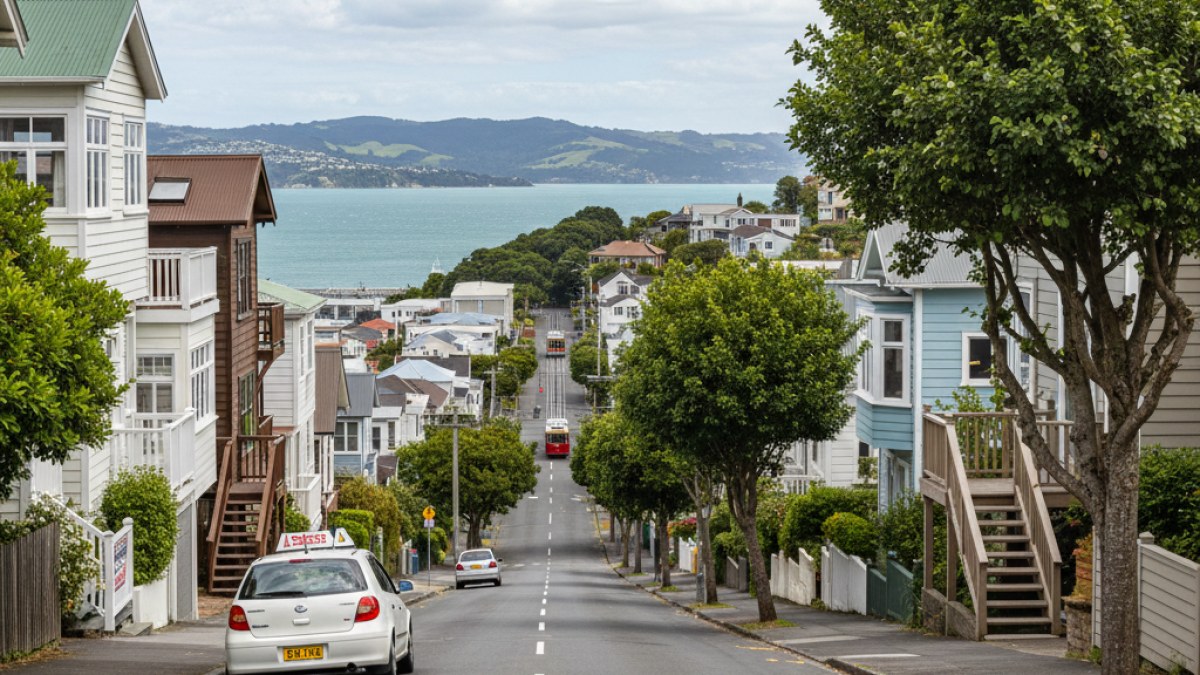
Wellington is one of New Zealand's most challenging cities to take a driving test. The capital is built on steep hills, squeezed between harbour and ranges, with narrow streets laid out long before modern traffic volumes. Add persistent wind. Wellington regularly hits 100+ km/h gusts, and you've got a test environment that demands more than average preparation.
The Wellington region's restricted licence pass rate sits at 51.9% (2023), one of the three lowest regions nationally alongside Auckland (49.2%) and Bay of Plenty (50.9%). But within the region, where you test makes a difference.
Wellington Pass Rates
NZTA doesn't publish centre-level pass rates regularly, but data obtained through Official Information Act requests gives a picture of how centres compare:
| Centre | Restricted Pass Rate | Notes |
|---|---|---|
| Porirua | ~64% | Highest in Wellington region |
| Wellington City | ~60% | Highest full licence pass rate (73%) |
| Lower Hutt | ~54% | Most popular choice |
| Upper Hutt | No published data | Expected similar to Lower Hutt |
Data from NZTA OIA releases (2016). Current rates may differ, but the relative ranking is likely similar.
The gap between Porirua (64%) and Lower Hutt (54%) is 10 percentage points, enough to matter. But as NZ driving instructors point out, testing at an unfamiliar centre can backfire. Familiarity with the roads around your test centre is worth more than a few extra points of pass rate.
Wellington Testing Locations
Driving tests in New Zealand are conducted by VTNZ (Vehicle Testing New Zealand), the primary practical test provider. AA offices handle licence applications but VTNZ runs the driving tests. The Wellington region has four VTNZ centres:
Porirua (VTNZ): Region's Best Pass Rate
Address: 10 Titahi Bay Road, Elsdon, Porirua 5022
North of Wellington, Porirua sits between the motorway and the coast. The test area includes suburban streets and some arterial roads near the town centre. Routes typically cover Titahi Bay Road, Main Road, Kenepuru Drive, and surrounding residential areas, about 12.5 km over roughly 20 minutes of driving.
Road characteristics:
- Mix of flat and gently hilly terrain (nothing like Wellington city's extreme gradients)
- Suburban and semi-commercial roads
- Moderate traffic near the town centre
- Several roundabouts
- Some wind exposure along the coast
Key advantage: Porirua is the only Wellington-region centre open on Saturdays (8:30 am - 3:00 pm), making it an option for candidates who can't test on weekdays.
Best for: Candidates who want the best statistical chance in the Wellington region. The terrain is gentler than the city, and the 64% pass rate is the highest locally.
Lower Hutt (VTNZ): Flat Valley Floor
Address: 25 Brunswick Street, Hutt Central, Lower Hutt 5011
Lower Hutt sits on the Hutt Valley floor, northeast of Wellington city. The test area is noticeably flatter than Wellington itself, with wide suburban streets, good visibility, and manageable traffic outside peak hours.
Road characteristics:
- Relatively flat terrain (the Hutt Valley floor)
- Wide suburban streets with clear markings
- Moderate traffic on main corridors (High Street, Hutt Road)
- Several roundabouts in residential areas
- Some sections along SH2 may be included for full licence tests
Best for: Candidates who want to avoid hills completely. Lower Hutt's flat valley floor removes the stress of gradients that dominate Wellington city testing.
Upper Hutt (VTNZ): Quietest Traffic
Address: 847 Fergusson Drive, Upper Hutt 5018
Further up the valley from Lower Hutt, Upper Hutt offers the quietest test environment in the region. Traffic volumes are lower, streets are wider, and the suburban layout is straightforward. A typical test route covers about 11 km through Fergusson Drive, Totara Park Road, California Drive, and surrounding residential streets.
Road characteristics:
- Flat to gently rolling terrain
- Quiet suburban streets with low traffic
- Some rural-fringe roads on the urban edges
- Straightforward intersection design
- Mix of 50-80 km/h zones
Note: Upper Hutt is open weekdays only, with theory tests available until 3:00 pm.
Best for: Candidates who want the calmest possible test environment and don't mind the travel from central Wellington.
Wellington City (VTNZ): Most Challenging
Address: 156 Adelaide Road, Newtown, Wellington 6021
Testing in Wellington city means dealing with the full force of the capital's driving challenges. The centre sits on Adelaide Road, a main corridor connecting the CBD to southern suburbs. Test routes may take you through Newtown, Mount Victoria, Island Bay, and surrounding inner suburbs.
Road characteristics:
- Extreme gradients, some nearby streets exceed 1:3.5 incline (Fore Street in Kaiwharawhara is the steepest at 16 degrees)
- Narrow heritage streets with cars parked on both sides
- Heavy traffic in the CBD and inner suburbs
- Bus lanes and bus-only roads
- One-way streets in the central city
- Strong, unpredictable wind gusts on exposed roads
Key challenges:
- Hill starts at traffic lights on steep gradients
- Speed control on steep descents
- Parked cars reducing road width to single-lane in places
- Wind gusts pushing the car sideways, especially on elevated roads
- Bus lane rules (you can enter a bus lane up to 50 metres before turning, entering earlier is a $150 fine)
Best for: Only if you've done extensive practice in Wellington city and are fully confident with hill driving. Despite being the hardest test environment, Wellington City's full licence pass rate is historically strong at 73%, likely because candidates who reach this stage have already mastered the local conditions.
NZ Driving Test Format
New Zealand uses a graduated licensing system with two practical tests:
Restricted Licence Test
This is the test most people take first (after holding a learner licence for at least 6 months, or 12 months if under 25). It takes about 1 hour total, including 45 minutes of driving, split into two stages:
Stage 1 (10 minutes): Checks the basics on roads up to 60 km/h. Includes left and right turns, lane changes, merging, straight drives, a roundabout, and a reverse parallel park. There are 7 assessable tasks, and you can't get more than 1 critical error in this stage.
Stage 2 (35 minutes): You drive on roads with speed limits from 50-100 km/h. There are 18 assessable tasks covering more complex traffic situations, speed transitions, and independent driving. In Wellington, this stage is where the hills and wind really come into play.
- Critical errors: Up to 2 over the whole test. Three or more = fail. Any immediate failure error (e.g. causing an accident, running a red light) = instant fail.
- Fee: NZ$167.50 (includes your first test and one free resit if you don't pass). Third attempt onwards costs $102.80 each.
Full Licence Test
Taken after holding a restricted licence for at least 18 months (or 12 months with an approved course).
- Duration: About 30 minutes (20 minutes driving)
- Key difference: Beyond driving skills, you need to verbally identify hazards and explain how you'd respond to them
- Fee: NZ$98.90
2027 reform: The NZ Government confirmed on 3 February 2026 that the full licence road test will be removed from 25 January 2027. It'll be replaced with an online assessment. The total cost of getting a full licence drops from $362.50 to about $282.50. This applies to Class 1 (car) licences only. The restricted test becomes the only driving test you'll ever take, making it even more important to prepare thoroughly.
Wellington-Specific Challenges
Hills
Wellington's hills are the single biggest challenge for driving test candidates. The city has some of the steepest residential streets in New Zealand. Fore Street in Kaiwharawhara has a gradient of 1:3.5 (about 16 degrees), and streets in Mount Victoria, Kelburn, and Brooklyn regularly exceed 1:5. Hill starts, stopping at a traffic light on a steep incline and moving off smoothly, are tested frequently because they're unavoidable.
Manual transmission: If you're driving manual in Wellington, hill starts require confident clutch control. Stalling on a hill is a common error. Consider testing in an automatic if hills are a weakness.
Automatic transmission: Easier on hills, but you still need strong brake-to-accelerator transitions to prevent rolling back.
Wind
Wellington averages 173 days per year with gusts above 60 km/h. The Cook Strait between the North and South Islands funnels wind through the only major gap in the mountain ranges, and Wellington sits right in the path. On exposed roads, particularly along the waterfront, on hillside streets, and on the motorway, sudden crosswinds can push your car across the lane.
What examiners look for: You should adjust your speed for wind conditions and maintain a firm grip on the steering wheel. If the car drifts due to a gust, a quick correction is expected, overcorrecting is worse than the drift itself.
Bus Lanes
Wellington has New Zealand's highest per-capita public transport use. Bus lanes are common on main routes through the city, and the rules matter for your test:
- You can enter a bus lane up to 50 metres before making a turn
- Entering a bus lane outside of this is a traffic offence ($150 fine)
- Wellington uses camera enforcement on bus lanes, one camera generated nearly $250,000 in fines over two months in late 2024
If your test route goes through Wellington city, know which lanes are bus lanes and when you're allowed to use them.
Narrow Streets
Many Wellington streets, especially in the inner suburbs (Mount Victoria, Thorndon, Kelburn, Brooklyn), are too narrow for two cars to pass comfortably. You'll need to know the give way rules for narrow roads, generally, the car going uphill has right of way.
Choosing Your Centre
1. Porirua for the Best Pass Rate
At 64% restricted pass rate, Porirua is the clear leader in the Wellington region, 10 points above Lower Hutt. The terrain is gentler, traffic is moderate, and it's the only centre open on Saturdays. If you can practise in the Porirua area, it's the strongest statistical choice.
2. Lower Hutt or Upper Hutt for Flat Terrain
If hills are your weakness, the Hutt Valley centres remove steep gradients from the equation. Lower Hutt has more traffic but is easier to reach. Upper Hutt is quieter but further out. Pick based on where you've been practising.
3. Avoid Wellington City Unless You've Trained There
Wellington city's hills, narrow streets, bus lanes, and wind make it one of the hardest test environments in New Zealand. Only test here if your instructor has trained you specifically on Wellington city routes and you're confident with hill starts, speed control on descents, and navigating narrow streets with parked cars on both sides.
4. Practise in All Conditions
Wellington's weather changes fast. If you get a calm, sunny practice day, also practise on a windy day. Your test might happen in conditions very different from your best practice sessions.
Common Mistakes
- Stalling on hills: particularly in manual cars. Practise hill starts until they're automatic.
- Rolling back on steep gradients: use the handbrake or brake-hold technique at traffic lights on hills.
- Speed on descents: it's easy to pick up speed going downhill. Use engine braking (lower gear) and brake early.
- Not adjusting for wind: if the car drifts in a crosswind, the examiner expects you to correct smoothly.
- Bus lane errors: entering a bus lane too early or driving in one when not permitted.
- Forgetting to indicate at roundabouts: NZ requires left indicator when exiting any roundabout.
- Mirror checks: check mirrors before any speed or direction change, and at least every 10 seconds during normal driving.
Tips for Test Day
- Book mid-morning on a weekday: after rush hour but before school pick-up. Or book Saturday at Porirua.
- Arrive 15 minutes early to settle in and adjust to conditions
- Check the weather: if extreme wind is forecast, consider rescheduling
- Drive your test routes beforehand: AUDrive maps practice routes around NZ test centres
- Bring your learner or restricted licence: expired or missing licence means no test
- Check your vehicle: all lights, tyres, mirrors, seatbelts must be in working order. A vehicle that fails the pre-test check means no test.
Frequently Asked Questions
Which Wellington test centre has the highest pass rate?
Porirua has the highest restricted licence pass rate in the Wellington region at approximately 64%. Wellington City has the lowest restricted pass rate but the highest full licence rate at 73%.
Can I take my driving test on a Saturday in Wellington?
Only at Porirua. It is the only Wellington-region centre open on Saturdays (8:30 am to 3:00 pm). All other centres are weekdays only.
How much does the NZ driving test cost?
The restricted licence test costs NZ$167.50, which includes your first test and one free resit. A third attempt costs $102.80. The full licence test costs $98.90.
Is Wellington harder than other NZ cities for the driving test?
Yes. Wellington's restricted pass rate is 51.9%, one of the three lowest regions nationally. The hills, wind, narrow streets, and bus lanes make it one of New Zealand's most challenging test environments.
Should I avoid Wellington City centre for my test?
Only test at Wellington City if you have trained specifically on city routes and are confident with hill starts, steep descents, and narrow streets with parked cars on both sides. Otherwise, Porirua or the Hutt Valley centres offer more manageable conditions.
Related Guides
- NZ Driving Test Complete Guide: Full breakdown of the restricted and full licence tests, pass rates by region, and 2027 reform.
- Christchurch Test Centre Comparison: Flat terrain and modern roads make Christchurch one of NZ's most learner-friendly cities.
- Auckland Test Centre Comparison: Auckland centre pass rates from Highbrook (73%) to Manukau (53%).
Data: NZTA official statistics (region-level 2023, centre-level from OIA releases 2016). Pass rates reflect restricted licence tests and may change over time.