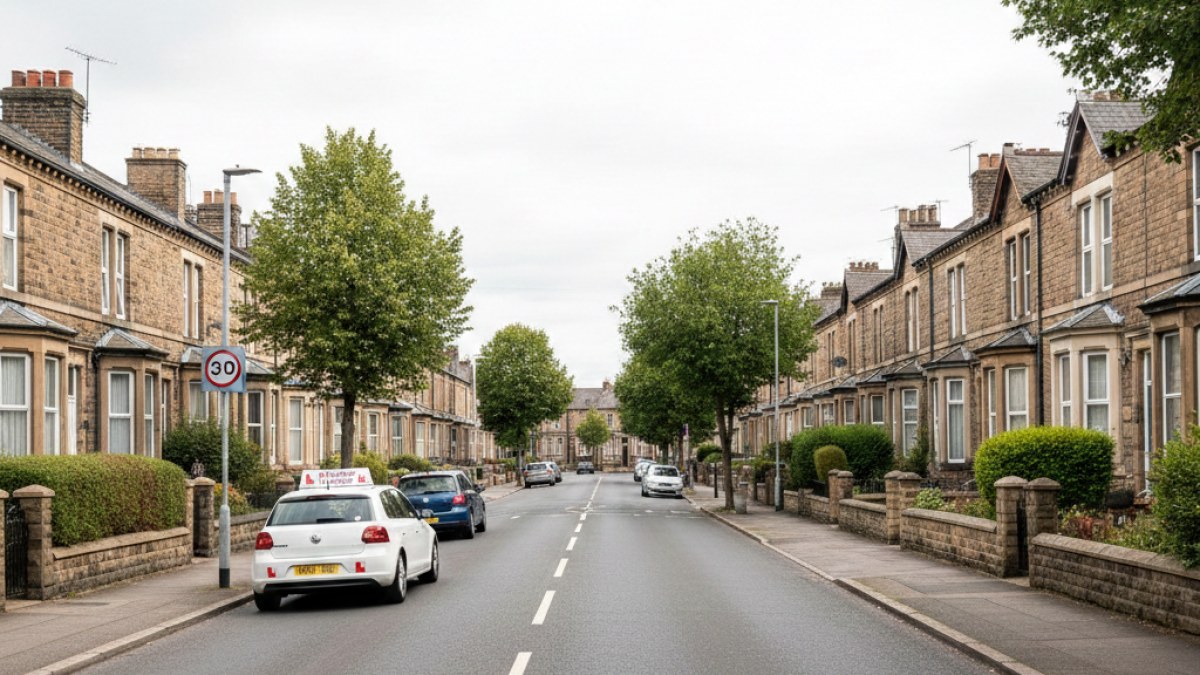
UK driving test pass rates vary enormously depending on where you take the test. The national average is 51%, but individual centres range from 33% at Wolverhampton to 79% at Arbroath in Scotland. That's a 45-percentage-point gap: your chances of passing can literally double depending on which test centre you choose.
This guide uses official DVSA data for the 2024/25 financial year (April 2024 to March 2025), covering 290+ test centres across England, Scotland, and Wales.
National Overview
| Statistic | Value |
|---|---|
| National average pass rate | 51.2% |
| Median pass rate | 49.9% |
| Highest | Arbroath: 78.9% |
| Lowest | Wolverhampton: 33.4% |
| Total test centres | 296 |
The clear pattern: rural and semi-rural centres have significantly higher pass rates than urban ones. Scottish Highlands centres dominate the top of the table, while inner-city centres in London, Birmingham, Liverpool, and the West Midlands cluster at the bottom.
Highest Pass Rate Centres
These mainland centres consistently produce the best results. Most are in rural Scotland where traffic is light and road layouts are simple.
| Rank | Centre | Pass Rate | Region |
|---|---|---|---|
| 1 | Arbroath | 78.9% | Scotland (Angus) |
| 2 | Gairloch | 75.9% | Scottish Highlands |
| 3 | Inveraray | 74.1% | Scotland (Argyll) |
| 4 | Newton Stewart | 73.7% | Scotland (Dumfries & Galloway) |
| 5 | Duns | 69.9% | Scottish Borders |
| 6 | Girvan | 69.2% | Scotland (Ayrshire) |
| 7 | Thurso | 69.0% | Scottish Highlands |
| 8 | Malton | 68.3% | North Yorkshire |
| 9 | Stranraer | 68.1% | Scotland (Dumfries & Galloway) |
| 10 | Forfar | 66.3% | Scotland (Angus) |
These centres share common features: low traffic volumes, straightforward road layouts, fewer multi-lane roundabouts, and limited pedestrian activity. Some very remote centres (Portree, Ballater) show even higher rates but with under 50 tests per year, making the data less reliable. Most candidates can't realistically travel to rural Scotland for their test: so let's look at what matters for each major region.
Lowest Pass Rate Centres
| Rank | Centre | Pass Rate | Region |
|---|---|---|---|
| 1 | Wolverhampton | 33.4% | West Midlands |
| 2 | Featherstone | 34.1% | West Yorkshire |
| 3 | Wednesbury | 36.4% | West Midlands |
| 4 | Chingford, London | 36.5% | Northeast London |
| 5 | Gateshead | 37.4% | Tyne and Wear |
| 6 | Leicester (Cannock St) | 37.7% | East Midlands |
| 7 | Glasgow (Shieldhall) | 37.7% | Glasgow |
| 8 | Barking, London | 37.9% | East London |
| 9 | Belvedere, London | 38.3% | Southeast London |
| 10 | Speke, Liverpool | 38.6% | Merseyside |
These centres sit in busy urban areas with heavy traffic, complex road systems, and challenging test routes. The West Midlands is particularly tough: Wolverhampton and Wednesbury both sit in the bottom five.
London Pass Rates
London deserves its own section. With 32 test centres and some of the longest waiting times in the country, choosing the right London centre matters a lot. London's average (48%) is 3 points below the national average.
| Centre | Pass Rate | Centre | Pass Rate | |
|---|---|---|---|---|
| Sidcup | 59.0% | Morden | 48.8% | |
| Enfield (Innova) | 54.1% | Brentwood | 48.5% | |
| Tolworth | 53.3% | Hornchurch | 48.3% | |
| Hither Green | 53.1% | Loughton | 48.0% | |
| Isleworth | 51.8% | Tottenham | 47.9% | |
| Bromley | 51.7% | Yeading | 46.9% | |
| Mill Hill | 51.1% | Goodmayes | 43.7% | |
| West Wickham | 50.9% | Greenford | 40.5% | |
| Pinner | 50.3% | Wanstead | 40.4% | |
| Chertsey | 50.3% | Belvedere | 38.3% | |
| Barnet | 49.9% | Barking | 37.9% | |
| Hendon | 49.5% | Chingford | 36.5% |
The gap between Sidcup (59%) and Chingford (36.5%) is over 22 points. Sidcup benefits from calm suburban roads around the A222, while Chingford's routes mix narrow residential streets with high-speed forest roads.
Best London bets: Sidcup, Enfield Innova, Tolworth, or Hither Green all sit above 53%.
Avoid if possible: Chingford, Barking, Belvedere, and Wanstead all fall below 41%.
For the full London breakdown with interactive map, waiting times, and centre-by-centre analysis: 32 London Test Centres Ranked by Pass Rate.
Major Cities Comparison
Birmingham
Birmingham has some of the lowest pass rates outside London.
| Centre | Pass Rate |
|---|---|
| Shirley | 58.1% |
| Kings Heath | 47.0% |
| Kingstanding | 44.6% |
| Garretts Green | 42.0% |
| South Yardley | 41.6% |
Pick: Shirley jumped to 58% this year, significantly ahead of the rest. The suburban roads south of the city make a real difference.
Manchester
Manchester shows a wide range across its centres.
| Centre | Pass Rate |
|---|---|
| Bolton | 56.7% |
| Bredbury | 54.2% |
| West Didsbury | 50.9% |
| Sale | 49.1% |
| Chadderton | 44.9% |
| Atherton | 44.4% |
| Cheetham Hill | 43.7% |
| Rochdale | 41.2% |
| Bury | 40.3% |
Pick: Bolton and Bredbury both sit above 54%. Bury (40.3%) and Rochdale (41.2%) are noticeably harder.
Liverpool
| Centre | Pass Rate |
|---|---|
| Southport | 59.2% |
| Upton | 50.0% |
| Wallasey | 49.6% |
| St Helens | 40.2% |
| Widnes | 40.1% |
| Norris Green | 38.7% |
| Speke | 38.6% |
Pick: Southport climbed to 59.2%, a clear standout. Speke improved from 32% to 39% but remains one of the hardest in the country.
Edinburgh
| Centre | Pass Rate |
|---|---|
| Musselburgh | 47.0% |
| Currie | 43.2% |
Both Edinburgh centres fall below the national average. Currie dropped from 47.6% to 43.2% this year.
Glasgow
| Centre | Pass Rate |
|---|---|
| Baillieston | 44.4% |
| Anniesland | 40.8% |
| Shieldhall | 37.7% |
Glasgow is tough. Shieldhall (37.7%) is now in the national bottom 10.
Leeds
| Centre | Pass Rate |
|---|---|
| Horsforth | 51.3% |
Horsforth sits just above the national average at 51.3%.
Bristol
| Centre | Pass Rate |
|---|---|
| Avonmouth | 53.7% |
| Kingswood | 52.0% |
Bristol performs well for a major city, with both centres above the national average.
Why Pass Rates Vary So Much
Traffic complexity
The single biggest factor. Rural centres with quiet B-roads produce pass rates above 70%. Urban centres where test routes include multi-lane roundabouts, bus lanes, complex one-way systems, and heavy pedestrian traffic produce rates below 40%.
Road types on test routes
Centres whose routes include dual carriageways, ring roads, or motorway slip-roads tend to have lower pass rates. Candidates make more errors when dealing with higher speeds, lane changes, and merging traffic.
Candidate demographics
Urban centres attract more first-time test takers (often younger, less experienced) and overseas licence converters who are adjusting to UK driving rules. Rural centres often have candidates who've been driving farm vehicles or on private land for years before taking their test.
Examiner standards
DVSA insists standards are uniform, but anecdotally, some centres are considered stricter. The official position is that all examiners follow the same marking criteria.
How to Choose Your Centre
1. Don't chase pass rates blindly
A 60% pass rate centre 100 miles away won't help if you've never driven there. Your driving instructor will have taught you on roads near a specific centre: changing centres means learning a whole new area.
2. Consider nearby alternatives
If your local centre has a 40% pass rate and there's a 55% centre 20 minutes away, it's worth considering: but only if you also practise on that centre's routes extensively before test day.
Use AUDrive to explore test routes around any UK test centre and practise on the actual roads used during tests.
3. Book early
Popular centres with good pass rates fill up fast. Waiting times at some centres stretch to 3-6 months. Book as early as you're allowed to, then keep checking for cancellation slots.
4. Time your test well
Mid-morning on a weekday (Tuesday to Thursday, 10:00-11:30) typically offers the lightest traffic. Avoid rush hours and school run times.
Booking Information
Book your practical driving test at gov.uk/book-driving-test.
| Item | Cost |
|---|---|
| Practical test (weekday) | £62 |
| Practical test (evening/weekend/bank holiday) | £75 |
| Extended test (after disqualification) | £124 |
You'll need:
- A valid theory test pass certificate (must be within 2 years)
- UK provisional driving licence number
- Your driving instructor's reference number (optional)
Watch the official DVSA guide to the practical test:
What the Practical Test Covers
The test lasts about 40 minutes and includes:
- Eyesight check: read a number plate from 20 metres
- Show me, tell me: two vehicle safety questions
- General driving: following examiner's directions through varied roads
- Independent driving: can now run for the full test duration (sat nav, road signs, or both). Updated November 2025.
- One reversing manoeuvre: parallel park, bay park, or pull up on the right
- Possible emergency stop: happens in about 1 in 7 tests (reduced from 1 in 3, November 2025)
You can accumulate up to 15 minor faults and still pass. But any serious or dangerous fault is an instant fail, no matter how well you drove otherwise.
Top Reasons for Failing
According to DVSA statistics:
- Junctions: observation: not looking properly before emerging (the #1 serious fault)
- Mirrors: change of direction: not checking mirrors before turning or changing lanes
- Steering control: drifting, overcorrecting, or losing control
- Road positioning: wrong lane at roundabouts or on dual carriageways
- Inappropriate speed: too fast or too slow for conditions
What We'd Do
Don't overthink it. Pick a centre where you've actually practised the roads, not just the one with the highest number on a chart. If there's a centre within 30 minutes that has noticeably better stats, switch. But practise those routes first.
Book early (wait times are long everywhere), test mid-morning on a Tuesday or Wednesday, and don't rely on the centre's pass rate to save you from bad preparation.
Related Guides
- 32 London Test Centres Ranked. Detailed London analysis with interactive map and waiting times.
- UK Driving Test Complete Guide. Full test format, scoring, and what to expect.
- Head Checks and Mirrors. The #1 fail reason at every centre.
FAQ
What is the UK driving test pass rate?
51.2% nationally (2024/25). About half of all candidates pass. It ranges from 33.4% (Wolverhampton) to 78.9% (Arbroath, Scotland).
Which UK test centre has the highest pass rate?
Arbroath in Scotland at 78.9%. But unless you live nearby, it's not practical. For most people, the best strategy is finding a semi-rural centre within reasonable travel distance.
Which UK test centre has the lowest pass rate?
Wolverhampton at 33.4%. Featherstone in West Yorkshire (34.1%) and Wednesbury (36.4%) are close behind.
Does the test centre you choose actually matter?
Yes. A 45-percentage-point gap between the best and worst centres is significant. Even within the same city, pass rates can differ by 20+ points (Birmingham Shirley 58% vs South Yardley 42%). The routes, traffic, and road layouts genuinely vary.
Can I take my test at any centre in the UK?
Yes, but new booking rules limit test moves to twice (since March 2026). From 9 June 2026, centre changes restricted to the 3 nearest centres. Plan your choice before you book.
What changed in the driving test in November 2025?
Three things: emergency stops now happen in 1 in 7 tests (down from 1 in 3), independent driving can run for the full test duration, and the number of stops during the test dropped from 4 to 3.
Data: DVSA official statistics, 2024/25 financial year (April 2024 to March 2025). Pass rates cover car practical tests only. Rates may change over time.
Explore driving test routes near any UK test centre with AUDrive. Practise on the exact roads used during your test.