Frankston VicRoads Driving Test Routes
Book Test-
Pro
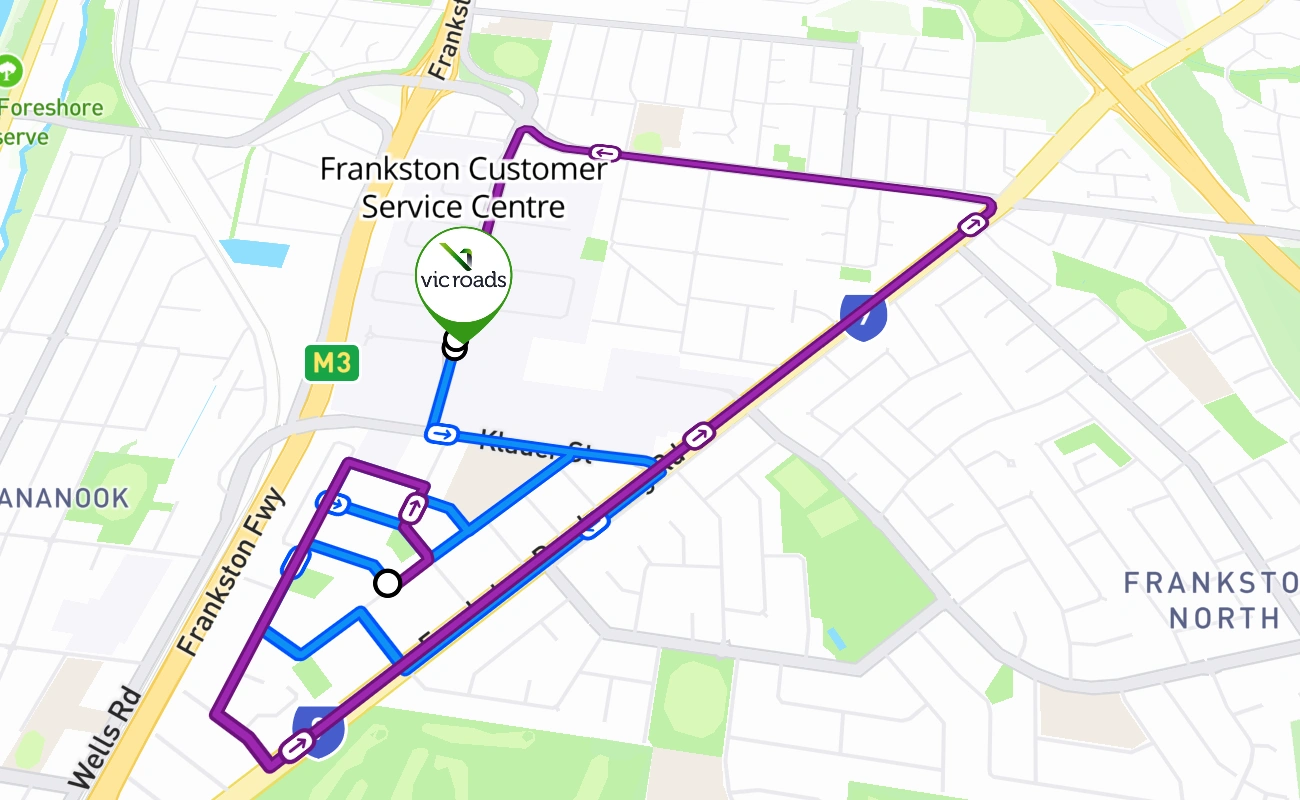
Frankston (VIC) #1752
eleanor 03 Jul 2026873 -
Pro
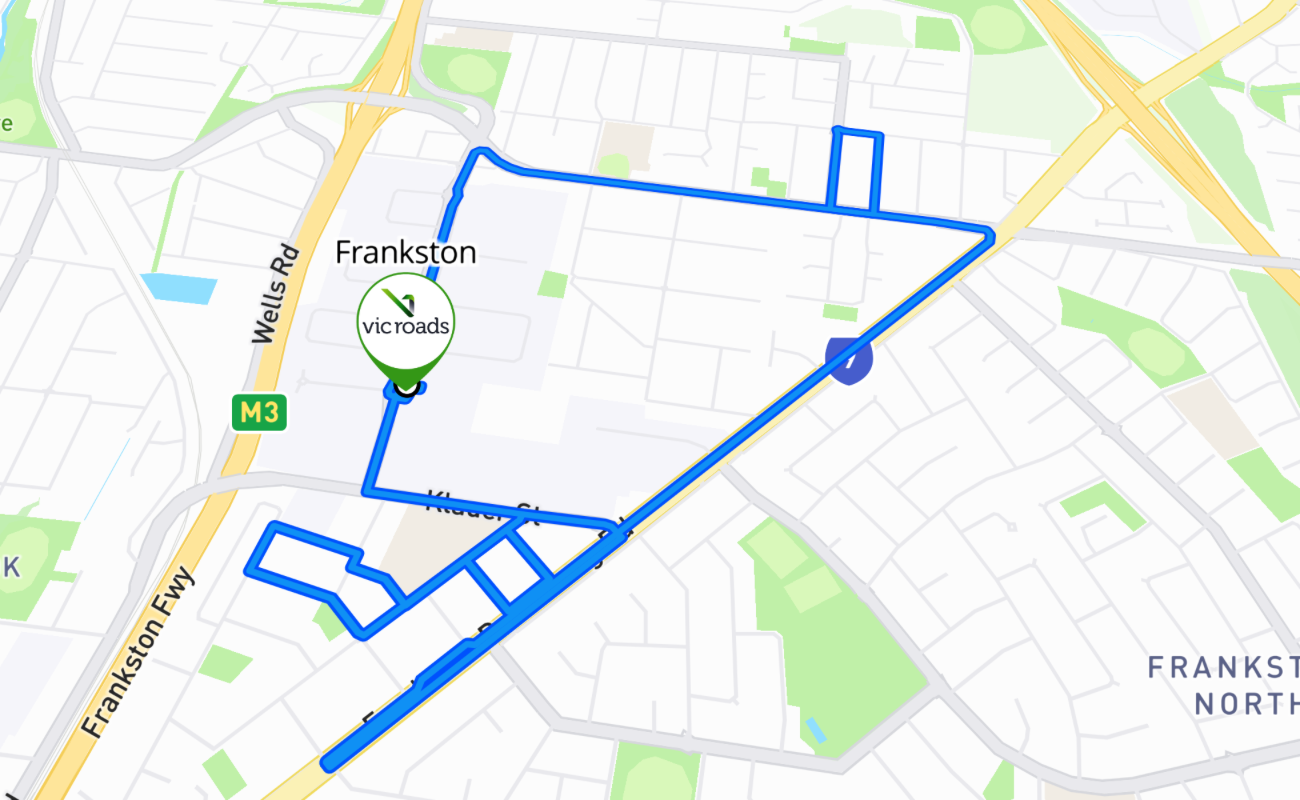
Frankston (VIC) #179
Manidhar Devanaboina 09 Feb 20262K -
Pro
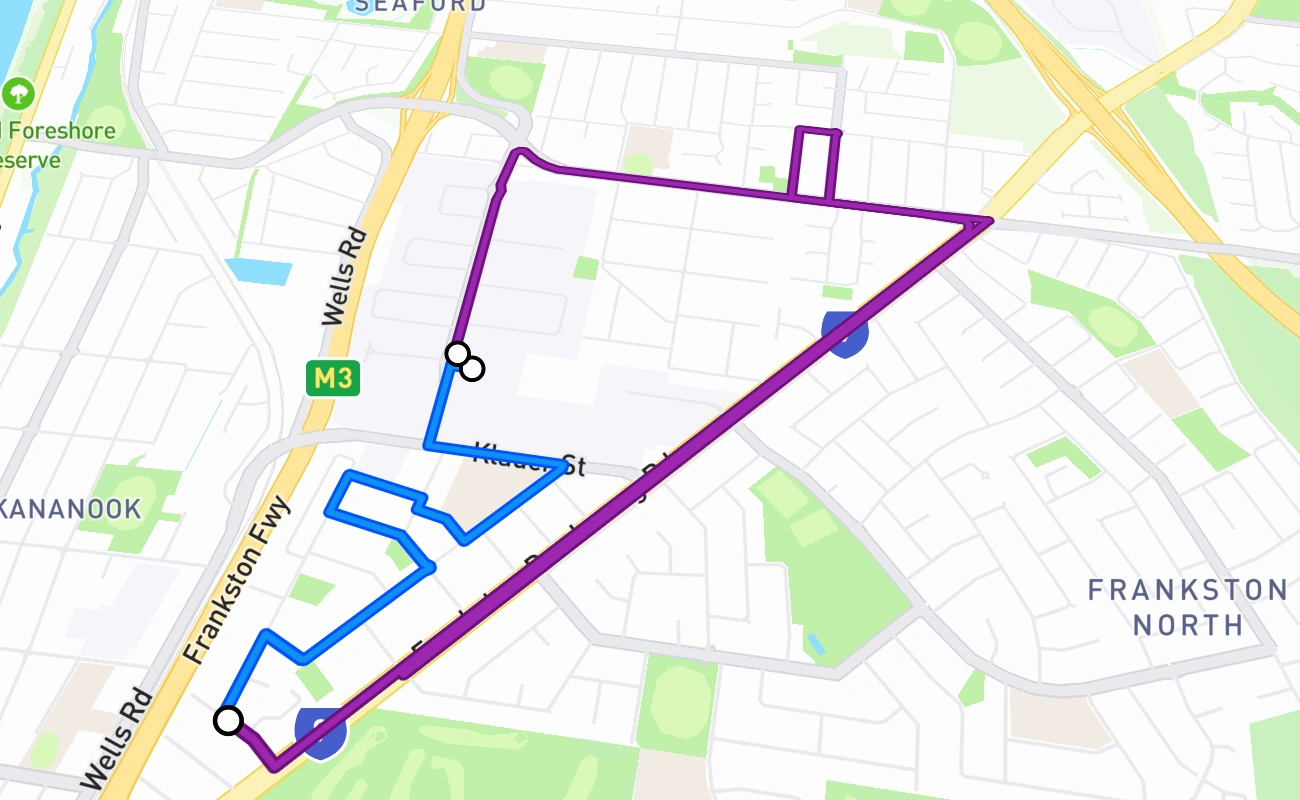
Frankston (VIC) #175
Andrew S 10 Jan 20262K -
Pro

Frankston (VIC) #173
Andrew S 09 Jan 20261.8K -
Pro
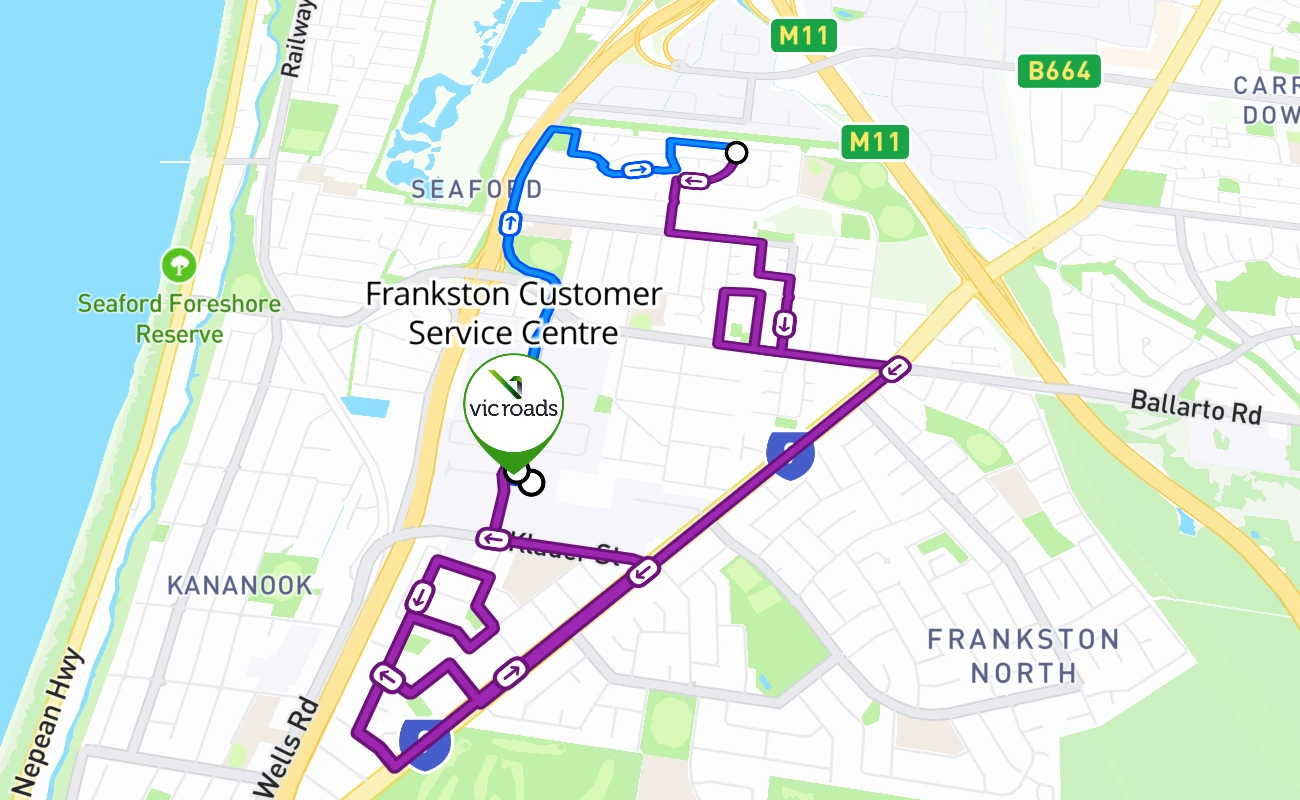
Frankston (VIC) #174
Andrew S 09 Jan 20261.6K -
Free
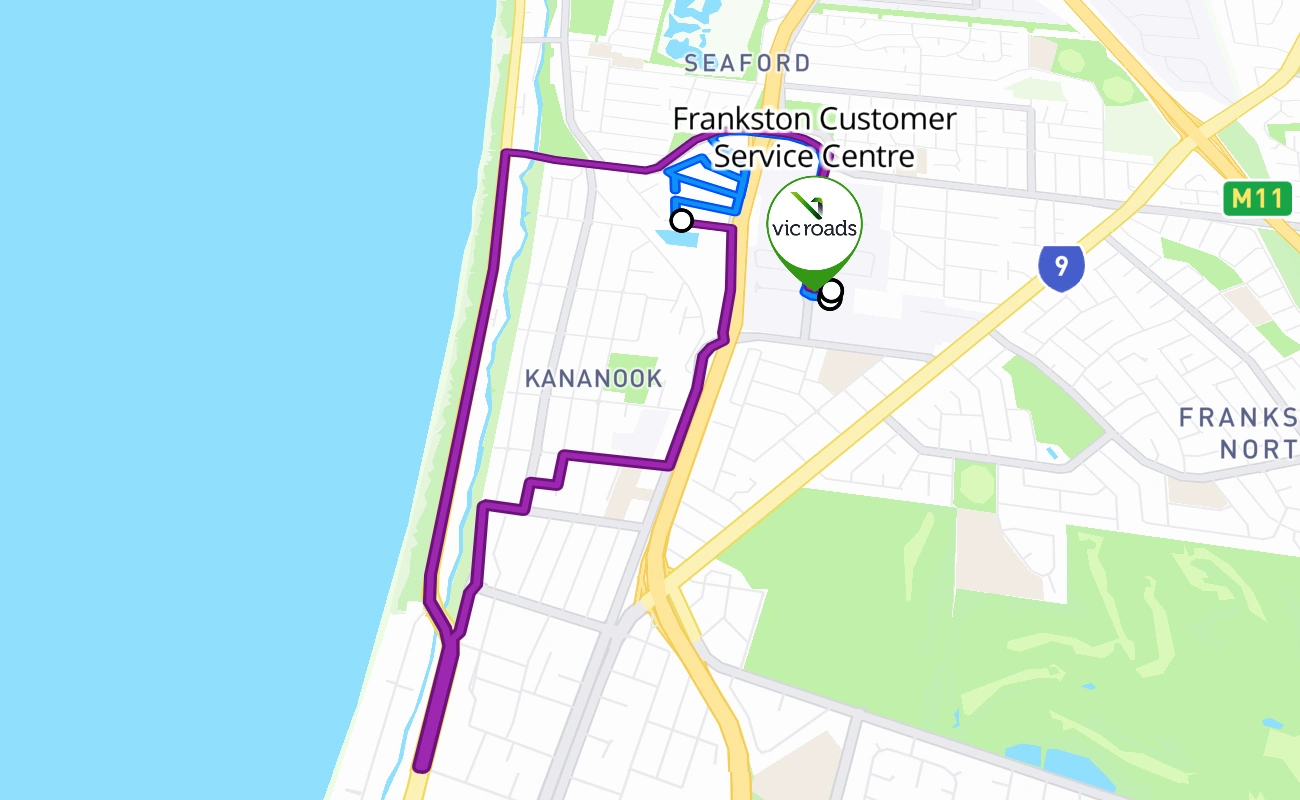
Frankston (VIC) #172
Andrew S 09 Jan 20261.8K -
Free
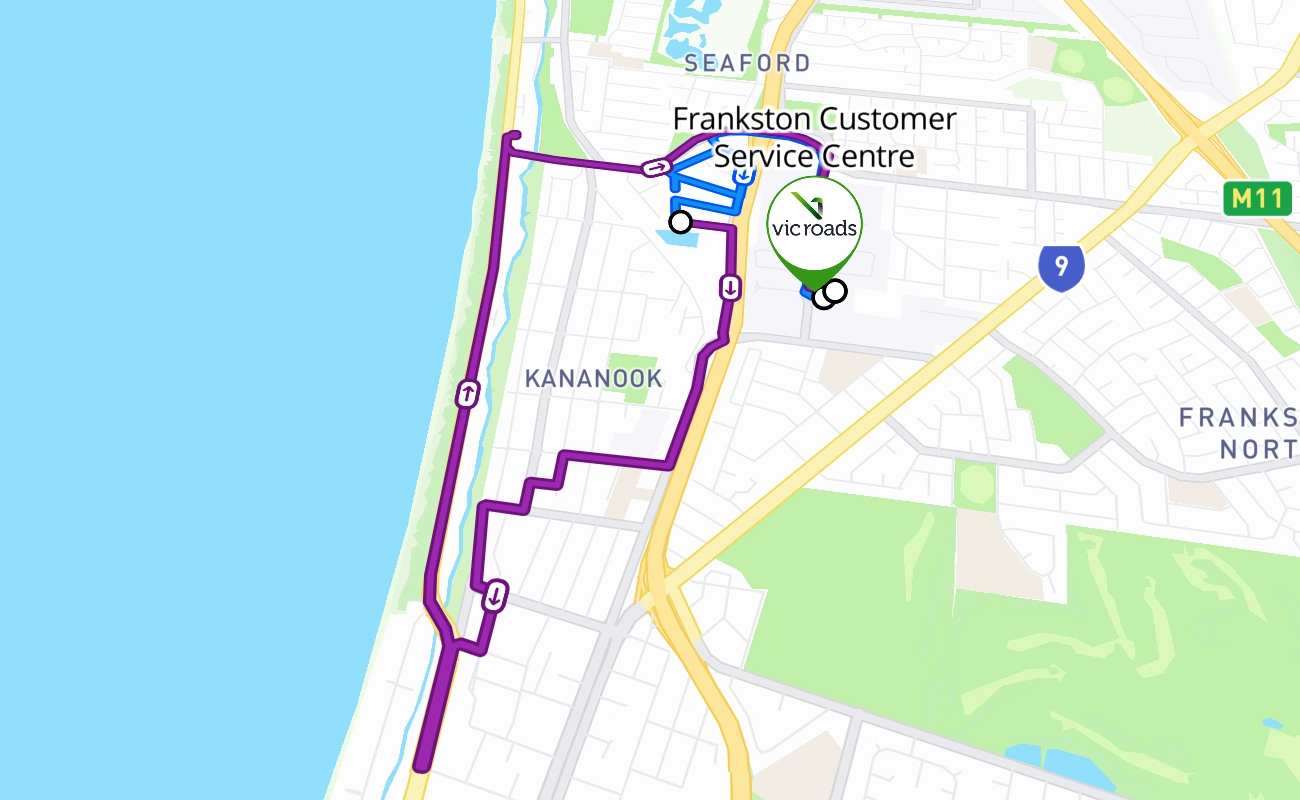
Frankston (VIC) #171
Andrew S 09 Jan 20261.5K -
Free
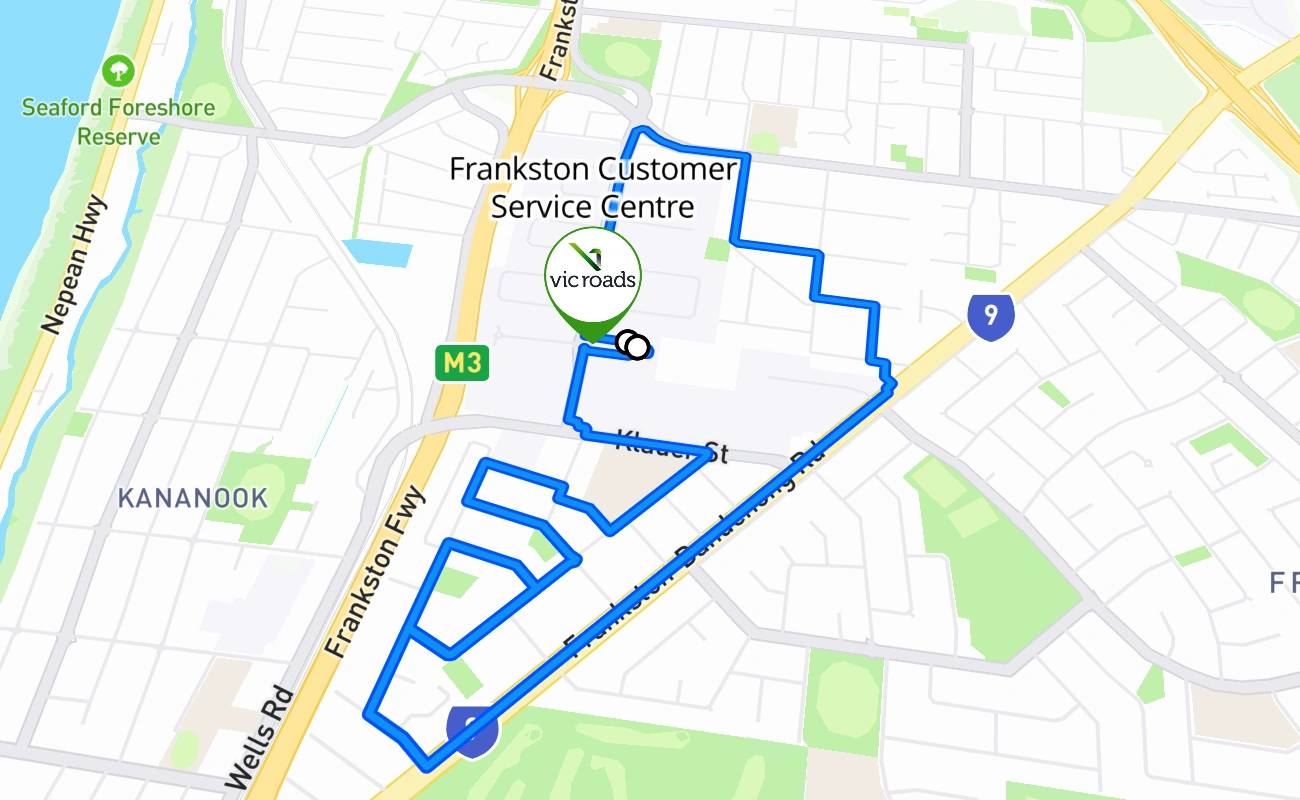
Frankston (VIC) #112
Manidhar Devanaboina 30 Sep 20252.2K -
Pro
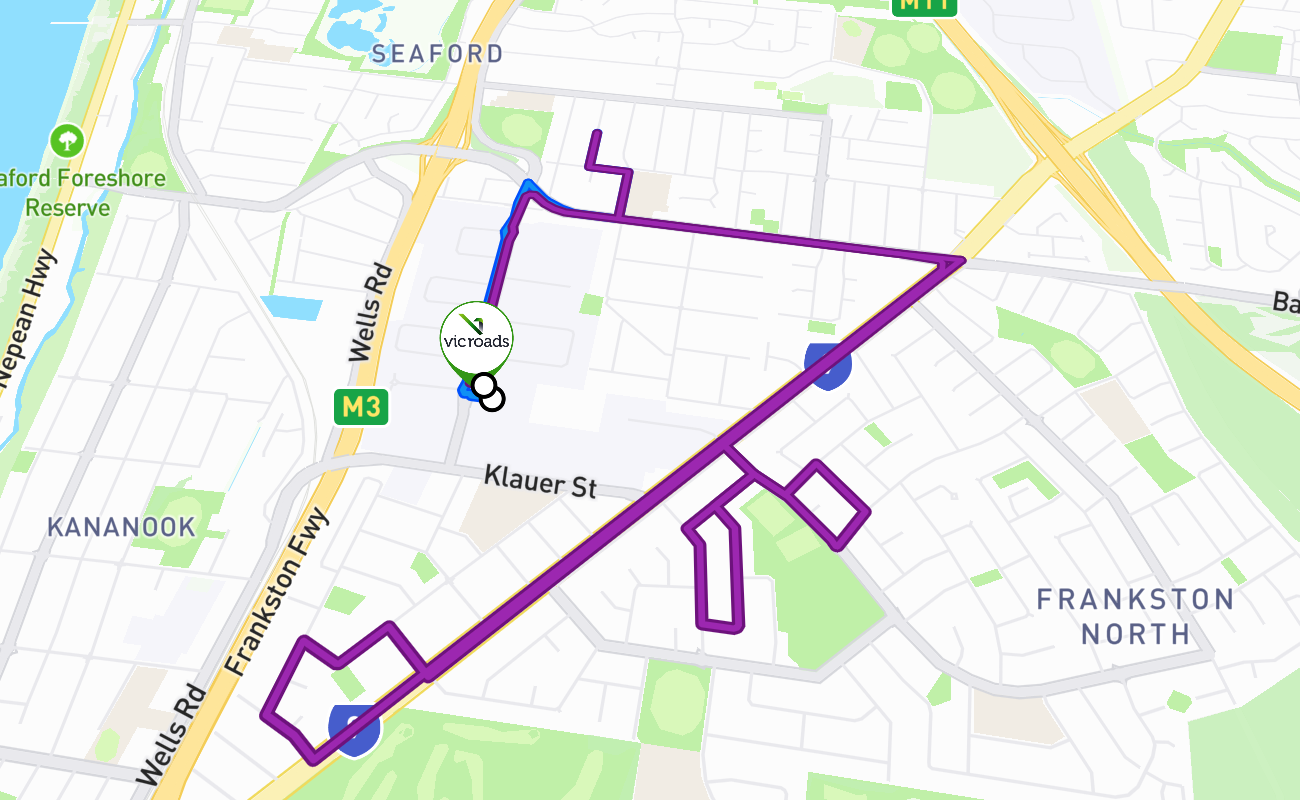
Frankston (VIC) #20
 AUDrive 12 Jun 20252.2K
 -
Pro
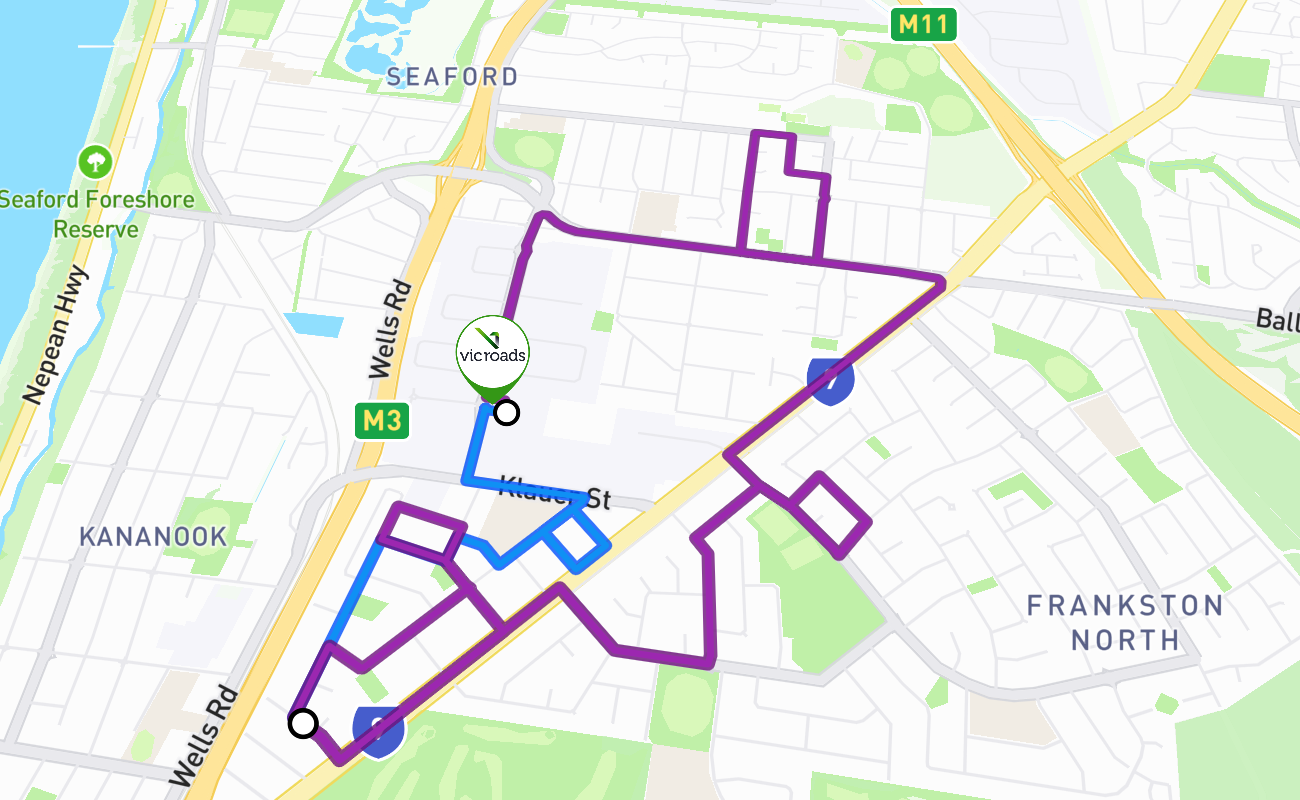
Frankston (VIC) #21
AUDrive 11 Jun 20252.9K -
Pro
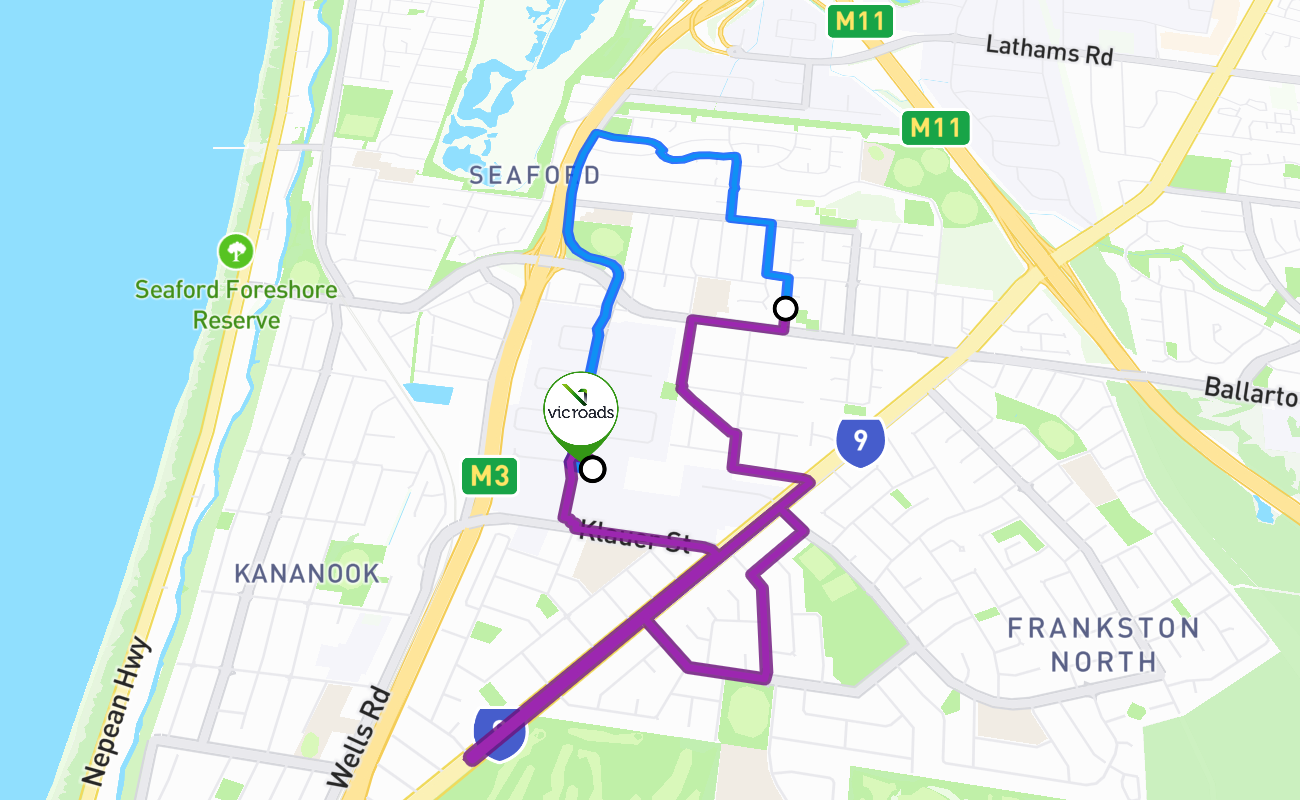
Frankston (VIC) #19
AUDrive 11 Jun 20252.1K -
Pro
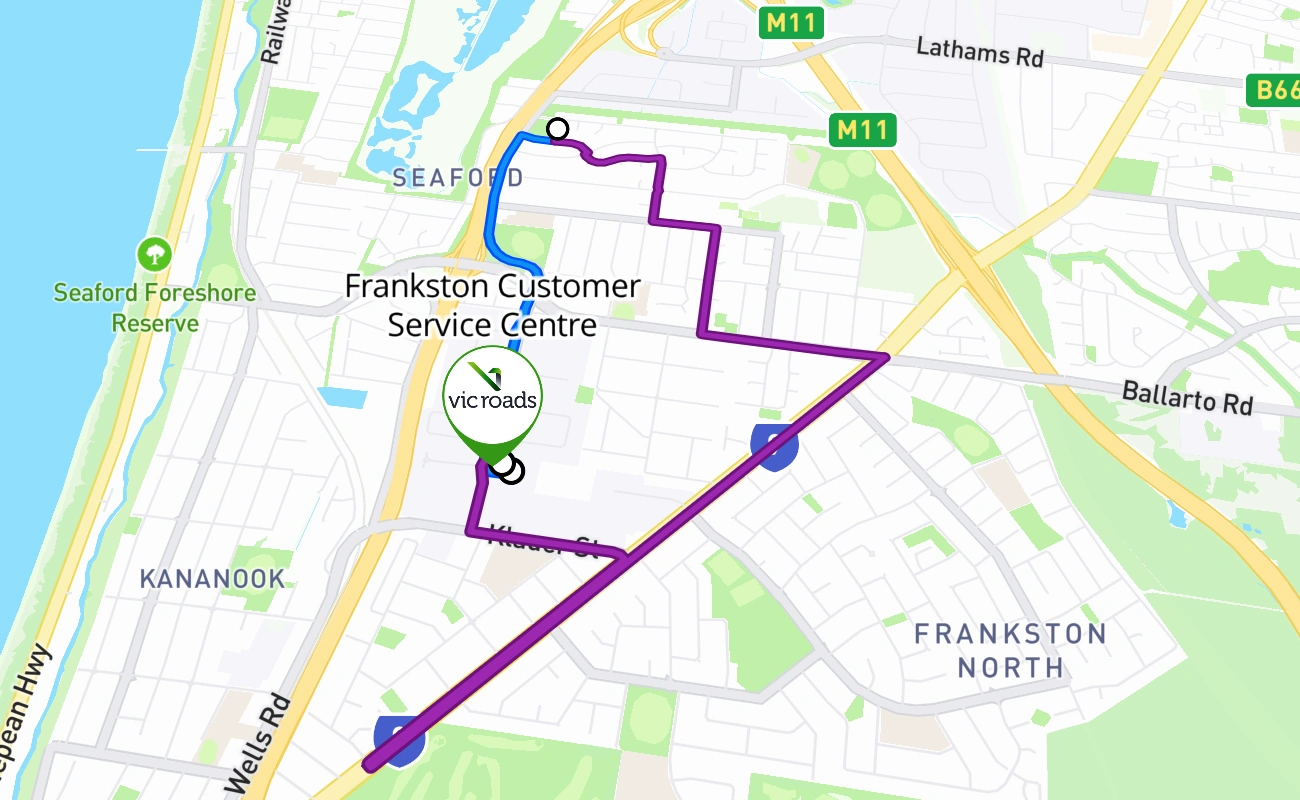
Frankston (VIC) #18
AUDrive 10 Jun 20252.2K -
Earn Pro rewards
Passed your test?
Contribute your route, get your Pro refunded.
Contribute a Route


General Tips
 Typical Speed Limits
Primarily 70-80 km/h on main arterial roads like Wells Road and Frankston-Dandenong Road, with 50 km/h in residential areas and prevalent 40 km/h school zones.
Traffic Conditions
Moderate to heavy, with a significant presence of heavy vehicles (trucks) due to the surrounding Hartnett Drive industrial estate. Traffic flow on main roads can be constant and fast-paced.
Key Features
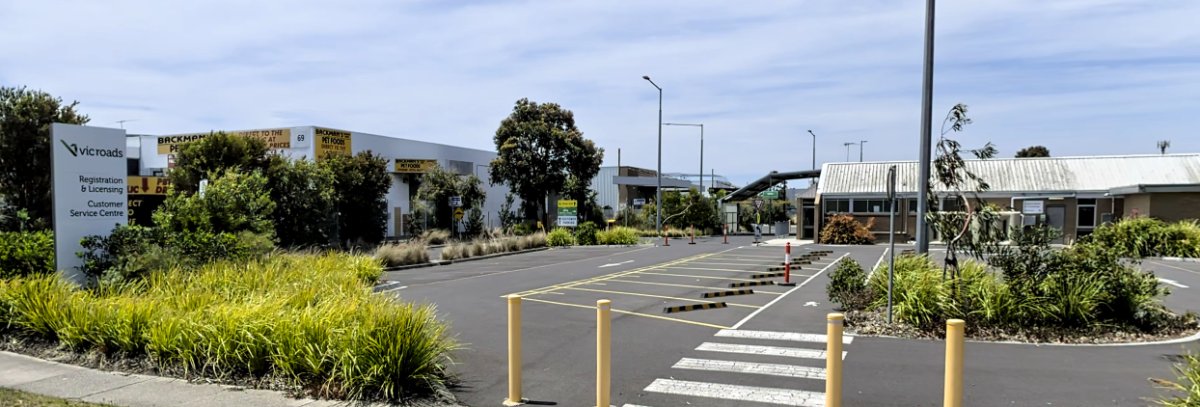
Located within an industrial/commercial area. Key features include large, multi-lane roundabouts, merging onto high-speed arterial roads, and dealing with truck traffic. A mix of industrial and quiet residential streets.
Common Test Maneuvers
Merging and lane changes on high-speed, multi-lane roads are very common. Navigating large roundabouts correctly, three-point turns, and reverse parallel parking in residential side streets away from the main industrial traffic.
Driving Instructors & Schools at Frankston
Be the instructor Frankston learners see first. Learners compare routes and pass rates on this page right before booking their test. Your listing meets them at that exact moment, and every enquiry comes straight to you.
500+ learners a month
see the Frankston test centre page
Enquiries come straight to you
no commission and no middleman
Free while we launch
early joiners are listed first
Right where they decide
your listing sits with this centre's practice routes
Frequently Asked Questions
How do I book a driving test in Victoria?
You can book your Victorian drive test online through the VicRoads website (vicroads.vic.gov.au), by phone on 13 11 71, or in person at a VicRoads Customer Service Centre. You must have passed both the Learner Permit Knowledge Test and Hazard Perception Test (HPT) before booking.
Is Frankston an easy place to pass the driving test?
Frankston is considered one of the easiest test centres in Melbourne. A driving instructor claims it has the highest pass rate in Australia at 83%. The examiners are known for being very forgiving - there are stories of candidates making multiple errors but still passing. It's rated 4.2 stars on Google with 340 reviews.
What are the requirements for the Victoria driving test?
To take the VicRoads drive test, you must: be at least 18 years old, have held your learner permit for at least 12 months, completed 120 hours of supervised driving (including 10 hours at night) if under 25, and passed the Hazard Perception Test (HPT). You also need a roadworthy registered vehicle.
What are the examiners like at Frankston?
Frankston examiners have excellent reviews. George is praised for being calm, professional, and fair. Chris is described as providing amazing service. Overall, examiners are known for being patient with nervous candidates and giving clear instructions. 36 Google reviews specifically mention driving tests positively.
How much does the Victoria driving test cost?
The VicRoads drive test costs $51.80 plus a $21.50 appointment fee, totalling $73.30. Under the Motorist Package, the first online Learner Permit Knowledge Test and Hazard Perception Test are free. If you fail, you pay the full drive test fee again but the appointment fee is waived if you rebook.
What is the Frankston driving test structure?
The Frankston test has two stages: Stage 1 is in residential areas with left/right turns and either reverse parallel parking or 3-point turn. Stage 2 involves faster roads with lane changes on multi-lane roads. You must complete Stage 1 before moving to Stage 2.
What is the driving test pass rate in Victoria?
Victoria has the highest driving test pass rate in Australia at 75%, well above the national average of 62%. Even the lowest-performing centre in Victoria (Dandenong at 67%) still exceeds the national average. 9 out of the top 10 pass rate centres in Australia are in Victoria. (Data: EzLicence 2024-2025)
How is the Victoria driving test structured?
The VicRoads drive test takes approximately 30 minutes. It starts with pre-drive checks (seatbelts, mirrors, indicators, wipers, lights), then covers suburban driving and may include higher-speed roads. You will do either a three-point turn OR reverse parallel parking (examiner chooses). The test has two stages covering different road environments.
What are the main fail points at Frankston?
Key fail points include: 1) Overdoing head checks - examiner said one candidate did too many, affecting forward vision, 2) Waiting too long for a gap when merging - must take the first safe gap, 3) Driving too slow - must stay within 10km/h of the speed limit.
What are the instant fail items in the Victoria driving test?
Instant fail items include: running a red light, speeding, not stopping at stop signs, failing to give way, causing danger to other road users, any collision, not checking blind spots when changing lanes, and any action requiring examiner intervention. Forgetting to cancel your indicator after a lane change can also result in a fail.
What should I bring to my Victoria driving test?
Bring: your current learner permit, proof of identity, a roadworthy vehicle with current registration and insurance, and your supervising driver (who must hold a full licence for 2+ years). Arrive at least 15 minutes early. The vehicle must have L plates displayed and no warning lights on the dashboard.
What areas does the Frankston driving test cover?
Routes cover the Seaford area including Hartnett Dr (starting point), Seaford Rd, Austin Rd, Brunel Rd, and near East Seaford Reserve. Stage 1 goes through residential streets while Stage 2 uses main roads like Peninsula Blvd with higher speed limits.
Can I convert my overseas licence to a Victorian licence?
Yes. Drivers from recognised countries (UK, USA, Canada, NZ, EU, Japan, Singapore and others on the Austroads list) can convert directly without tests. Drivers from non-recognised countries including China must pass the Knowledge Test, Hazard Perception Test, and Drive Test. A NAATI certified translation is required for non-English licences.
How does Frankston compare to other Melbourne test centres?
Frankston is easier than both Mitcham (which has bad road conditions) and Heatherton (which has stricter examiners recently). With its claimed 83% pass rate and forgiving examiners, it's a popular choice for nervous drivers or those who have failed elsewhere.
What happens if I fail my Victoria driving test?
If you fail, you will receive feedback on what to improve. You can rebook immediately but must pay the drive test fee again ($51.80). There is no limit on attempts. Given Victoria's high 75% pass rate, most candidates pass within 1-2 attempts with adequate preparation.
What are the most common reasons for failing the Victoria driving test?
The most common fail reasons are: not making head checks obvious enough (examiners need to see you turn your head), forgetting to cancel indicators after lane changes, poor mirror checking frequency, failing to give way at roundabouts, speeding in school zones (40km/h), and incorrect hook turn procedure in Melbourne CBD.
What should I know about head checks at Frankston?
Head checks are required, but don't overdo them. One examiner commented that a candidate did too many head checks, which affected their forward vision. Do head checks at appropriate times (lane changes, merging) but maintain focus on the road ahead.
What is a hook turn and will it be in my driving test?
A hook turn is a right turn made from the left lane, unique to Melbourne CBD where tram tracks occupy the centre of the road. You pull into the left lane, wait for the cross-street light to turn green, then complete your right turn. Hook turns are unlikely in the drive test unless your test centre is in the CBD area (e.g., Carlton).
How many hours of practice do I need before the Victoria test?
If under 25, you must complete 120 hours of supervised driving (including 10 night hours) recorded in your logbook. This is one of the highest requirements in Australia. If 25 or older, there is no mandatory hour requirement, but VicRoads recommends extensive practice. Most successful candidates have at least 5-10 hours of professional lessons.
How should I handle merging during the Frankston test?
When entering main roads or smaller roads, you must choose the FIRST available safe gap. Waiting too long for a 'perfect' gap will lose you points. Practice quick gap judgment before your test - this is a common area where candidates lose marks.
Which Melbourne test centres have the highest pass rates?
Based on EzLicence data (2024-2025), Melbourne test centres with the highest pass rates are: Frankston (~80%, the highest in all of Australia), Geelong (77%), Werribee (~75%), Melton (~74%), and Bundoora (~73%). All Victorian centres exceed the national average of 62%.
What is the best time to book my Frankston driving test?
Afternoon times work well at Frankston. During school holidays there may be less traffic. Light rain doesn't necessarily affect the test. The centre has good availability compared to some other Melbourne locations.
Which Melbourne test centres are more challenging?
While all Victorian centres have pass rates above the national average, the more challenging ones include: Dandenong (67%), Heatherton (64%), and Broadmeadows (69%). Carlton is perceived as difficult by Chinese learners due to tram tracks and CBD traffic, though its pass rate is around 70%.
What is the Victoria learner permit and P-plate system?
Victoria uses a Graduated Licensing System: Learner Permit (age 16+), P1 Red Probationary (age 18+, after 12 months on L), P2 Green Probationary (after 1 year on P1), and Full Licence (after 3 years on P2 or age 22). P1 drivers have a zero BAC limit and passenger restrictions at night.
Any tips for nervous drivers at Frankston?
Frankston is ideal for nervous drivers. Examiners like George and Chris are known for being patient and supportive. If instructions are unclear, ask - don't guess. The 83% claimed pass rate suggests a positive testing environment. Focus on smooth driving and taking safe gaps confidently.
Do I need professional driving lessons before the Victoria test?
While not mandatory, professional lessons are highly recommended. Most first-time passers have 5-10+ hours with a qualified instructor. Victorian instructors know the specific test routes and criteria. Each hour with an instructor counts as 3 hours in your logbook (up to 10 instructor hours = 30 logbook hours).
What documents do I need to convert an overseas licence in Victoria?
You need: your original overseas licence, NAATI certified translation (if not in English), passport and visa, proof of Victorian address (utility bill or bank statement), completed application form, and payment. Permanent residents must convert within 6 months. Temporary visa holders can drive on their overseas licence with an English translation.
Other VIC Driving Test Centres
Heatherton Customer Service Centre
Heatherton
Mitcham Testing and Inspection Centre
93A Heatherdale Road
Carlton Customer Service Centre
Carlton
Bundoora Customer Service Centre
Bundoora
Deer Park Licence Testing Centre
Deer Park
Broadmeadows Customer Service Centre
Broadmeadows
Office discussion
No comments yet
Share how your practice went. It helps the next learner.